| View |
| preceded by | |
| Philippines |
| succeeded by |
| Philippines | Link to Wikipedia |
Philippines: History, Coinage and Collectibles
In the annals of global numismatics, few archipelagos possess as storied a currency lineage as the Philippine Islands. Spanning thousands of islands from Luzon to Mindanao in the Pacific theater, this territory has served not only as a nexus for maritime trade between China and Europe but also as a crucible where colonial currencies transformed into symbols of national sovereignty. For historians and collectors alike, understanding the numismatic narrative requires looking beyond simple metal content; one must examine these pieces through the lens of empires rising and falling, economic shifts from agriculture to industry, and the enduring cultural resilience of the archipelago itself.
Historical Background
The story begins far before foreign mints existed within its borders. As an early trade hub between East Asia and Latin America during the Manila-Acapulco Galleon Trade Era, the Philippines was effectively a frontier province for Spanish Spain. While local economies relied heavily on barter systems involving agricultural goods like abaca fiber and tobacco, international commerce drove demand for silver currency to facilitate transactions with neighbors in China and Japan. For centuries, the archipelago circulated foreign coins—primarily Mexican Silver Dollars minted in Mexico City—but these were not merely paper or token money; they were tangible links between Pacific empires.
Colonial rule brought profound changes but also established a monetary framework that would take generations to evolve into a national identity. Under American administration following the Spanish-American War, the islands entered an industrialization era transitioning from agriculture toward manufacturing and services centered on Manila as its capital hub. This economic shift necessitated stable currency systems capable of supporting complex trade networks rather than just coastal commerce. The narrative arc leading up to independence was defined by a struggle for autonomy that found expression in every coin issued; each new design marked not merely an administrative change but a step toward national maturity, transforming the islands from a Spanish possession into the Republic of the Philippines.
Currency and Coinage History
The evolution of currency here is unique because it began with borrowed sovereign power. For nearly four centuries, "Philippine" money was often simply Mexican pesos used as circulating change without local authorization or minting until relatively late in colonial history. This era ended only when the archipelago gained full administrative autonomy and sought its own medium of exchange to mark a new epoch for economic independence.
The first locally issued currency under US supervision appeared during World War II, often utilizing silver standards that had been hoarded prior to occupation but were released post-war to stabilize commerce. However, the most iconic period for collectors arrived not immediately upon war's end in 1946 (the year of independence), but rather between 1935 and 1942 during the Commonwealth era. During this brief window before full sovereignty, coin production was heavily influenced by Washington yet adorned with local heraldry.
This hybridity defines much of early Philippine numismatics: designs borrowed from American artistic styles to communicate a message that "the future is our own." Following World War II and independence in 1946, the economy continued its transition toward modernization. Although high-denomination coins circulated for decades before the eventual shift toward notes due to demonetization policies affecting metal content standards (silver becoming scarce or removed from circulation), these silver pieces remain highly significant markers of a developing nation moving into an emerging market status.
Mints and Coin Production
In discussing production centers, one must navigate how coinage was struck in the region. During its early independent years, coins were not necessarily stamped on-site within Manila due to logistical constraints; much like Spanish colonial precedents where Mexico City blanks circulated widely or US Mints produced issues for overseas colonies.
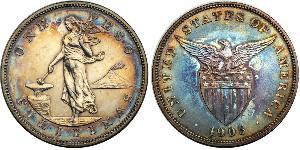
Despite this reliance on external resources initially, distinct artistic characteristics evolved over time that defined the era's production traditions. Early Commonwealth designs featured heraldry heavily influenced by Washington DC mints but with local interpretations—specifically in how eagles and sunbursts were rendered to represent national symbols of independence found later at airports or educational buildings.
Mint technologies shifted from standard industrial striking methods as economies developed, transitioning to higher volumes required for service-centered commerce. The production centers adapted not only for volume but also for artistic expression: the use of copper-nickel clad materials allowed for durable circulation in tropical climates while retaining visual appeal necessary for collectors who appreciated fine details.
Notable Coins
No discussion of these collectibles is complete without acknowledging specific examples that bridge history and commerce. One such piece often seen by enthusiasts involves silver denominations minted during the Commonwealth era (roughly 1935–1940). The most famous among them include various quarter-dollar pieces, which were widely circulated in Manila but are now rare due to wartime melting or loss of standard circulation coins.
Another notable entry is found within the series issued for Independence Day commemorations. These silver dollars typically feature imagery combining local flora with national symbols—perhaps a representation of rice fields alongside indigenous bird life. The historical context behind these designs was significant: they marked a transition where currency design shifted away from colonial motifs like coats-of-arms or Spanish heraldry toward representations that honored the nation's cultural heritage.
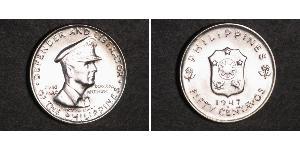
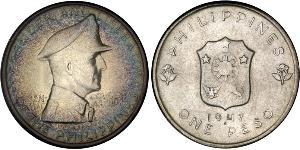
Furthermore, collectors should note high-denomination issues such as one dollar coins featuring portraits of national heroes who played pivotal roles in establishing sovereignty and resisting foreign occupation. The significance to modern collectors lies not merely in their rarity—many were minted in large quantities during industrial booms but remain scarce due to historical attrition—and rather in what they represent: the transition from a colony to an emerging market state.
Cultural Legacy
The legacy of these coins extends beyond material value; it is embedded within cultural heritage. As the archipelago experienced growth and modernization, coinage reflected its society's values—resilience against natural disasters like typhoons was a theme often present in national narrative which influenced art on currency faces depicting landscapes rather than just portraits.
The design of these coins served as an enduring testament to economic diversification from traditional agriculture toward industrial and service sectors. While the government eventually prioritized paper money due to inflation pressures affecting metal reserves, coinage remained a potent historical artifact connecting modern citizens to their ancestors' struggles during early states formed centuries prior or colonial eras.
For collectors
The enduring appeal of Philippine collectibles lies in their scarcity and the rich history they preserve. For those looking at these artifacts today, one finds that each piece carries the weight of a civilization's evolution through trade wars to industrialization and independence movements. The coins tell stories not only about who ruled this archipelago but also how it survived external pressures.
Collectors are particularly drawn to early Commonwealth era issues because they bridge two distinct eras: those struck in silver before the war represents pre-independence stability, while post-war pieces show resilience amidst global conflict. They remain key targets for enthusiasts of history who seek physical evidence of a country's transition from an agricultural society into a modern industrial economy that continues to participate actively in international forums.
In conclusion, these artifacts provide insight not just into economics but cultural identity and how this archipelagic nation found its footing on the world stage. Whether studying historical trade routes or analyzing artistic evolution seen here today across museums and auction houses around the globe, Philippine numismatics offers a tangible connection to history itself—bridging centuries of maritime exchange from China's coastal route along southern Asia all through modern development efforts.