| View |
 North Korea (1948 - )
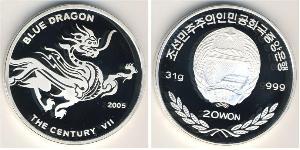
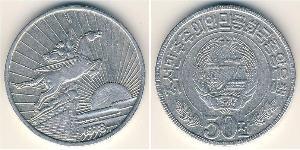
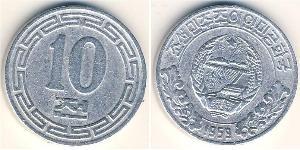
| North Korea (1948 - ) | Link to Wikipedia |
The Democratic People’s Republic of Korea: History, Coinage and Collectibles
Welcome to this overview of the monetary heritage of North Korea. As a curator with decades of experience in East Asian numismatics, I invite you to examine how geography, history, and state policy have converged on the Korean Peninsula for nearly two millennia.
Historical Background
The narrative begins thousands of years ago when first inhabitants settled along the rugged coastlines defined by modern borders. The peninsula's rich cultural evolution moved from early kingdoms to unified empires like Goryeo and Joseon, before entering a complex imperial period in 1897 with the Korean Empire. This era ended abruptly as Japan compelled Korea into becoming its protectorate in 1905, formally annexing it ten years later.
This colonial shift was transformative not just politically but economically. The Japanese administration focused heavily on industrial development; mines and hydro-electric dams were built, particularly in northern regions which would eventually constitute North Korea today. However, this era of forced assimilation included a strict suppression of local identity. Following the surrender at World War II's end in 1945, occupation powers withdrew—Soviet forces from the north by 1948 and American troops from the south following.
The division along the thirty-eighth parallel established two distinct economic zones where money would evolve differently based on ideological alignment. The Soviet-backed government of the North developed in contrast to the Western-aligned regime in the South. This bifurcation was cemented by events leading up to and during the Korean War, which saw foreign intervention alter borders significantly before a ceasefire restored an approximate status quo in 1953.
Currency and Coinage History
The history of money on this peninsula is a story of transitions from occupation currency to national independence. During the Japanese colonial period (roughly 1907–1945), local administration utilized coins struck in Japan or by private mints using standard Imperial designs adapted for the region.
- The Occupation Era: The primary coinage circulating was essentially an extension of the Japanese yen system. This period is often misunderstood, as collectors must differentiate between pieces officially made in Tokyo and those cast at facilities under local Korean direction but with foreign oversight.
Upon independence following 1945, new monetary systems were proposed to assert sovereignty. By 1947 or so, the South began moving toward a distinct Won series. In contrast, North Korea's economic development was initially supported by Soviet trade and aid rather than indigenous minting operations for general circulation.
Mints and Coin Production
The landscape of state-run enterprise in this region is characterized by centralization. The source text notes that means of production are owned by the state through enterprises funded directly from resources such as mining or agriculture. This centralized control extended to currency issuance for many decades.
Pyeongongyang
The capital city has served since ancient times as a political hub, and its central role continued into modern administrative history. While specific locations of state mints are often classified information today due to strict regulation, Pyongyang is understood to be the primary center for producing official state issues.
Notable Coins
In collecting these items, focus should remain on those that reflect historical shifts rather than modern scarcity alone. The most sought-after pieces generally stem from the pre-1945 era because they represent a unique bridge between two worlds: local production and foreign design.
The Early Won Series (Transitional)
Around 1967, following years of post-war recovery efforts, North Korea began issuing its own distinct coinage to facilitate trade with socialist bloc nations. These coins often feature the iconic imagery associated with state leadership and industrial themes.
Key Characteristics:
- Rarity Profile: Early issues of metal currency in this region are rare, as paper money was the primary medium for general exchange during much of the Soviet-influenced post-war period. Metal coins often served specific institutional functions.
The design aesthetics shifted dramatically between occupation and independence, moving from Imperial eagles to imagery representing agricultural cooperation or state leadership figures within industrial settings.
Cultural Legacy
Minted currency in this region has always carried a heavy ideological weight. The "Juche" philosophy promoted by the first leader emphasized self-reliance and independence, which was frequently reflected on paper money (the Sikjeon Won). While metal coin production remained sporadic compared to neighboring economies during specific historical windows due to international trade restrictions and embargoes imposed in later years.
The coins that do exist serve as tangible artifacts of a time when the nation navigated a path from colonial rule toward ideological sovereignty. The state-run economy mentioned earlier dictates how value is perceived; often, currency was treated more like an administrative instrument than a trade commodity for international commerce during decades of isolation starting in the 1980s.
For Collectors
The monetary legacy here offers high historical value. Because official coinage production was frequently constrained or restricted to internal use and foreign aid transactions, finding authentic examples requires keen market knowledge. These pieces are essential for understanding the economic trajectory of East Asia during its most volatile geopolitical shifts.
This series concludes with a reminder that every preserved specimen in this category connects back to a rich history where industrial ambition collided with imperial power before settling into modern state isolationism, making these artifacts not just metal objects but historical records. We encourage you to appreciate them for the stories they tell about resilience and change.