Historical Background
The narrative of Korea is a tale deeply rooted in the vast expanses of East Asia. For millennia, this peninsular region has stood as a bridge between major powers to its north and south.
To understand the numismatic landscape here today, one must first grasp how trade flourished before the advent of modern metal currency. The peninsula’s history is not merely defined by borders on a map—though the division established in 1945 remains significant—but rather by centuries of cultural diffusion and economic exchange. From the legendary founding of Gojoseon to the unification efforts under Silla, Korea existed as a distinct entity long before "Korea" became a standard English spelling derived from Goryeo.
Culture played an immense role in early commerce. It was during the reign of Unified Silla that trade routes were formalized with the Tang dynasty and beyond. The opening of the peninsula to Western traders, particularly following Japan's victory over China in 1895, fundamentally shifted the region from a closed economy to one integrated into global maritime networks.
Cultural evolution also dictated economic shifts. The invention of Hangul during the early years of the Joseon dynasty is often cited as a period of great intellectual and technological advancement. While this era saw relative isolationism—fortified against Japanese and Qing aggression—it was precisely because these gates were eventually forced open in 1905 that modern coinage could be introduced. This transition from an isolated state to a protectorate, and finally to independence after World War II, mirrors the evolution of money itself.
Currency and Coinage History
Metal currency is often seen as the bloodline connecting past empires to modern nations. In Korea's case, this lineage was forged in fire during periods of both occupation and national resurgence.
The introduction of metal coinage into the Korean peninsula was largely tied to its interactions with China and Japan prior to the 20th century. For a long time following annexation by Japanese influence starting in 1905, Korea utilized currency systems closely modeled after those of their neighbors or occupiers.
The early decades of modern economic life saw significant reforms as industrialization swept across Asia under foreign direction and eventually domestic management. The suppression of independence movements during the first half of the 20th century meant that monetary sovereignty was often compromised, yet this very struggle shaped collectible history today. Following World War II in 1945, when Korea stood on a precipice between Soviet and American influence until division became reality by 1948, currency reforms accelerated.
Southern coinage emerged rapidly after the war as part of rebuilding efforts led largely by U.S.-led international forces. In contrast to centuries of tribute systems where copper cash was circulated for trade but not domestic use in early periods (due to isolation), post-war Korea required a standardized, reliable currency system.
Mints and Coin Production
The mints were often the silent engines behind national stability. They produced small metal tokens that carried heavy weight regarding political status.
During periods of Japanese influence from 1905 through to independence, coins minted in Korea bore designs reminiscent of Japanese issues or Chinese styles adapted for local use. The industrialization mentioned during this period was not just physical but technical; new presses allowed for mass production rather than the hand-struck artistry that defined earlier centuries.
The establishment of a distinct national identity post-1945 necessitated mints capable of producing high-quality currency to replace occupied coinage. The design philosophy shifted from military first symbols or imperial portraits seen in colonial eras back towards agricultural and cultural motifs reflecting the nation's own heritage. This shift is crucial for collectors, as it marks the transition from a foreign-controlled economy (1905–1948) to a sovereign one.
Coin production technology advanced alongside the country’s status on the world stage. The emergence of pop culture and global influence later in history coincided with sophisticated minting techniques capable of capturing fine details in alloys that were previously uncommon in East Asian numismatics. However, it is important to remember that for a significant portion of history—such as during the Joseon dynasty period—the country focused on peace rather than coinage production.
Notable Coins
Certain coins stand out not because they are made of gold or silver, but because they carry stories that change hands in every auction.
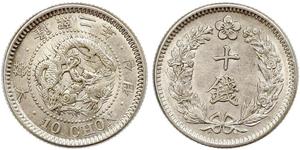
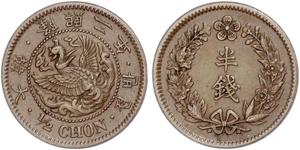
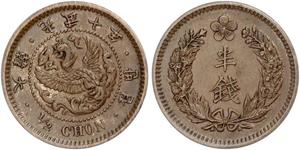
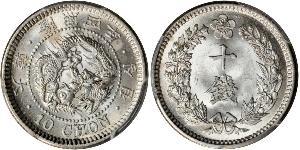
- The Colonial Copper Cent: Issued during the protectorate period (1905–1948), these tokens often feature portraits and designs reflecting Japanese influence. They serve as tangible artifacts of a time when Korea was forced to open up, marking a painful but transformative era in history.
- The Independence Era Commemoratives: Coins struck during the transition from colonial rule toward sovereignty highlight specific anniversaries of independence or national liberation events (1945–1948). These pieces are rarer because they were often short-lived experiments before a stable system was established.
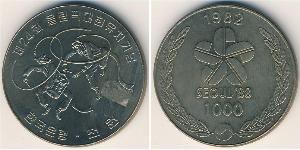
- The Modern Republic Series: As Korea became a developed nation, its coinage evolved. Later issues feature the modern symbols of unity and technological achievement that align with the "Korean Wave" phenomenon described in historical records today. These coins represent the maturation of the economy into one of the world's fourteenth-largest by GDP.
Cultural Legacy
A coin is not just metal; it is a mirror held up to the soul of its maker and user.
The numismatic history of Korea reflects its broader identity as both an ancient civilization and a modern power. The name "Korea" itself, derived from Goryeo, became standard through trade with Arabic lands in antiquity—a fascinating reminder that these coins were known by the world long before they bore national names today.
The design evolution on Korean currency mirrors the cultural narrative: moving away from foreign domination toward indigenous symbols of nature and industry. The creation of Hangul during this timeline also influenced later numismatic efforts to use native language scripts rather than just transliterated Chinese characters or colonial languages, reinforcing a sense of national pride.
Collectors often find themselves drawn not only to the condition of the metal but to what it represents: a story of survival against invasion, followed by rapid modernization. The "Korean Wave" in pop culture is an extension of this economic resilience—coins from these eras are collectibles that embody a country re-emerging as a global leader.
For collectors
The true value lies not just in the auction price, but in what you carry home when the deal is struck and history becomes part of your display case.
Korea remains vital to numismatists because it represents a critical pivot point between ancient Asian dynastic systems and modern industrial economics. The scarcity of coins from specific colonial transition years (around 1945–1948) makes them particularly interesting for those seeking historical context rather than just investment potential.
For the enthusiast, these pieces tell the story of a region that survived division to become a unified economic powerhouse in South Korea. Whether examining a copper token from the early protectorate or silver medals minted during reunification efforts, each artifact serves as a testament to resilience and cultural identity. It is this narrative richness that ensures Korean collectibles will remain significant chapter markers for generations of history enthusiasts.