| View |
 Korean Empire (1897 - 1910)
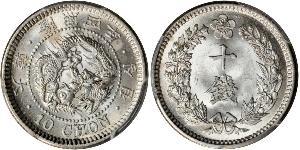
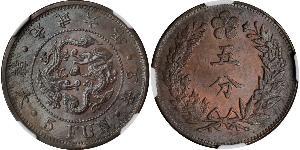
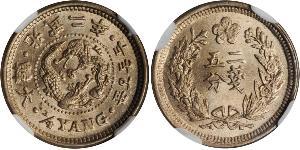
| Korean Empire (1897 - 1910) | Link to Wikipedia |
The Korean Empire: History, Coinage and Collectibles
Historical Background
In a dramatic period of global realignment at the turn of the nineteenth century, Korea stood as a crossroads between ancient traditions and pressing geopolitical modernization forces. The Joseon dynasty had long maintained tributary relationships with powerful neighbors like China's Qing Dynasty and Russia; however, these alliances often proved fragile shields rather than walls against intrusion. It was under King Gojong that a pivotal transformation occurred in 1897. Facing increasing pressure from the rising power of Imperial Japan and diminishing influence from Beijing, Gojong decided to abandon traditional dynastic titles for something grander yet distinctively modern: he proclaimed Korea as an empire.
This decision was driven by more than mere symbolism; it required a total restructuring of state identity. In what became known as the Gwangmu Reform (Light of Western Enlightenment), King Gojong sought to rapidly industrialize and westernize society without compromising sovereignty entirely. While the nation modernized its military infrastructure, economy, and land systems, foreign powers watched closely with envy or concern. The declaration aimed not just at a new political title but an economic one: a sovereign state needed independent monetary authority to facilitate trade free from direct tributary burdens.
Currency and Coinage History
The financial history of this brief imperial era represents a fascinating study in adaptation under pressure. Before the proclamation, Korea utilized traditional barter systems alongside copper coins known as won, valued in units called hu. However, by 1897, these were insufficient for modern international commerce. As trade routes expanded and foreign merchants entered ports like Busan, there was a pressing need for silver currency that met Western standards of weight and fineness.
The shift to coinage occurred against the backdrop of intense diplomatic maneuvering. The empire needed money to pay its new modern army—often equipped by Russian or Japanese consultants—but also wished to establish economic independence from foreign loans, which were strictly regulated following 1905 under Japan's protectorate status. Consequently, early attempts at currency reform focused on issuing silver dollars that could be used internationally while retaining local cultural motifs.
The monetary system was further complicated by the dual nature of Korean commerce: traditional markets dealing in silk and rice alongside new industrial enterprises manufacturing textiles and matches for export to Japan. This economic necessity spurred the government to mint standard denominations, though production was often interrupted or forced into compliance with Japanese directives as foreign relations deteriorated following 1905.
Mints and Coin Production
Korea's own capacity to manufacture currency at scale was virtually non-existent when Gojong ascended the throne. Consequently, early coinage efforts relied on private mints operating in Korea or contracting Western firms for specialized work. As the Gwangmu Reform progressed, a desire emerged not just to import foreign money but to print domestic silver that reflected Korean dignity.
Minting operations were frequently outsourced due to rapid changes in technology and political exigency. The government had to navigate complex relationships with British or American mint contractors for specific batches while simultaneously preparing the machinery necessary to produce coins bearing national symbols rather than purely foreign imagery. By 1905, however, Japanese influence grew stronger; this era often involved the retooling of facilities to align Korean currency designs and specifications more closely with Imperial Japan's own yen system.
The artistic direction during these turbulent years was unique—a synthesis designed for international recognition yet intended as a statement of independence. The mints were not merely factories producing metal discs; they became workshops where the identity of an empire struggling to maintain its soul in the face of assimilation strategies could be physically stamped into silver.
Notable Coins
- The Silver Yuan Dollar (Sangje) Variants:
- The Year 1897 Coronation Issues:
- The 1905 Protectorate Transitions:
- The Military Reform Coins:
These coins represent one of the most sought-after groups for numismatists interested in East Asian history. Early issues feature designs that attempt to blend Western coinage traditions—such as profiles or laurels—with traditional Eastern aesthetics, often utilizing dragons and imperial seals.
Minted shortly after Gojong's coronation at Hwangudan Palace. These coins carry the weight of historical significance; they were intended to demonstrate that Korea was no longer a tributary state but an equal partner in international affairs.
Coinage from this period is particularly rare and poignant. As Japanese pressure mounted, official designs changed rapidly to appease the protectorate power while trying to maintain a facade of Korean sovereignty through subtle design choices.
Around 1905–1910, as modernization accelerated for defense against perceived threats from Russia and Japan, coinage production was sometimes utilized directly to pay the salaries of a rapidly expanding army. While often crude in quality due to emergency minting conditions, these pieces reflect an era where currency became a tool of national survival.
Cultural Legacy
The legacy of this period extends beyond simple economic function; it speaks volumes about the resilience and ambition of Korean identity. The visual language found on coins from 1897 to 1906 tells a complex story: you often find Western-style busts combined with Hanja calligraphy, or eagles representing the West juxtaposed against dragons symbolizing Asian tradition.
Culturally, these pieces serve as artifacts of an era defined by "Gangmu," meaning enlightenment. Just as Korea sought to adopt modern science and military training while rejecting colonial subjugation, their currency sought a path that could be both progressive enough for Western acceptance yet culturally distinct enough to honor the nation's heritage.
The choice of motifs was deliberate: many coins feature images from Korean history—such as portraits or depictions from ancient Joseon palaces—to remind citizens and foreign observers alike of the deep lineage connecting this new "Empire" back to millennia-old roots. In essence, every stamped coin acts like a small banner planted in the soil.
For Collectors
The numismatic heritage of Korea during this period is compact yet dense with historical meaning for enthusiasts worldwide. The scarcity stems largely from political instability: as annexation approached and civil wars broke out, many coins were melted down or lost rather than hoarded in the manner seen elsewhere.
Rare examples often come to light through estate sales of Japanese collections acquired post-1945 or specialized auctions where provenance is key. For collectors focused on world history, these pieces offer a tangible connection to the dramatic geopolitical shifts that reshaped East Asia at dawn of modernity. Whether seeking high-grade specimens from 1897 coronation periods or common denominations illustrating economic struggle, each piece represents an attempt by a small nation to assert itself against overwhelming global forces.
The Korean Empire remains relevant today as a testament to the enduring spirit of national identity that survived even when political borders were redrawn. In the collection case, these silver artifacts are more than just history; they stand silent guardians of a past era where Korea chose independence through reform and modernization before ultimately facing inevitable colonization.