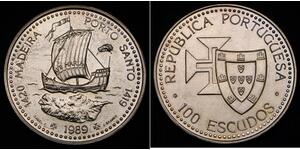
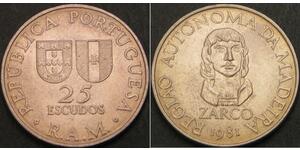
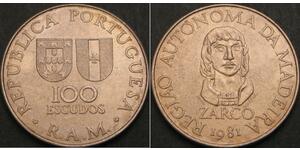
| View |

 Madeira
| Madeira | Link to Wikipedia |
Islands of Gold: Madeira's History, Coinage and Collectibles
Welcome to our gallery exploration of the Atlantic archipelago known as Madeira. While situated geographically apart from mainland Europe, this volcanic island territory has woven itself deeply into the tapestry of Portuguese maritime history. For centuries, its existence served not only as a waypoint for sailors but also as a distinct economic hub where coins flowed through customs and trade. In this collection guide, we will examine how Madeira's role within the Kingdom shaped its monetary legacy.
Historical Background
The journey to understanding Madeira begins in the early fifteenth century with Prince Henry of Portugal guiding explorers around Cape Verde on their path toward Indian and Atlantic discovery. What began as a naval base soon evolved into an agricultural powerhouse driven by sugar cane cultivation and wine production, famously shipped across oceans via its main port at Funchal. During these colonial centuries, the island functioned autonomously within the larger structure of Portuguese sovereignty.
This autonomy influenced commerce significantly; local merchants needed reliable currency to fund their trade with African colonies in Guinea and Brazil while maintaining ties to Lisbon. The sugar economy demanded liquidity that often flowed directly from foreign ships rather than domestic minting alone. However, as Portugal faced external pressures during the Age of Discovery, Madeira served as a strategic buffer zone where wealth was accumulated through re-exportation.
Culturally, Madeira established an identity rooted in maritime resilience and isolationist trade practices which protected its local economy from mainland instability for long periods. By the time it became fully integrated into Portugal's economic reforms, it had developed a society that viewed itself as a distinct outpost within the nation.
Currency and Coinage History
The evolution of money on Madeira follows the broader trajectory of Portuguese monetary systems but with specific interruptions due to its insular nature. In the early colonial period, silver coins known as Reais de Outo from Lisbon served as standard currency for local trade involving sugar exports.
In 1902, Portugal officially adopted a national minted coinage that replaced earlier regional standards of exchange based on gold and silver weights found in vaults across the Atlantic. However, due to global conflicts like World War II, which disrupted shipping lanes heavily affecting Madeira's port operations, residents often held onto older Portuguese escudos as stores of value when banknotes were scarce.
The transition from the Escudo to the Euro was particularly significant because it marked the final integration into European monetary standards while retaining local cultural references on coinage. The shift also allowed for a new era where collectors can identify coins that circulated in Madeira before the introduction of single-market currency policies, preserving these artifacts as tangible records of Portuguese Atlantic expansion.
Mints and Coin Production
To understand how money was produced here, one must look to Lisbon rather than local forges. The Casa da Moeda de Lisboa cast coins specifically designated for overseas circulation. Because Madeira was a port destination on major trade routes from Africa and South America, high volumes of gold bullion flowed through the island's customs houses before being shipped back to mainland refineries.
This logistics chain meant that while no large-scale minting occurred within Madeiran borders for centuries due to lack of precious metal deposits locally, there were specific variations in silver coins produced at Lisbon that bore marks indicating their intended destination. Local banks like the Banco da Madeira de Funchal also issued paper notes during the first half of the twentieth century.
Salt preservation was a common phenomenon affecting coinage found on these islands compared to mainland Europe, creating unique surface patinas now prized by collectors seeking examples that survived centuries without significant degradation. The island's geography ensured coins were less exposed to heavy circulation wear inside vaults where they remained protected from the elements.
Notable Coins
- The 10 Escudo Silver Piece: During mid-twentieth century periods, this silver denomination is highly sought after. It was widely circulated before being phased out in favor of smaller notes and later Euro cents found within the archipelago's ports.
- Lisbon-Minted 20 Escudos with Crown Symbols: These coins carried royal imagery reflecting the monarchy period during which Madeira served as a loyal territory. Their value often increases if they were held in island banks that preserved them from standard wear.
The importance of these examples lies not just in their rarity but in what they tell us about trade flows between Funchal and Europe. Collectors appreciate pieces with heavy luster marks indicating minimal usage before being stored away, representing a snapshot of wealth concentration on Atlantic islands during times when banking was less regulated than today.
Cultural Legacy
Madeiran coinage reflects the island's identity through symbols found in local heraldry and designs used across Portuguese currency. The laurel tree, native to these volcanic soils, appeared frequently on national coins circulated here as a botanical tribute to Madeira wine production which defined its economy for centuries.
Furthermore, maritime motifs such as ships and anchors were prominent features because the island was built upon navigation. The use of Portuguese lilies on coin faces connected residents back to mainland heritage while acknowledging their unique position within a trade network that spanned three continents during the empire's height.
For collectors
This historical region offers significant numismatic opportunities through specific hoards found in archival collections around Funchal. High-grade specimens of Portuguese circulation coins from this territory often retain unique surface qualities due to isolationist storage practices before modern banking integration took over.
The key value lies not merely in finding common pieces but understanding the economic context that brought them into existence—whether as sugar trade payment or wartime reserve currency held by local families. For those seeking historical investment, Madeira-related issues offer a chance to possess physical tokens of Atlantic exploration and colonial administration history while appreciating how maritime isolation preserved these artifacts better than mainland counterparts.