| View |
| preceded by | |
|
|||||||
 Landgraviate of Hesse-Kassel (1567 - 1806)
|
|||||||

| succeeded by | ||||
|

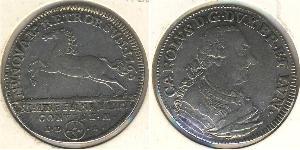
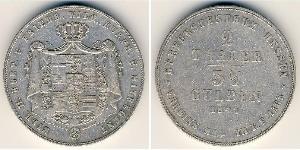
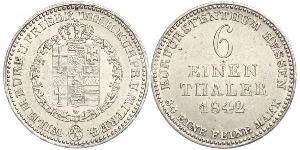
| Landgraviate of Hesse-Kassel (1567 - 1806) | Link to Wikipedia |
Hesse-Darmstadt: History, Coinage and Collectibles
Historical Background
To appreciate the currency of Hesse-Darmstadt, one must first understand the fractured landscape from which it emerged. In 1567, Landgrave Philip I "the Magnanimous" faced a dilemma: he had four sons and no single heir to inherit his entire principality without dividing it. The resolution led to the creation of Hesse-Darmstadt for George, one son among them. This division shattered unity within the House of Hesse forever. While some branches moved north towards Kassel or east towards Rotenburg, Darmstadt settled its fate in the south. Initially a mere Landgraviate within the Holy Roman Empire, its destiny was tied to complex theological and political disputes.
The coinage produced during this era reflects not just economic value, but the identity of these small sovereigns caught between massive powers like France, Spain, and the Austrian Habsburg dynasty. For nearly two centuries, Darmstadt navigated a dangerous course as a Calvinist entity in a region increasingly dominated by Lutheranism elsewhere or Catholicism in neighboring bishoprics. The Thirty Years' War further complicated this picture; while Kassel leaned towards Protestant resistance against Rome, Darmstadt often sided with the Emperor to ensure its own survival. This delicate balancing act was physically manifested on their coins: symbols of sovereignty were adopted and discarded as political alliances shifted.
The state evolved significantly when it acquired vast territories from secularized bishoprics around 1803 following Napoleon's rise. Suddenly, this small pocket of land in the Rhine valley possessed resources previously unseen for such a minor house. By joining the Napoleonic Confederation of the Rhine and elevating its ruler to Grand Duke status in 1806 after his cousin lost Kassel, Hesse-Darmstadt transformed from a petty feudal fief into one of the wealthiest states in Germany's new constitutional order.
Currency and Coinage History
The monetary history of Hesse-Dammstadt is a story of consolidation. Like many smaller German entities prior to unification, early trade was conducted using silver from local mines or currency received through taxes levied by the Emperor and his vicars. The first major evolution occurred when George established himself in Darmstadt as Landgrave around 1567. Early issues often utilized older dies inherited from previous territories like Katzenelnbogen. These coins were essential for internal commerce, paying soldiers during local skirmishes, or settling debts between merchants.
A pivotal moment came with the transition to the Grand Duchy in 1806. Before this elevation, currency was relatively uniform with its smaller neighbors; gold and silver pieces bore simple inscriptions indicating weight rather than high artistic merit. After Napoleon's influence dissolved the Holy Roman Empire, Darmstadt needed to project power on par with larger states like Prussia or Bavaria. Consequently, a new monetary system was established that included standardized denominations—thalers for large payments, kreuzer and pfennig for small change—to facilitate trade in an era where commerce became increasingly regulated by paper banknotes yet still reliant on physical coinage as reserves.
The Napoleonic period brought radical changes. The mint began issuing coins bearing the title "Grand Duke" rather than "Landgrave." This was not merely a cosmetic update; it signaled that the region had achieved parity with European powers, though they retained their own autonomy under French tutelage until Napoleon's defeat later restored traditional titles and imperial relations.
Mints and Coin Production
The heart of coin production lay in Giessen. In 1607, Louis V founded the University of Giessen with a distinctly Lutheran focus to oppose his cousin at Marburg, who favored Calvinism in Kassel. It was also here that mintage flourished; as an intellectual and academic hub, it naturally attracted skilled artisans capable of creating intricate designs for currency.
The mint in Darmstadt itself served the residence city but relied on these specialized workshops elsewhere to produce high-quality silver for broader trade. Throughout history, these small states utilized various technologies adapted from their larger neighbors—sometimes utilizing copper plates for lower denominations or refining imported bullion into fine gold and thalers.
The artistic characteristics of Darmstadt's coinage shifted as the state grew more confident. Early designs were often austere and strictly functional, but by 1806, coins featured elaborate crowns, detailed portraits reflecting fashion trends in France (often under a specific French influence), and complex inscriptions detailing territorial acquisitions.
Notable Coins
- The early "Landgrave" issues from the era of George or his successors are significant to collectors for establishing continuity. These coins often featured the cross pattée or other heraldic devices common in Germany but stamped with specific local marks indicating they were not minted by a foreign emperor.
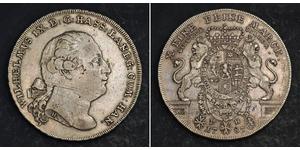
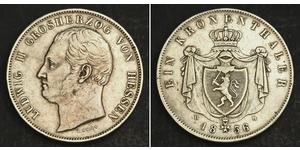
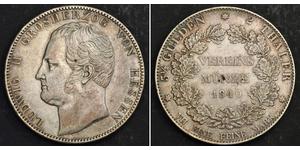
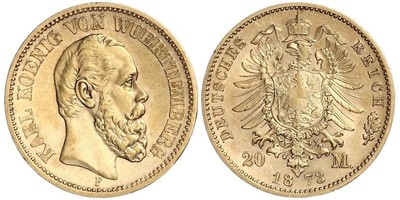
- Grand Ducal Thalers (post-1806): With new status, Gold pieces became available and silver thalers displayed elaborate portraits of Louis X and subsequent rulers. The portrait art on these coins shows the influence of French artistic styles prevalent in Paris at that time. They are highly sought after because they represent the "Golden Age" of Hesse-Darmstadt before it merged into German unification.
- The Half-Pence (18th Century): These copper and brass pieces were essential for local trade, though rare today compared to silver issues. Their value lies in their historical context—they allowed peasants or merchants within the complex exclaves of Darmstadt, Giessen, and Vöhl to conduct daily commerce.
Each coin tells a story: an early silver piece might date back to when Hesse-Darmstadt was still merely defending itself against Kassel; while Grand Ducal pieces from 1806 onward speak of wealth generated by the administration's new control over vast former Catholic territories. The transition in iconography—from religious symbols to classical laurels—is visible on every issue.
Cultural Legacy
The coinage of Hesse-Darmstadt serves as a cultural artifact that preserves the memory of this short-lived, yet influential statehood. Unlike larger entities like Prussia or Austria, where coins often bore generic imperial symbols, Darmstadt's currency was distinctively marked by its location in Southern Germany and along the Rhine. The artistry on these pieces reflects how small German states maintained national identity through culture rather than land size.
The religious divide of that era left a mark: Giessen became famous for coins with Lutheran motifs, distinguishing them from their neighbors who might bear Catholic symbols or Imperial eagles. Even when the state expanded, it kept its own "Hesse" branding distinct from neighboring states to maintain independence within an increasingly complex political map.
The transition in 1806 and again after Napoleon's defeat (which restored older titles) is clearly visible in numismatic records: a coin might show one title minted for just five years before another replaces it entirely. Collectors prize these transitional issues as tangible proof of the chaotic yet fascinating history of German unification, where empires were dismantled only to be rebuilt.
For collectors
The Landgraviate and Grand Duchy remain a favorite subject for numismatists focused on European silver. These states were prolific mints because they needed money to pay armies that fought alongside foreign powers, ensuring high circulation numbers which often make common denominations affordable entry points into the field.
Rarity is less about low production and more about survival; as small economies integrated into Germany's larger markets after 1866, local coins faded from use. Consequently, well-preserved examples of Grand Ducal pieces or early Landgrave silver are valuable for their condition rather than scarcity alone.
The historical significance extends beyond the metal itself: these coins were once spent by soldiers during wars that reshaped Europe and paid taxes in a territory carved up among many competing powers. For enthusiasts, owning an issue from Hesse-Darmstadt allows them to hold fragments of history written in silver—a tiny piece of evidence showing how a younger branch of one noble family navigated the treacherous waters between empires to build their own sovereignty.