| preceded by | ||||
|
||||

|
|||||||
 Grand Duchy of Hesse (1806 - 1918)
|
|||||||
| succeeded by |

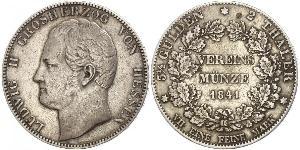
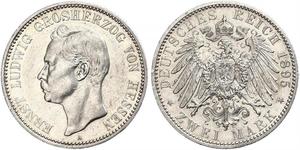
| Grand Duchy of Hesse (1806 - 1918) | Link to Wikipedia |
The Grand Duchy of Hesse: History, Coinage and Collectibles
Historical Background
Welcome to the collection of history that defines one of Western Europe’s most fascinating micro-states before 1900. To understand its coinage is first to map a political puzzle unique in German history: The Grand Duchy of Hesse did not possess contiguous territory, nor was it united geographically by natural borders alone.
The state emerged from the Napoleonic era as an independent entity in 1806. It began life within what Napoleon called the Confederation of the Rhine before joining the restored German Confederation and later the German Empire in 1871. For most collectors, this period (the Grand Duchy) is distinguished by its existence until the end of World War I when it was dissolved.
The political geography of Hesse-Darmstadt created a unique economic reality that influenced trade routes significantly before railways were established. The grand duchy’s economy relied heavily on two distinct regions: Upper Hesse, which struggled with poor agricultural yields and high poverty rates leading to mass emigration in the 19th century; and the fertile Starkenburg and Rhenish Hesse plains located along the great navigable rivers of the Rhine and Main.
This economic duality is crucial for understanding numismatic value. The wealthy, industrialized regions on the banks of the waterways supported a sophisticated commercial economy capable of demanding fine silver coinage from state mints in Darmstadt and Giessen. Meanwhile, Upper Hesse was largely agrarian until emigration began to drain its population.
Historically, this region remained distinct due to political maneuvering between France, Prussia, Austria, and Bavaria for over a century. When it finally joined the German Empire in 1871, local autonomy was restricted, but the rich cultural heritage persisted through art, education (the University of Giessen being central), and religion until its end.
Currency and Coinage History
The evolution of money within this territory mirrors its turbulent political journey. For centuries prior to 1806, coins were minted by various minor nobility families holding feudal rights over these lands. The shift to the Grand Duchy brought a consolidation effort under Louis I.
In the early decades after promotion to grand duchy status in 1806, coinage was often fragmented as territories had been transferred from other states like Westphalia or Cologne without immediate standardization of currency value across all provinces. However, by 1825 (or shortly thereafter), a reform was initiated which began moving toward a more unified financial system.
The mid-19th century presented specific challenges due to the political unrest surrounding Germany as a whole. The revolutions of 1848 brought demands for social liberalization and, eventually, an attempt at unification through currency standardisation in Europe known as the Thaler reform later on which influenced German states.
The grand duchy maintained its own mint standards during this transitional period until entering the German Empire. It was not simply a member of Prussia; while it joined the economic sphere of the Mark, for many years the region retained specific characteristics in coinage design and alloy composition that collectors prize today as evidence of pre-nationalist state identity.
Mints and Coin Production
The minting process was heavily centralized around two primary centers: Darmstadt (the capital) and Giessen. Unlike some large states with dozens of small mints, Hesse’s production focused on these hubs to ensure high-quality control over silver content.
- Darmstadt: As the political center, this mint handled state issues for gold florins used in international trade and royal payments. Artistic elements here were more formal and classical as befitting a capital city of European significance.
- Gießen: Located within Upper Hesse despite its economic struggles at times, the University town hosted minting operations that often bore specific artistic touches influenced by academic circles and liberal reform movements. This location allowed coinage to reflect both high artistry and political changes during times of revolution.
The physical geography dictated production logistics too; while forested Upper Hesse provided raw materials like coal, the transport was vital for moving finished bullion out from river ports in Rhenish Hesse where industry had developed significantly. The minting traditions maintained continuity with older silver standards until forced changes by the German Empire required adaptation to new imperial currency laws.
Notable Coins
Collectors seeking pieces that represent this era often focus on specific denominations and reigns of its three most famous rulers: Louis I, Ludwig II, and Friedrich I. While catalog details can be technical for the general collector, it is important to understand their historical context.
The Silver Florins
During the early 19th century before joining Prussia fully in terms of politics (though trade was shared), silver florins were issued that bore portraits of Louis I and his successors. These are significant because they carry imagery derived from ancient symbols adopted during their promotion to Grand Duke.
The Copper Half-Pfennings
Daily commerce required smaller denominations in copper alloys known as Pfennigs. While often overlooked today, the half-pfennig of this era reflects a society still transitioning from feudal tolls and river-based taxes to an industrial economy.
The Gold Thalers/Florins
Minted later into the 19th century before entering full imperial alignment, gold issues show a shift in artistic style where portraits became more realistic. These coins were primarily used for international settlement rather than domestic retail due to their high value.
Cultural Legacy
The coinage serves as an enduring artifact of the region’s identity through its heraldry and design elements. For nearly two centuries, Hessian iconography featured eagles (often distinct from Prussian or Austrian versions) alongside religious crosses reflecting the state's Protestant heritage.
Cultural reforms played a major role in how these symbols evolved on metal plates; following the 1840s when serfdom was abolished and social liberalization increased, coin designs occasionally featured motifs symbolizing freedom or reform such as liberty caps or specific wreath styles that differentiated it from its conservative neighbors like Baden.
In a museum context, viewing these coins is akin to looking at snapshots of the industrial revolution spreading along the Rhine Main. The wealth generated by vineyards and fruit growing on banks (Bergstraße area) was literally stamped onto silver denominations exported across Europe during this specific window of history.
For collectors
The Grand Duchy remains relevant to modern numismatists because it represents a bridge between the Holy Roman Empire era fragmentation and the unified German Empire. The coins from Hesse are not simply local currency; they were part of a broader European network before WWI where their designs often influenced other states.
Summary
Totally, this history emphasizes why it matters: These pieces offer rare glimpses into the final years of monarchical rule in Germany. The scarcity found today is often driven by early date releases or later dates from 1870s where mints were closing due to imperial reforms. Understanding their context transforms a simple object into a historical document, connecting you directly with an era that was pivotal for German industrialization and political unification.
In conclusion, collecting these coins allows enthusiasts to physically hold history of this unique region which survived centuries of geopolitical change without being fully conquered until the great wars ended it. It remains one of those few remaining regions in Europe where you can trace a lineage from 18th century feudal lands all the way to early republican era through its preserved numismatic records.