| View |
 Kingdom of Scotland (843-1707)

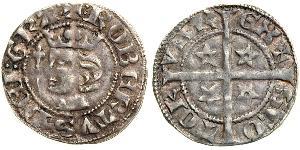
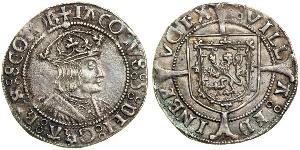
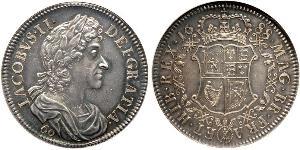
| Kingdom of Scotland (843-1707) | Link to Wikipedia |
Kingdom of Scotland: History, Coinage and Collectibles
Historical Background
Welcome to the gallery, if you will allow me a moment to paint your mind’s eye what this place once was before it became simply 'Scotland' on a modern map. Picture North Britain roughly in the year 843. The land is not yet one unified entity; it is a mosaic of distinct entities: the Picts dwelling along the coast, and their cousins from Dál Riata to the west living further inland. These people were different—different laws, different customs, perhaps even speaking different tongues that predate modern Gaelic.
The story here begins not with stone castles or grand palaces, but with a struggle for survival against Viking raiders who swept in from Ireland and Denmark to disrupt the monastic life of Iona. This was a violent era where kingship itself was fragile; one day you had 'King Uuen' and next he is dead by the sword. From this chaos rose Kenneth mac Alpin, uniting these disparate groups into what we now recognize as Alba or Scotland.
This political unification had profound consequences for trade. A fragmented kingdom meant barter economies—land was wealth—and no need for a national coinage that could move across borders easily. But as the realm expanded south to absorb Strathclyde, and later moved inland through Lothian, it touched England's sphere of influence. The fluidity of these northern lands required more than just sword power; it needed law, order, and eventually, money.
The text tells us that under David I, the 'Davidian Revolution' swept across this land. This was a turning point where feudalism replaced older tribal tenures. Wealth became centralized around lords who began to pay in coin rather than goods alone. You can feel the tension of history here: Scotland wanted to maintain its independence against England while absorbing lands that needed their own currency systems to be managed. The monarchy evolved from an itinerant institution—kings traveling with them tents and courts—to a settled crown underpinning a government structure that included Sheriffdoms.
Currency and Coinage History
If we look at the evolution of money here, it is a story written in metal. Before David I, Scotland had no native coinage known to history; they used English or Scandinavian currency depending on where you stood politically. It was with King David that this changed decisively.
When he established his reign around 1084 onwards (though the text suggests earlier dates for some claims), he introduced silver pennies modeled after contemporary English coinage but stamped as Scottish authority. This allowed trade to flourish without fear of foreign debasement or rejection in markets along the Forth.
The story continues through centuries where Scotland was sovereign, then entered a personal union with England in 1603 under James VI, and finally dissolved into Great Britain in 1707. The transition from an independent currency to one shared with the English realm required careful negotiation of 'Pound Scots.' Even after being abolished as standard legal tender by the Acts of Union, this history did not end.
Here is where it becomes a fascinating footnote for collectors: unlike many regions that lost their money completely in union, Scotland retained unique banknotes. The Bank of Scotland began issuing these notes from 1704—a full century before standardization forced them to align with Sterling entirely. While the sovereign power moved to London, this legal anomaly allowed local banks and the Scottish government distinct monetary identity.
Mints and Coin Production
In any nation's history, where does one mint coin? Early in the kingdom’s life, production was often itinerant; there were no fixed mints for centuries after David I. The Crown traveled with its power from place to place, meaning coins bore marks of wherever they happened to be struck.
The shift came as Edinburgh rose from a settlement into a capital city during the second half of the 15th century. As we discussed earlier in our Historical Background section, this was not just political but functional; with Parliament emerging and oversight of taxation coming directly under their control (though never entirely centralizing), financial governance had to stabilize.
The production technology itself tells a story of cultural exchange. Early coins reflected the influence of continental Europe, especially France where James IV traveled often. The minting traditions evolved from rough feudal standards into refined metalwork that mirrored western European practices while maintaining Scottish distinctiveness.
Notable Coins
For the discerning collector, there are two broad categories in Scotland's history: the medieval silver coins and the unique banknotes. Let us focus first on what you might hold today from those early centuries.
- The David I Stags:
You will likely encounter these frequently at auctions or in private cabinets of artistry. These coins feature a stag, the traditional symbol of kingship and hunting prowess which was deeply ingrained in early Scottish culture. The coinage is important to collectors because it represents the moment where Scotland decided not just 'look like' England politically by copying their designs but asserting its own cultural identity through animal iconography.
- The Sterling Standard Coin:
This relates to a reform that took place after the union of crowns in 1603. As Scotland aligned with English economics, their coins began to look nearly identical—except for the legend on them which often declared 'King James' or similar local claims. The historical context here is crucial: these represent the moment an independent kingdom accepted a larger economic framework.
- The Scottish Banknotes:
This category belongs to the late period but remains vital for collectors who seek 'unique' items. While English currency was stamped by mints, Scotland utilized private banks that printed their own paper money. In 1704 and following centuries, this gave a vibrant color palette of designs—often utilizing complex watermarks and engravings—that is rare to find outside the United Kingdom.
Cultural Legacy
To understand what you are holding, one must look beyond metal. The coins reflect a society defined by its geography: Highlands with short growing seasons versus Lowlands that were more fertile trade hubs. The currency served as glue connecting these regions during times when roads were rough and travel difficult.
The cultural imprint is visible in the iconography we see on old silver; they often show religious symbols, particularly after Scotland underwent a Protestant Reformation where images of Catholic saints gave way to simpler heraldic or symbolic designs. Later coins reflect the rise of Calvinism: stags for kingship turned toward civic and national pride rather than royal vanity.
The 'legacy' is also one of independence within unity. The fact that Scotland kept its own notes despite political annexation speaks volumes about local identity. It was a legal institution, born out of the same system where Parliament oversaw taxation but remained distinct from English politics in some ways until 1707.
For Collectors
If you are standing in an auction house today looking at these artifacts, consider that each coin or note is a physical relic of sovereignty and law. The 'Kingdom' did not simply vanish into history; its economic DNA was preserved through the transition to Great Britain.
We encourage collectors to focus on historical significance rather than purely market value. For example, finding a silver penny from David I offers a tangible connection to when feudalism replaced tribal barter in this land. It represents an era of legal reform where sheriffdoms were introduced and power was consolidated away from great lords like the mormaers.
The story is complete not with 1707, but continues today because unique banknotes still circulate or are preserved as artifacts. The collection you curate becomes part of a continuing narrative: that even in unity, distinct cultural and legal identities can survive through their own currency history. Scotland offers a quiet counterpoint to the grand empires across Europe; its coinage is not about conquest on a map, but preservation of culture during difficult times.