| View |

|
|||||||
 First Hellenic Republic (1822- 1832)
|
|||||||

| succeeded by | ||||
|

| First Hellenic Republic (1822- 1832) | Link to Wikipedia |
The First Hellenic Republic: History, Coinage and Collectibles
Historical Background
The narrative of modern Greek statehood begins amidst one of the most tumultuous upheavals in European history. The birth of this provisional republic was not merely a change of government but an act of resurrection for a civilization seeking independence from nearly four centuries of Ottoman rule. During the revolutionary years, Greece faced the monumental task of establishing governance within crumbling infrastructure and war-torn landscapes.
The pivotal year 1822 saw the convening of the First National Assembly at Epidaurus. It was there that delegates drafted a constitution to define liberty for their nation in spirit before they could fully secure it by sword, marking the birth of this period as the Hellenic Republic under a Provisional Administration. For several years following 1827 and until full independence was recognized internationally after the Battle of Navarino and subsequent treaties in London (1830-1832), Greece existed between suzerainty and freedom.
This era defined the national character through sacrifice against overwhelming odds. The state transitioned from regional governing councils to a centralized administration led by Count Ioannis Kapodistrias, who became Governor of Greece in 1827. While military campaigns secured territory, the internal reconstruction required economic stability and legal frameworks that extended beyond mere survival; they sought legitimacy before international powers.
Currency and Coinage History
In this crucible of revolution, monetary systems evolved rapidly to meet urgent needs for tax collection and trade. The scarcity of resources meant the early administration often relied on whatever local coinage survived from Ottoman circulation or provisional tokens stamped by regional councils before centralization could be achieved.
The establishment of a unified currency was inextricably linked with political sovereignty. Initially, disparate regions issued their own money to facilitate taxes and payments for volunteers fighting against the Turco-Egyptian forces. It required time until 1830 when international recognition allowed for standardization. The transition from Ottoman copper coins like piasters or akceshiz was not just economic but symbolic; it marked a break from imperial subjugation.
Kapodistrias' administration attempted to create a coherent monetary system that would facilitate commerce across the newly liberated territories, including Samos in 1829. His efforts were hindered by limited resources and political instability following his assassination in 1831, yet they laid foundations for modern Greek financial practices where public finance served statebuilding purposes rather than mere survival.
Mints and Coin Production
The physical production of money during the First Republic was often rudimentary by comparison to later industrial-era numismatics. Workshops were frequently makeshift, operating in locations such as Epidaurus or Nafplion where security permitted it. The technology remained traditional; coins were largely hand-struck rather than machine-pressed.
The absence of heavy machinery reflected the priority placed on military necessities over minting operations until peace arrived under European supervision after 1830. Mint directors had to secure silver bullion in a region where economic infrastructure was being built from scratch, often dealing with inflation and supply shortages that rendered local currency scarce outside major cities.
Production traditions were heavily influenced by the need for speed against war. This meant simple designs struck quickly on copper or bronze tokens rather than elaborate gold pieces seen later during the monarchy era. The artistic choices reflected a pragmatic approach to preserving national dignity through recognizable symbols like olive branches and shields that communicated liberty without expensive resources.
Notable Coins
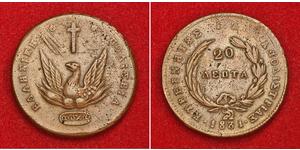
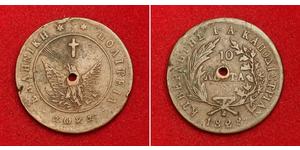
The first significant numismatic artifacts from this period are not found in grand museums but rather exist as rare, small-scale pieces representing the struggle for survival. Among collectors of Hellenic statehood tokens, provisional copper issues struck at Epidaurus hold immense historical weight.
Kapodistrias Period Tokens:
- Historical Context: These circulated under his administration immediately after he was selected as Governor in 1827. They served dual purposes for local payments and trade within the autonomous state.
- Design Features: Often simple obverse portraits or symbols representing Greek freedom, sometimes featuring the motto "For Freedom" stamped with basic lettering typical of revolutionary handcrafts rather than professional engraving houses.
- Collector Importance: Their rarity lies in their scarcity relative to other regions. Each piece represents a period where local governance struggled against overwhelming odds before international powers like France and Britain could intervene financially or militarily.
Late Republican silver issues, minted following the London Conference of 1832 which declared Greece an independent Kingdom but preserving earlier republican principles in certain contexts, provide a bridge for collectors to understand this transition. These were often limited runs meant only for specific trade needs rather than general circulation.
Cultural Legacy
The coins minted during the First Hellenic Republic encapsulate the democratic ideals of an emerging nation before it was overshadowed by royalist designs introduced under King Otto later in 1832. Unlike later monarchical coinage that focused on divine right or monarch portraits, Republican issues emphasized civic virtue and collective freedom.
Symbols like the olive wreath—representing peace after revolution—and democratic motifs appear frequently where found rather than crowns. These visual elements communicate a cultural memory of struggle against imperial domination while asserting rights claimed by classical heritage from antiquity to modern timeside, creating continuity across millennia for their citizens and future generations.
The economic narrative told through metal artifacts reflects the resilience required to rebuild an entire society after centuries without independence. Every coin surviving today tells a story not just of value transfer but of national identity formation amidst chaos that eventually stabilized into one of Europe’s most enduring republics before modern statehood consolidation in 1832.
For collectors
Focusing on this period requires looking beyond standard catalog data to appreciate the historical weight behind these small objects. The First Hellenic Republic represents a unique chapter where democracy was tested under fire before monarchy arrived, making its currency artifacts exceptionally significant for numismatists interested in political history.
Rare examples remain highly sought after because they represent the birth of modern statehood rather than just imperial succession lines as often seen later. Whether examining provisional tokens from Epidaurus or transitional silver issues, collectors acquire pieces that narrate freedom itself. The First Hellenic Republic coins offer a tangible link to revolutionary ideals and help enthusiasts understand how financial sovereignty accompanies political independence in this region.