| View |
| preceded by | |
 Eritrea (1993 - )
|
| succeeded by |
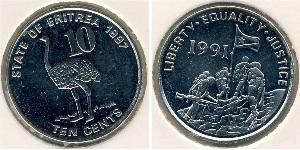
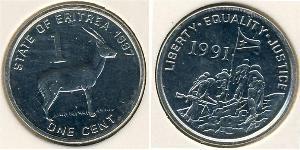
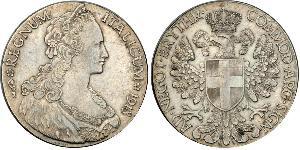
| Eritrea (1993 - ) | Link to Wikipedia |
Eritrea: History, Coinage and Collectibles
Welcome to an exploration of one of history's most fascinating corners of our world. As a museum curator presenting this collection on Eritrean heritage, I invite you to view the Red Sea coast not just as a geographic entity, but as a nexus where empires rose and fell across centuries.
In this exhibit hall, we stand before artifacts that whisper tales of ancient trade routes linking Rome, Axum (Aksum), and India. Eritrea's numismatic legacy is defined by its position at the heart of global commerce in antiquity, serving as a vital bridge between East Africa and the wider world.
Historical Background
The narrative begins deep in prehistory. The region that constitutes modern-day Eritrea sits atop an archaeological goldmine regarding human origins; sites like Danakil Depression suggest it was a critical corridor for early migration out of Africa around 130,000 years ago.
The earliest known kingdoms here are the descendants of those who harvested sea resources and utilized tools found at Barka Valley dating back to roughly 8,000 BC. This was an era where coinage had not yet arrived; value was measured in gold dust and wares traded along the Red Sea littoral.
The landscape shifted dramatically with the rise of D'mt (c. tenth century BC). Evidence of massive temple complexes at Yeha points to a centralized state capable of organizing complex production systems, including ironwork and agriculture. Following this was the zenith: The Kingdom of Aksum.
Aksum stands as one of history's most significant powerhouses in antiquity. At its peak during the first few centuries AD, it controlled territory spanning both present-day Eritrea and Ethiopia. Under rulers like Ezana or his successors, this kingdom was considered a "great power" by Persian contemporaries. The location on the Red Sea made Aksum the gateway for merchants bringing gold from the south to connect with Arab traders heading west toward Egypt.
Currency and Coinage History
If you look closely at this region's ancient past, coins do not appear instantly; they are usually the result of shifting imperial power. Before Aksumite silver struck its own currency, local economies were influenced by Ptolemaic Greeks who utilized Zeila as a major port during Roman times.
The Aksumite Era:
Distinguishing features of early Eritrean money are the bold use of silver and gold. While most East African regions used barter, wealthy states like Axum minted their own coinage to settle international debts.
The transition from local weights of precious metal into hammered coins signaled a move toward standardizing trade along the Indian Ocean routes, allowing Eritrean merchants to conduct business with Roman fleets and Sassanian ships alike.
A Shift in Control:
- The arrival of Italians starting in 1890 fundamentally altered this monetary landscape. Italian administration sought to stabilize the coast and integrate it into a broader colonial economy.
- The introduction of Piastres standardized commerce, though they often bore stamps or portraits celebrating local landscapes rather than foreign icons initially—though later coins carried Roman-style designs.
This period also brought the British Military Administration following WWII. During this brief interval and into the independence era starting in 1952-1960s, currency issues often reflected a temporary or transitional status until local autonomy was fully realized with its own parliament established later.
Mints and Coin Production
Unlike modern nations that operate industrial-scale mints, Eritrea's ancient minting traditions were likely localized operations centered in Aksum. The artistry here tells a story of high-level craftsmanship.
- Aksum as Center:
- The city, now listed as a World Heritage Site for its architecture and history, would have housed the artisans striking currency in gold and silver.
- These workers utilized high-relief sculpting techniques typical of ancient Near Eastern styles, producing coins that were heavy, solid pieces of metal rather than thin shavings seen elsewhere. These designs often bore religious imagery such as crosses or lions representing Solomonid dynastic rule.
Later production during the Italian occupation utilized industrial minting technology and shifted to silver denominations (Piastre) designed for modern banking systems but still featuring artistic flourishes honoring local landscapes like coastal towns.
- Ethiopian Influence:
- Historically, the highlands and coast were sometimes under Ethiopian governance (Bahr Negus era) before colonial division. This means that Aksumite coins often overlap chronologically with designs used in Ethiopia to a degree not seen elsewhere.
However, this distinction is crucial: Eritreans held their own parliament and sovereignty for ten years under UN auspices (1952–1962). While political borders shifted, the cultural continuity remained strong. This period often influenced later currency designs when independence was eventually claimed.
The Italian occupation ended during WWII and left a legacy of Piastres that circulated until nationalization efforts began post-1952 or 1960s, depending on political transitions. These coins serve as records of colonial administration styles but remain rare due to the tumultuous history following their creation.
Notable Coins
- The Silver Solidus (Aksumite Gold):Found in antiquity, these coins were rare but highly valued. They feature intricate portraits and inscriptions of Aksumite monarchs who styled themselves as Kings or Emperors. Collectors prize them for their high artistic finish.
- Coin Context: Issued during the peak period when the Kingdom ruled vast territories, these served to assert dominance and facilitate trade across long distances between India and Egypt.
Many are considered ancient numismatic treasures due to their age (dating to 4th-6th centuries AD) rather than simple volume production. They often feature a cross within an eight-pointed star design, reflecting local Christianization which began around the fourth century.
- The Italian Occupation Piastre:Issued in large quantities but often struck quickly due to wartime needs and administrative shifts. While less rare than ancient Aksumite silver, high-grade examples (UNC condition) are sought after for their distinct portraits of local figures or landscapes.
- Coin Context: These circulated during the colonial era but represent a specific economic identity when Eritrea was an Italian colony. They reflect industrial standardization efforts which clashed with older, traditional trade practices involving gold dust and silver weights used in rural markets.
These items were often replaced or rendered obsolete following independence referendums and the end of colonial status in 1952-60s. As a result, surviving examples are often those that never entered circulation due to war events or political annexations during the early years.
For modern collectors interested in African history from this period (c. late 1880s–WWII), these coins offer a tangible connection to Italy's colonial presence, offering detailed depictions of coastal life and administrative structures that were ephemeral otherwise.
Cultural Legacy
The coinage produced in Eritrea is more than just metal; it encapsulates the region's unique identity. The Aksumite designs bear strong Semitic influence but adapted for local contexts where Christianity played a central role alongside traditional faiths. You can see this duality: while coins bore crosses, they also referenced ancient deities and historical figures like King Ezana.
This blend of symbols—crosses with lions—is one of the few places in world history where both Christian cross design was paired with a "Solomonid Lion" representing power. The coinage serves as a microcosm for Eritrea's multi-ethnic composition.
For collectors, these coins are prized not only for their rarity but because they help reconstruct the timeline of trade dominance in East Africa before modern borders were drawn by colonists who later divided Aksumite lands into distinct colonies. Today, studying these artifacts helps us understand how a small nation played an outsized role in ancient geopolitics.
For Collectors
Eritrea remains significant for collectors today because of its historical weight as one of the great empires of antiquity. While modern political transitions and recent conflicts have kept this region out of circulation, they also preserved a numismatic heritage that is difficult to find elsewhere.
The scarcity of high-quality specimens from these earlier periods makes them desirable for those seeking "complete" collections on ancient African coinage. Furthermore, the distinct designs found in Eritrean minting—particularly during its autonomous period under UN governance (1952–60s)—provide a unique look at how sovereignty was asserted through currency reform. The legacy of these coins is also tied to Ethiopia's own history, as both nations shared similar numismatic traditions.
A Final Thought for the Curator
To hold an ancient coin bearing Aksumite imagery or Italian colonial designs in one's hands brings us back 20 centuries. It allows us to visualize trade caravans crossing these lands, merchants calculating value on scales of gold dust and silver pieces at ports like Massawa.
This exhibit concludes with a reminder that while the nation is modern today—governed by Isaias Afwerki since independence in 1993—the historical layers found within its currency tell stories that span from the Roman Empire to early industrial nations. For those who appreciate the intersection of history and art, Eritrea offers an enduring treasure trove.