| View |
| preceded by | |
|
|||||||||
| British Cyprus (1914–1960) | |||||||||

| succeeded by | ||||
|

| British Cyprus (1914–1960) | Link to Wikipedia |
British Cyprus: History, Coinage and Collectibles
Historical Background
To understand the monetary soul of British Cyprus, one must first look at the island’s unique position as a maritime bridge between Europe and Asia Minor for centuries. For over two millennia prior to 1878, Cyprus belonged to various empires, most notably Venice and later the Ottoman Empire. This long history established deep cultural ties with the East; it was not until July of that year that British troops landed at Kyrenia Bay, beginning a chapter defined by strategic necessity rather than pure administration.
The early years were marked as a protectorate under nominal Ottoman suzerainty following the Cyprus Convention. This political arrangement created a fascinating dualism in local governance; while Britain held the actual military and administrative control to protect shipping lanes against Russian expansion, it did not immediately mint its own currency. The island remained economically tethered to both London and Constantinople for decades.
The narrative shifted dramatically during World War I. In 1914, following Ottoman entry into the conflict as an enemy power, Britain formally annexed Cyprus from the Sultanate of Turkey. This period is often characterized not merely by occupation but by a redefinition of statehood itself—evolving through military administration before becoming a Crown Colony in 1925. It was during this era that British authority solidified over the landscape and its economy began to transition fully into the Sterling standard, severing centuries-old ties with Ottoman monetary systems.
The late colonial period (the interwar years) remained stable economically under British influence but faced significant social pressures from a Greek nationalist movement known as EOKA in the mid-1950s. Following independence on August 16th, Cyprus became an island republic while Britain retained specific sovereign base areas to secure their military interests in the Mediterranean region.
Currency and Coinage History
A peculiar feature of British numismatics is that for most of its colonial existence, the territory did not issue a significant quantity of coins under local mints. The currency was almost entirely comprised of Sterling denominations—crown pieces or half-crowns—that circulated freely alongside older Ottoman Drachma issues in pockets where they had persisted.
This reliance on foreign coinage lasted until 1924, when the Colonial Office authorized the issuance of silver coins to replace the aging and worn-out Ottoman currency. This was a critical moment for collectors because it marked the island's first step toward economic autonomy within the British Empire. These early issues were typically struck in Great Britain or by licensed private firms like Thomas Sutherland Ltd.
The numismatic timeline accelerated significantly during 1954, when silver and copper coins were minted specifically to satisfy local commercial needs while reducing reliance on heavy sterling imports from the metropole. This transition reflected a government intent on fostering economic self-reliance ahead of independence. The shift was symbolic; it represented Cyprus moving away from being merely an appendage of London toward defining itself as a modern, sovereign entity in its own right.
The 1960 Independence era brought further changes to the coin system but marks one boundary for "Crown Colony" collecting: post-independence issues fall under Cypriot history rather than British Cyprus. However, understanding this transition is vital because it highlights why coins from this specific period are so highly sought after—collectors look for them not just as currency, but as historical markers of the final steps taken before total sovereignty.
Mints and Coin Production
During its time under British dominion, Cyprus did not operate a mint on the island itself. The production centers were located primarily at His Majesty’s Royal Mint in London or operated by contract mists within other Commonwealth jurisdictions like India or Canada.
This "outsourcing" tradition was common throughout the Empire but took on specific nuance in Cyprus due to shipping logistics and material costs—Copper and Silver coins arrived by sea freight, which often resulted in wear before they reached local circulation. However, this did not diminish their desirability; quite the opposite—it imbued them with a sense of scarcity unique to colonial history.
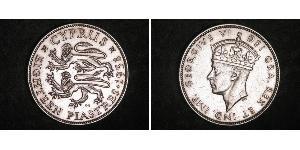
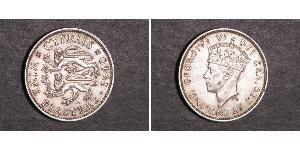
The artistic style during these periods was generally conservative but reflected broader British tastes: heavy usage of royal profiles (the King or Queen), and classical iconography featuring Greek inscriptions alongside Latin lettering. This duality—a blend of ancient Cypriot heritage written in a modern imperial tongue—was the defining aesthetic of this era.
Notable Coins
- The 1879 Half-Crown:
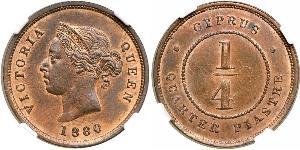
One of the earliest significant issues following British administration, these silver coins served as a bridge currency for traders and officials. While strictly "legal tender" in name only for locals (as most trade was done by barter or drachma initially), they are highly prized now for their bold depiction of Queen Victoria's profile against an intricate background featuring the date. - The 1924 Silver Crown:
Issued as part of a series to replace Ottoman currency, this coin is often seen in two distinct varieties: one showing King George V on horseback and another with more standard royal profiles. Collectors appreciate the heavy weight and substantial silver content which gave it value beyond just face worth. - The 1954 Silver Shilling:
Produced at various mints to support local commerce, these coins often featured a portrait of Queen Elizabeth II alongside inscriptions in Greek. The inclusion of the Greek language on British colonial coinage serves as an enduring testament to the complex identity that existed during this transition period. - The Sovereign Base Area Proof Sets:
While not strictly circulating "Crown Colony" coins, proofs produced for military and diplomatic use after 1960 often circulated in Britain and Cyprus. These were minted with high-grade metal standards that reflect the precision of mid-century numismatics.
Cultural Legacy
The coinage of British Cyprus is more than just financial history; it is a reflection of the island’s identity crisis during its colonial years. The frequent alternation between Latin and Greek script on the coins mirrors the political reality where Cypriot Greeks were eager to unify with mainland Greece, yet their administration remained firmly in London.
The use of royal imagery represents not just imperial rule but a specific cultural adoption: Cyprus citizens accepted British symbols as official state emblems for several decades. However, over time, these images began to feel foreign until the transition period where they were gradually replaced or modified to accommodate local sentiments before independence.
Furthermore, the coins act as an economic artifact of globalization in a smaller scale. They show how Cyprus connected with India (for copper sourcing) and Canada for silver production while trading globally within British shipping lanes during this era.
For collectors
British Cyprus holds enduring importance in numismatics because it represents the closing chapter of an empire that once spanned a quarter of the globe. For modern collectors, these pieces offer a rare opportunity to hold artifacts minted between 1870 and 1960—specifically those produced under Crown Colony status—which effectively ended when Cyprus declared independence in August 1960.
The scarcity is inherent; few coins were ever intended for mass local circulation, as the government preferred using Sterling denominations that everyone already recognized. Consequently, survival rates are often high because they were rarely spent on groceries or paid with daily wage earners but rather held by banks and used in major transactions.
These items remain valuable to collectors not just for their rarity, but for what they signify: a time when one small island stood alone between ancient Greek history and modern European identity. They are the tangible remains of an empire that ended abruptly in Cyprus while continuing elsewhere—making them unique markers of historical change.
The legacy is clear; even after British departure, these coins remained part of local economic life until they were replaced by Cypriot currency reforms. Owning a coin from this period connects one to the history of exploration and trade that defined Europe’s relationship with its overseas neighbors for generations.