| View |

 Azores
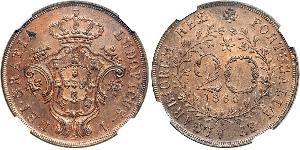
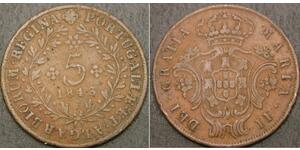
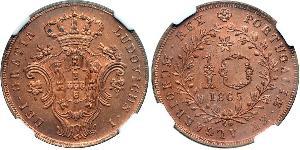
| Azores | Link to Wikipedia |
The Azores: History, Coinage and Collectibles
Historical Background
To understand the monetary landscape of the archipelago known today as the Azores, one must first look beyond simple geography. These volcanic islands in the North Atlantic Ocean were once a pivotal nexus for maritime commerce during the Age of Discovery. Discovered by Portuguese explorers and subsequently becoming an integral part of the Lusitanian empire, the region served as a critical restocking point along trade routes connecting Europe with Brazil, Africa, and Asia.
The economy that developed around these shores was deeply rooted in agriculture, specifically potato cultivation and salt fishing. However, its true wealth lay in its position on the global maritime web of commerce. As ships bound for New World territories stopped to replenish supplies or exchange trade goods at the whaling stations established during this era, a steady flow of coinage from Lisbon became essential to sustain local markets.
The political structure evolved slowly but significantly over centuries. Beginning as autonomous captaincies under royal charter and later becoming an independent administrative district after the 1755 Earthquake in Portugal disrupted imperial trade routes further down South America, the Azores eventually attained a higher degree of self-governance following democratic changes at mid-century.
Currency and Coinage History
The numismatic history of this region is defined less by local minting than it is by its relationship with Portugal. For four centuries, the archipelago utilized currency issued from the national mints in Lisbon or other colonial hubs like Goa or Rio de Janeiro during periods when the crown struggled to supply sufficient metal coinage.
The standard currency throughout this period was the Portuguese Real and later the Escudo. In local commerce on the islands, merchants often relied on silver coins that arrived via Atlantic trade winds before a unified monetary system could be fully enforced by state decree in these remote territories. When Portugal adopted decimalization with the creation of the new Euro currency after 1986, the archipelago joined this economic union.
A major shift occurred when modern collector societies and cultural organizations sought to preserve regional identity through commemorative coinage production authorized by national governments or mint contracts under European Union standards. Unlike other island states with ancient independent monarchies, the Azores never issued sovereign currency before joining Portugal's monetary sphere permanently; consequently, collectors focus on specific series designed to capture local heritage within these established legal frameworks.
Mints and Coin Production
The primary production center for any coinage bearing the name of this region was invariably located in Lisbon or modern contract facilities authorized by the Portuguese Mint. These were not mints built locally, but rather national operations that produced silver bullion used to mint commemorative pieces featuring Azorean landscapes and natural landmarks.
Coin production techniques followed standard industrial standards during early 20th-century issuance of Escudo denominations, transitioning eventually into the high-precision stamping required for Euro legal tender. In modern times, artistic design became the primary variable used to distinguish these issues from national series. The goal was not merely to reproduce Portuguese designs but to integrate indigenous motifs such as whales, volcanic craters like Mount Pico, and traditional fishing vessels known locally.
The production of proof sets for collectors began in earnest during periods when Portugal sought to showcase its autonomous territories through cultural exchange programs at European level fairs. This marked a transition from purely functional currency used by fishermen to high-quality pieces intended as souvenirs or investment items preserved within family vaults and auction archives worldwide.
Notable Coins
Among the most significant historical pieces circulated in this region are the silver 10 Escudos issued during the mid-20th century. These coins often featured protective designs symbolizing the local faith or maritime protection deities such as Our Lady of Fair Winds. The imagery reflects the deep cultural reliance on ocean safety that has defined island life for generations.
The most sought-after modern collectibles are specific Euro commemorative issues authorized after 1998 which feature regional landscapes rather than standard national landmarks like Lisbon or Coimbra castles. For instance, designs highlighting local bird species or endemic flora were released in limited quantities to commemorate the year of Portuguese presidency at European Union level.
- Silver Escudo Series from early 1970s featuring naval vessels used historically for protection and trade routes
- Euro commemorative sets highlighting regional tourism icons like volcanic craters
- Limited Proof editions authorized to promote cultural heritage during international exhibitions
The importance of these coins lies in their ability to document the transition from an agricultural society reliant on foreign trade goods into a modern region integrated within global financial markets.
Cultural Legacy
The coinage associated with this area tells a story about isolation and connection. Because they were surrounded by vast ocean, every arrival of cargo ships represented both opportunity for commerce and risk from storms. The symbols stamped onto coins reflect the resilience required to survive such conditions.
Religious iconography frequently appears on historical pieces used locally or circulated in proof collections during specific jubilee years. These designs show how Catholic traditions merged with local folklore regarding ocean safety, sea monsters known as Sirenes of old tales now replaced by whales found around the islands.
For collectors
Azores coinage remains important to hobbyists because it offers a unique blend of Portuguese national history and distinct regional identity. Collectors are drawn not only to rarity but also to condition preservation since many were originally circulated as trade currency before being preserved as artifacts.
In Summary
- The Archipelago's coinage connects modern Euro collection with 500-year history of Atlantic exploration. It represents the end points of great global shipping routes that moved wealth and knowledge through Portuguese ports for centuries before becoming integrated into European standards.