| View |
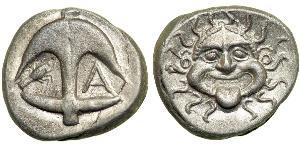
| Apollonia (Illyria) | Link to Wikipedia |
Apollonia: The Ancient State and Its Monetary Legacy
Historical Background
Welcome to a journey through the ancient past of Apollonia, an independent Greek colony located in what is now southern Albania. In its prime, this city-state served as one of the most significant trade hubs connecting the Aegean Sea with the Adriatic coast and the Roman heartland. Founded by Corinthian colonists from mainland Greece around 600 BC under the leadership of Gylax, Apollonia began not merely as a village but as an autonomous polis (city-state) situated in southern Illyria.
The city was strategically positioned at the mouth of the Aoös river, near the Adriatic coast. This location made it a vital gateway to the interior via early trade routes that would later become part of the famous Roman Via Egnatia. Unlike typical colonial outposts established through force or displacement, Apollonia’s founding legend highlights an invitation from the local Illyrian rulers. The initial settlers were few—perhaps only 200 Corinthians—and they formed a joint settlement with indigenous groups like the Taulantii.
As Apollonia grew into a sovereign state, it developed its own distinct political identity while maintaining ties to its motherland, Corinth. Eventually, the colony outgrew its colonial dependencies and became an oligarchic city ruled by a Greek elite over a local population that was mostly Illyrian in origin.
In 2nd-century BC Apollonia shifted its focus toward diplomatic integration with the Roman Republic, forming an alliance that cemented its status within the growing Mediterranean powers. The arrival of Emperor Augustus to study philosophy as a youth further highlights the city's prestige and cultural vibrancy during the Imperial period before it was eventually eclipsed by rising silt in its harbor.
Currency and Coinage History
For collectors interested in ancient numismatics, Apollonia represents an intersection of Greek influence and local Illyrian tradition. In antiquity, trade economies such as this relied heavily on coin circulation to facilitate the exchange between agricultural hinterlands and coastal markets.
During its independent polis phase, the economic system was a mix of Corinthian-style silver currency used for luxury goods and gold/silver pieces circulating through the Adriatic maritime network. As Apollonia matured into a major city in Illyria during the 2nd century BC, it operated under Roman auspices while maintaining local autonomy.
In this period, the region saw significant monetary activity linked to the broader Roman Empire's fiscal demands and military movements along these northern borders. While specific minting at Apollonia is less documented than in major metropolises, the flow of Imperial coinage into Illyrian territory was robust during its alliance with Rome.
Mints and Coin Production
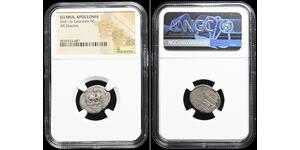
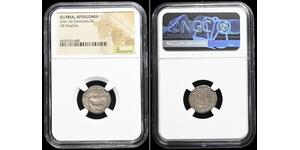
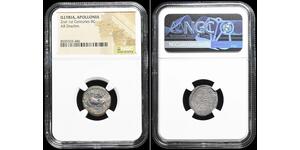
Apollonia's history as a trade colony implies an established demand for high-quality currency to manage commerce. The city operated within economic circles heavily influenced by Corinth, known for producing standardized silver tetradrachms that carried weight across the Adriatic Sea.
The artistic characteristics of this coinage were distinct but often adapted to local tastes or imperial regulations as political status changed from autonomous colony to Roman client state. During the period where Apollonia flourished under Illyrian and later Roman oversight, coins served not only as legal tender but also as a medium for propaganda and cultural expression.
The technology of coin production in this region typically involved standard striking methods common among Greek city-states: die engraving followed by high-pressure hammering on dies. As the settlement was organized under oligarchy with distinct elite rulers, these political changes might have resulted in variations visible to expert numismatists studying regional issues.
Notable Coins
The most historically significant coinage associated with this ancient state involves the silver and gold pieces found during excavations at Apollonia's ruins. Collectors should be particularly attentive to coins discovered within necropolises like Pojan, as these finds often relate directly to the city's local rulers or elite classes mentioned in historical texts.
A primary category of interest is the Corinthian-style silver issued when Apollonia was a colony around 600 BC. These pieces typically feature Greek deities that reflect religious ties back to the mother-city, though they were likely minted locally after gaining independence. Another important group consists of Roman-era denarii found in hoards across Illyria.
Collectors also find interest in coins associated with the Taulantii tribe and other local entities whose trade networks intersected Apollonia’s harbor. The significance for collectors lies less often in identifying every single date, but rather understanding which pieces represent a "state" of sovereignty versus periods where it was merely an administrative district.
Cultural Legacy
Apollonia's coinage reflects the dual nature of its culture: Hellenic roots and Illyrian reality. The city’s reputation as a hub for philosophy, rhetoric, and military training meant that wealth gathered through trade supported educational institutions and elite lifestyles.
The name "Apollo" was honored in the early founding period (Apollonia vs Gylakeia), but as it became Romanized, imagery shifted to reflect Imperial authority. The decline of Apollonia's harbor due to earthquakes left many coins buried underground; this preservation has allowed numismatists to piece together a timeline spanning from Archaic Greek independence through the early centuries AD.
For collectors
The ancient state of Apollonia remains important for historians and collectors today not only because it was one of 24 cities named after Apollo, but specifically as an independent Illyrian-Greek polity. The coins associated with this site offer tangible links to the early trade routes that connected Europe in antiquity.
The city's ruins were designated an archaeological park following its discovery and study of these artifacts. For a collector examining regional history from southern Albania or Greece, Apollonia represents a unique window into how colonial powers managed frontier territories with relative liberal policy toward local populations. The coins found here often bridge the gap between mainland Greek issues and eastern Adriatic tribal coinage.
Whether seeking pieces that illustrate the transition of Corinthian influence to Roman hegemony, or those highlighting the indigenous Taulantii connection, Apollonia provides a fascinating chapter in Mediterranean history for scholars who appreciate the intersection of archaeology, politics, and currency.