| View |
| preceded by | |
|
|||||||||
 Alsace
|
|||||||||


| succeeded by |
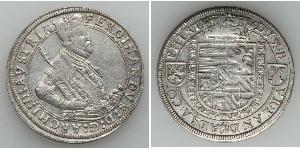
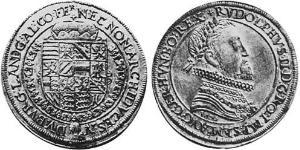
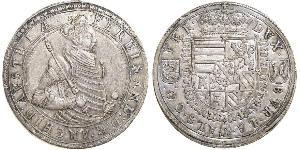
| Alsace | Link to Wikipedia |
Alsace: History, Coinage and Collectibles
Welcome to a journey through one of Europe's most captivating numismatic landscapes. Alsace stands as a testament to the shifting sands of European history. For centuries, it has occupied a unique position on the continental chessboard, serving as the vital bridge between Paris and Vienna, Rome and London, Lyon and Berlin. When viewing its coinage today, you are not merely observing metal; you are witnessing the physical manifestation of changing sovereignties, trade routes, and cultural identities.
Historical Background
To understand the coins of Alsace, one must first appreciate the region's tumultuous geography. Historically a crossroads rather than a static nation-state, this territory belonged to various powers including Burgundy, the House of Savoy, and the Kingdoms of France or Germany depending on the era. Its location along the Rhine River made it an economic powerhouse during periods of peace but also a strategic target for invasion.
The region's economy relied heavily on commerce between east and west. Grain flowed south from Swiss valleys while cloth traveled north toward German industrial hubs. This bustling trade required standardized currency that reflected its sovereign rulers at the time. Consequently, Alsace often circulated money distinct from both Parisian standards and Austrian issues due to local seignorage privileges or specific royal mandates.
The cultural fabric was richly woven with a blend of Romance languages alongside German dialects. This duality permeated public life until the mid-nineteenth century. When political boundaries were redrawn after major conflicts, the local populace did not simply swap allegiances; their daily lives continued under new administrative banners that demanded economic conformity.
The history is defined by its resilience against external pressure to assimilate or separate from these larger powers. The coinage reflects this internal tension: designs often retained local symbols like the Lilies of France while using Germanic mints in certain decades, illustrating a complex loyalty between regional identity and imperial authority.
Currency and Coinage History
The evolution of money in Alsace mirrors the broader monetary reforms across Europe. Under the early monarchies, coin production was often decentralized. A denier or livre might be minted locally to pay taxes owed to a specific duke within Strasbourg before being standardized by national decree.
A pivotal moment arrived with the French Revolution and subsequent Napoleonic era. The introduction of copper centimes and silver francs under Napoleon I brought Alsace into alignment with Parisian monetary policy, though production often remained decentralized until centralized reform in 1803 eliminated local mints for standard issues except where specific strategic needs existed.
The Franco-Prussian War marked a definitive shift. After France's defeat in 1870 and the annexation of Alsace-Lorraine, Prussia (later Germany) reorganized currency circulation to reflect its imperial rule. The German Goldmark replaced French standards overnight. This era saw coins bearing Imperial eagles striking metal in regions with heavy Francophone populations.
In modern numismatics for this region, the period between 1905 and World War II became a focal point of study due to scarcity caused by wartime destruction and subsequent melting during occupations. The coinage history is thus not just a sequence of dates but a narrative document proving who controlled whom in that specific corner of Europe.
Mints and Coin Production
The minting landscape around Strasbourg represents one of the oldest centers of European currency production. During the First French Republic, local ateliers were responsible for striking copper coins to fund provincial expenditures before consolidation by Paris took place.
When Germany established control in 1870, a different philosophy emerged regarding metal content and design quality. German Imperial silver issues from this region often featured finer details compared to earlier Republican pieces due to stricter technical regulations imposed on mints within the Rhineland borderlands.
The artistic characteristics distinguishable by collectors include specific motifs found in Strasbourg coinage. The reverse side of these early marks frequently displayed wheat or cornucopias, symbolizing agricultural wealth and trade prosperity essential for that economy. Later issues featured classical busts inspired by Roman models to assert imperial grandeur while attempting to normalize the region's integration into the German state.
During times when French control was reasserted in 1940 following World War II, minting resumed using established republican iconography but often faced interruptions due to logistical demands of war. The machinery and artistic skill passed down through generations ensured that even during periods of occupation or economic strain, the quality remained high enough to survive for decades.
Notable Coins
The silver thaler bearing the busts of Louis XIV remains perhaps the most sought-after treasure from this region's early period. Issued before full centralization, these coins often feature lilies and fleurs-de-lis on both obverse and reverse. For collectors, they represent a time when Alsace functioned with distinct privileges under Royal authority rather than as an annex.
Moving into the late nineteenth century, German silver pieces struck in this border territory offer profound historical value. The design features include portraits of Kaiser Wilhelm II alongside national symbols like oak leaves and wreaths. These coins were often issued to replace local currency systems that had struggled during wartime economic fluctuations.
The copper centimes minted under the French Third Republic (1870-1914) are significant for their historical context in establishing a unified franc economy across France including Alsace following annexation. These pieces were produced primarily to facilitate commerce and trade as borders became more defined but tensions remained high.
Coin collectors also seek out specific issues struck during the brief period of Vichy or German occupation before 1945 when standard French coins disappeared from circulation entirely in some areas due to requisitioning. Finding such pieces requires looking at mint marks that indicate they were pressed under pressure conditions, adding a layer of historical survival probability.
Cultural Legacy
The numismatic heritage of Alsace serves as more than just financial history; it is cultural identity encoded in metal. Before the industrial age standardized everything around state authority and uniform design, local artisans added regional characteristics to coinage that reflected their unique traditions alongside imperial orders.
This region's coins reveal a fascinating blend where French republican virtues met Germanic aesthetic preferences. The transition from classical portraits of kings or emperors to more realistic depictions shows how artistic tastes shifted with political dominance over generations. Each minting campaign was an act of soft power, asserting cultural influence as much as territorial control.
The symbols used—such as the Rhine river iconography often appearing on reverse designs in watermarked versions or regional variations where authorized by local authorities—honor a history defined by geography and trade routes. Even though modern borders exist today, collectors recognize that these coins bridge historical divides between France and Germany through shared heritage found within minting traditions.
For Collectors
The historical significance of this region makes its coinage highly important to collectors who value context over simple market values. These pieces remain relevant because they offer a tangible connection to the dramatic events that shaped central Europe in centuries past.
Coining traditions were interrupted by conflicts and industrial shifts, leading to natural scarcity among many dates or specific mint marks associated with local strikes within Strasbourg. While catalog data rarely appears directly on these items, their provenance carries weight because surviving examples tell stories of economic struggle during wartime periods when metal was requisitioned for ammunition production.
The region serves as a case study in how coinage evolves alongside geopolitical borders and sovereignty disputes that predate the modern nation-state concept. Collecting these pieces allows enthusiasts to explore themes of unity versus division, tradition versus innovation, and local loyalty versus imperial demands embedded within their numismatic holdings.