1 Ducat Dutch Republic (1581 - 1795) Gold
-iaoKbzbi3hIAAAFPcVgA8IfU.jpg "1 Ducat Dutch Republic (1581 - 1795) Gold")
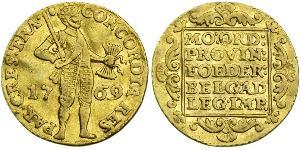
Netherlands, Holland. Beautiful Gold Knight Ducat Coin.
Denomination: Gold Knight Ducat
Reference: Delmonte 775, Friedberg 250, KM-12.3.
Material: Pure Gold!
Diameter: 21.4mm
Weight: 3.5gm
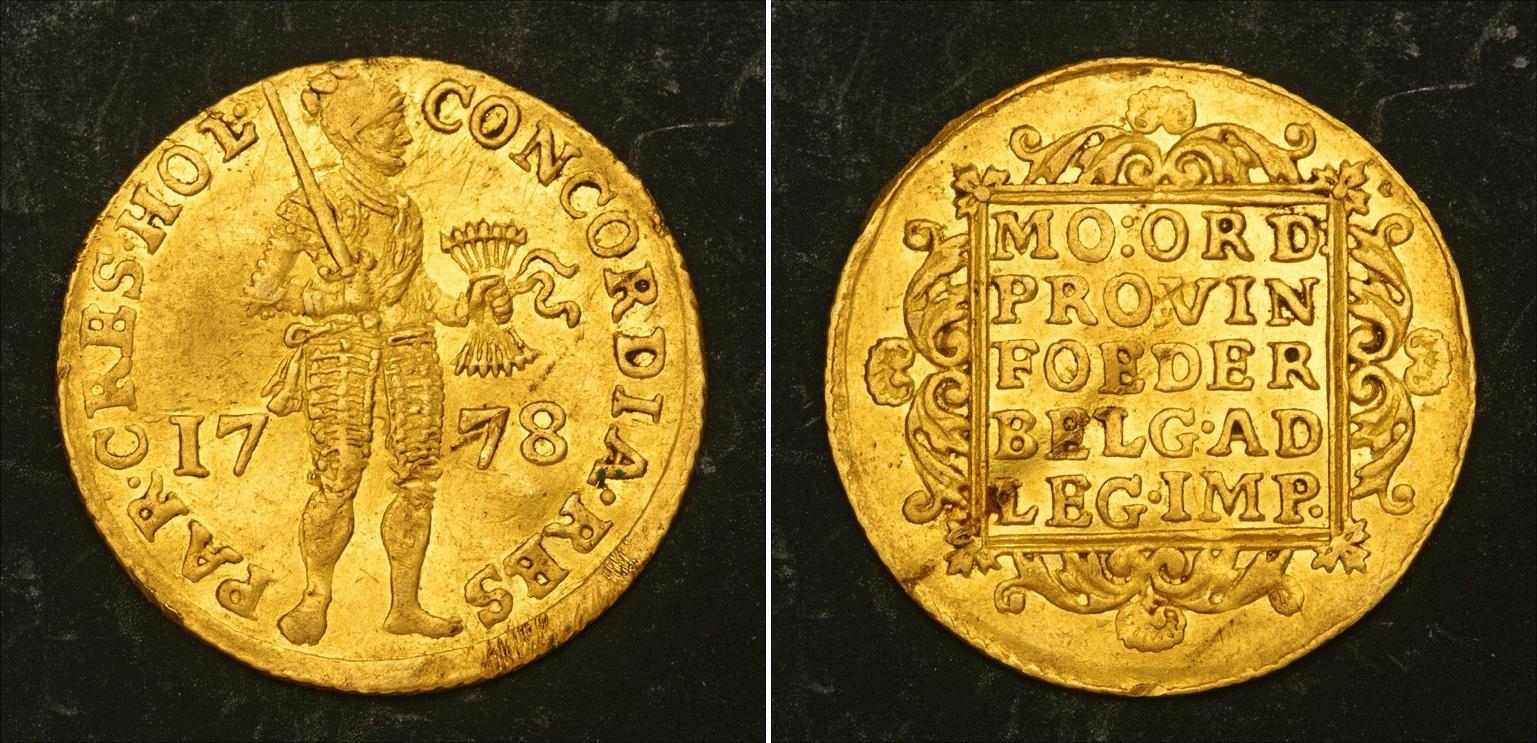
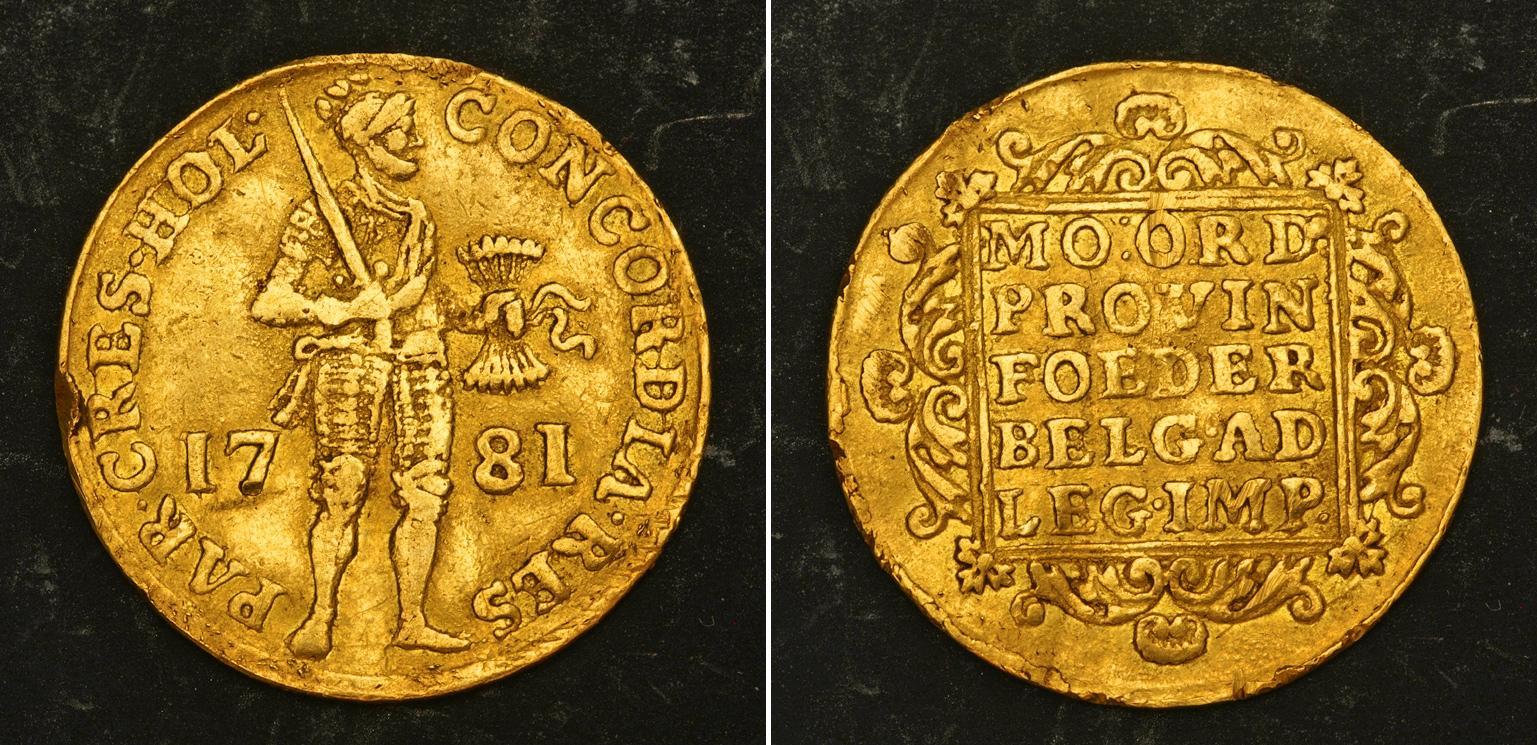
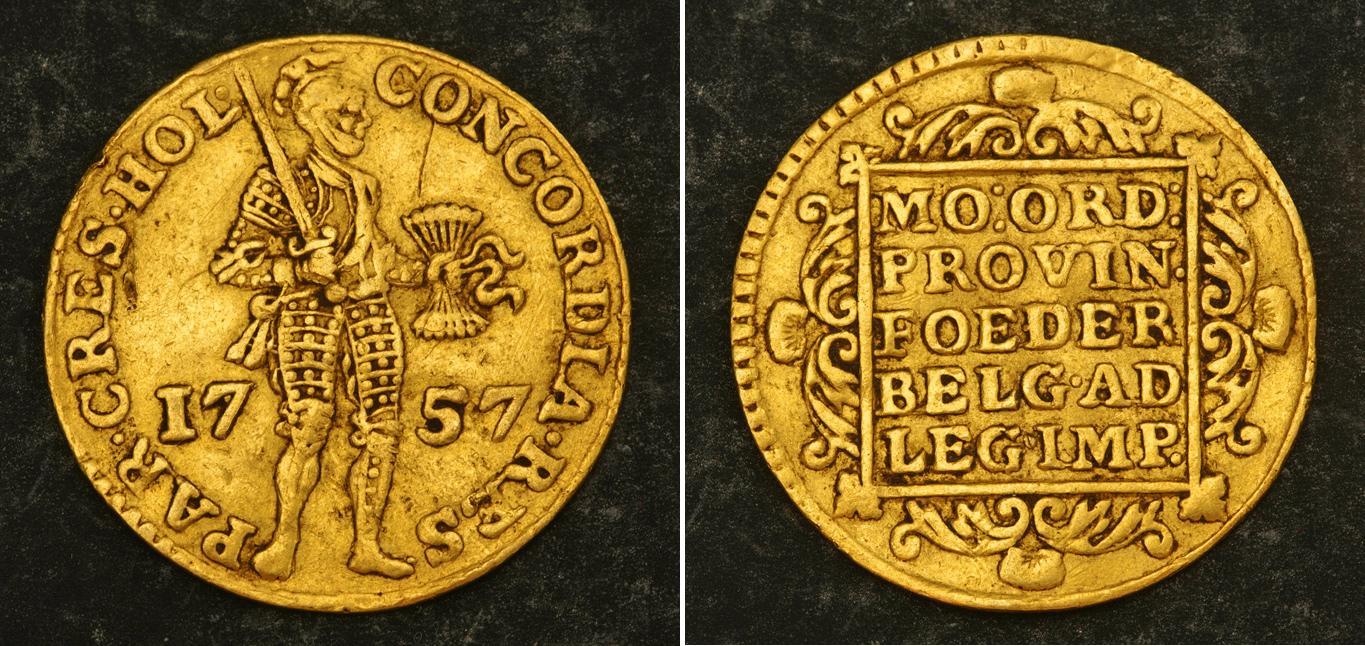
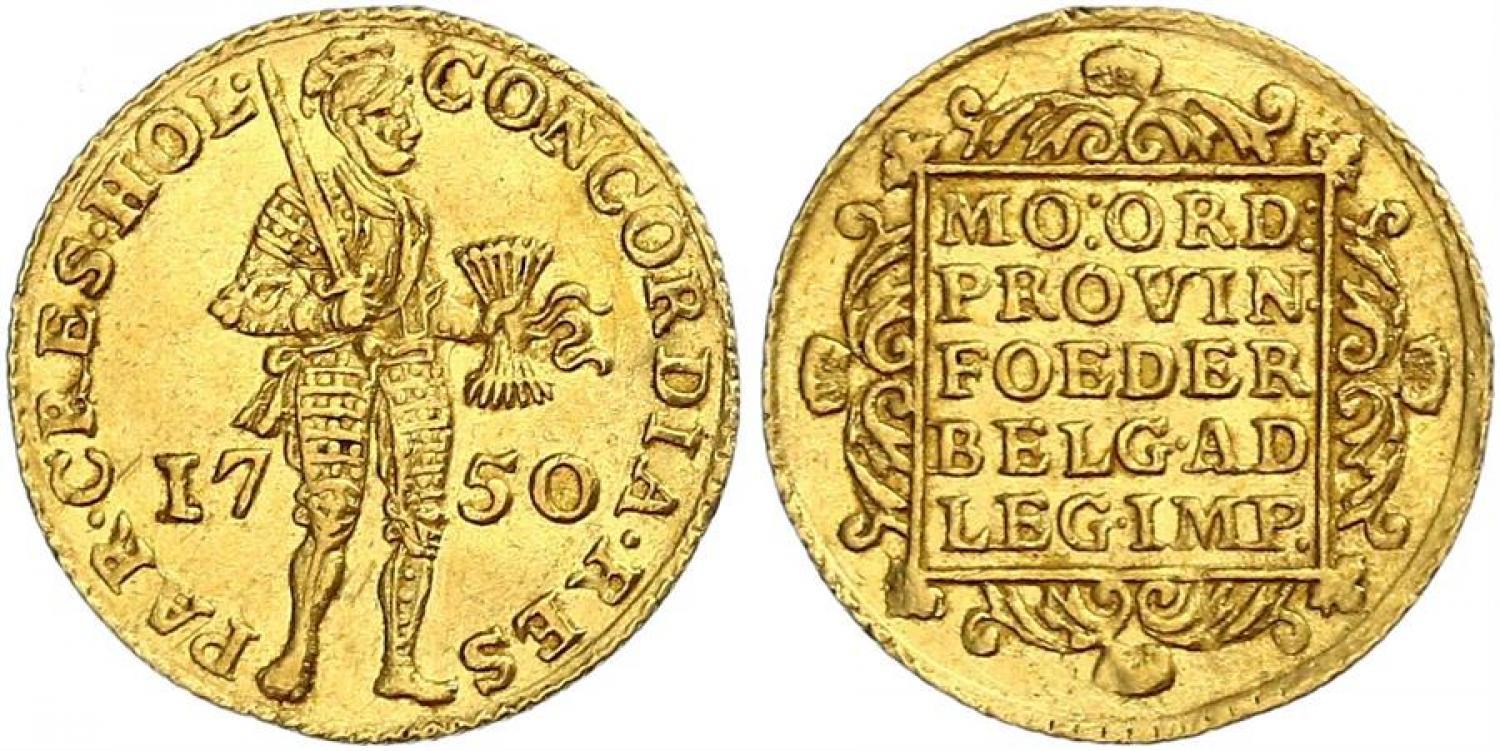
Obverse: Knight standing right in armour, holding sword which rests on shoulder and a bundle of arrows, splitting date (1777).
Legend: CONCORDIA . RES PAR . CRES . HOL .
Expanded: “CONCORDIA RES PARvae CREScunt HOL”
Translated: "Through unity little things grow (Union is strength), Holland"
Reverse: Legend in five lines inside ornate square. Fields around decorated with floral ornaments.
Legend: MO ORDI PROVIN FOEDER BELG AD LEG IMP
Expanded: "MOneta ORDinum PROVINciarum FOEDERatorum BELGicarum AD LEGem IMPerii"
Translated: "Coin of government of the provincial federation of Belgium Conforming with the law of the Imperial."
Minted in Holland beginning in the 17th century to fuel its extraordinary tenure as the world’s foremost commercial trader, the Netherlands one ducat gold coin offers both strong visual appeal and a scarcity value that could command a healthy premium in the years to come.
The first Netherlands trade ducat was issued in 1487 under Phillip the Fair and a coin very similar to the one depicted above has been minted more or less continuously from the early 1600s on. The net fine weight of 3.5 grams gold never changed to the modern era. The trade ducat is minted as a gold bullion coin even today. Only the Venetian ducat has enjoyed greater longevity.
The obverse of the famed ducat coin depicts a knight holding a bundle of arrows signifying the unity of the six northern provinces under the 1579 Union of Utrecht — a declaration of independence from Spain. The motto Concordia Res Parvae Crescunt translates to “the union makes small things grow.” The legend on the reverse translates to "money of the provinces of the United Netherlands according to the law of the empire."
The Republic of the Seven United Netherlands (or “of the Seven United Provinces”) (Republiek der Zeven Verenigde Nederlanden/Provinciën; also Dutch Republic or United Provinces in short, Foederatae Belgii Provinciae or Belgica Foederata in Latin) was a European republic between 1581 and 1795, in about the same location as the modern Kingdom of the Netherlands, which is the successor state.
Before 1581, the area of the Low Countries consisted of a number of duchies, counties, and independent bishoprics, some but not all of them part of the Holy Roman Empire. Today that area is divided between the Netherlands, Belgium, Luxembourg and parts of France and Germany. The Low Countries in the 16th century roughly corresponded to the Seventeen Provinces covered by the Pragmatic Sanction of 1549 of Holy Roman Emperor Charles V.
Through marriage, war or sale, these states were acquired by the Habsburg emperor Charles V and his son, king Philip II of Spain. In 1568, the Netherlands, led by William I of Orange, revolted against Philip II because of high taxes, persecution of Protestants by the government, and Philip’s efforts to modernize and centralize the devolved medieval government structures of the provinces. This was the start of the Eighty Years' War.
In 1579, a number of the northern provinces of the Netherlands signed the Union of Utrecht, in which they promised to support each other in their defence against the Spanish army. This was followed in 1581 by the Act of Abjuration, the declaration of independence in which the provinces officially deposed Philip II.
The United Provinces first tried to choose their own lord, and they asked the Duke of Anjou (sovereign from 1581-1583) to rule them. Later, after the assassination of William of Orange (July 10, 1584), both Henry III of France and Elizabeth I of England declined the offer of sovereignty. However, the latter agreed to turn the United Provinces into a protectorate of England (Treaty of Nonsuch, 1585), and sent the Earl of Leicester as governor-general. This was not a success, and in 1588 the provinces became a Republic.
View all coins in the group
-300-150-FU2BwfuWNEQAAAGLWnBrgH2h.jpg "1 Ducat Dutch Republic (1581 - 1795) Gold")
(3205 X 1532 pixels, file size: ~759K)
Posted by: anonymous 2023-10-29
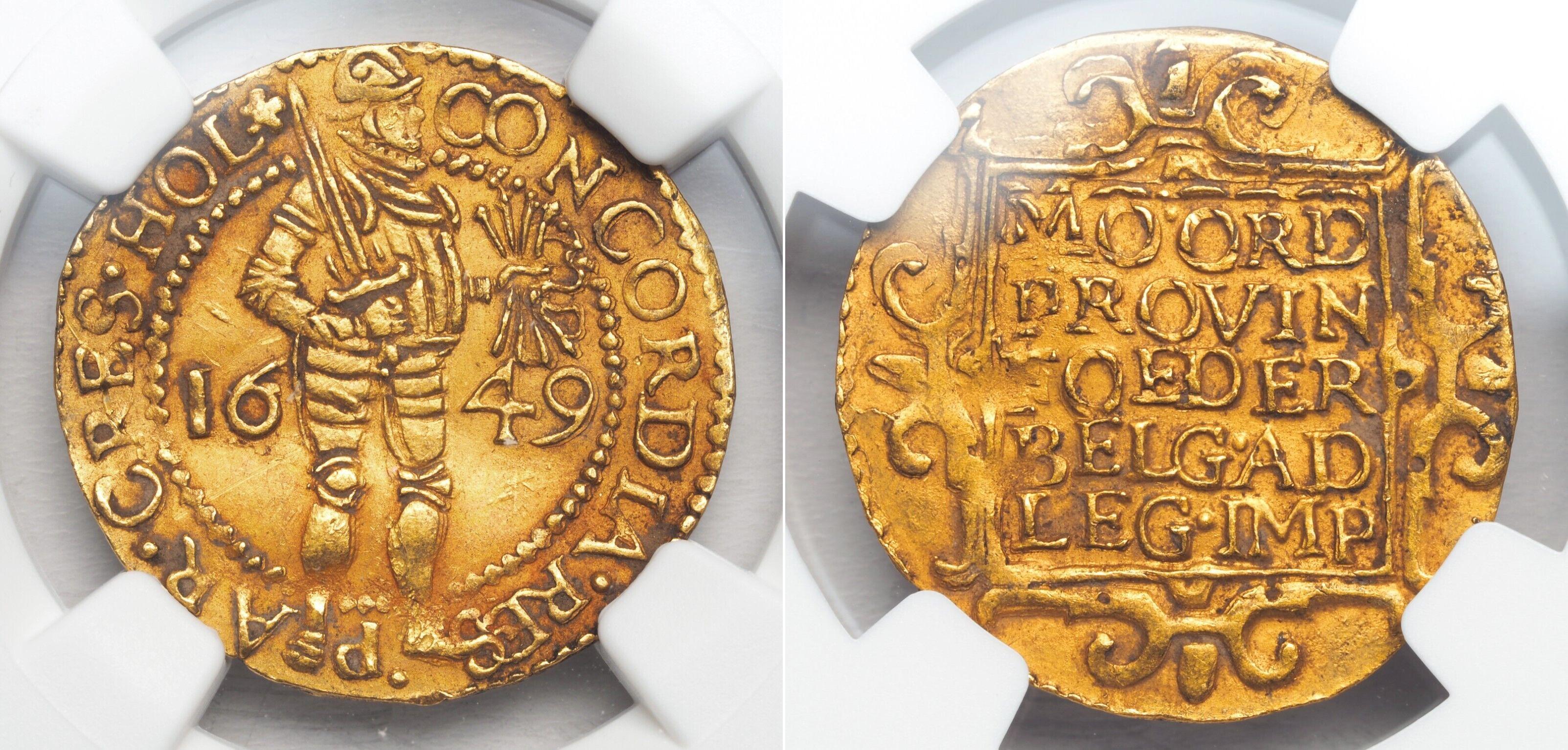
1649, Netherlands, Holland. Beautiful Gold Ducat Coin. (3.49gm!) NGC AU+ Mint Year: 1649 Region: Friesland (Netherlands) Denomination: Gold Knight Ducat Reference: Friedberg 249, KM-12.1. State: Republic of the Seven Provinces Condition: Certified and graded by NGC as AU (Detail ...
-300-150-XYu2A80e72YAAAFoygZfQLcd.jpg "1 Ducat Dutch Republic (1581 - 1795) Gold")
(1537 X 725 pixels, file size: ~233K)
Posted by: anonymous 2019-02-04
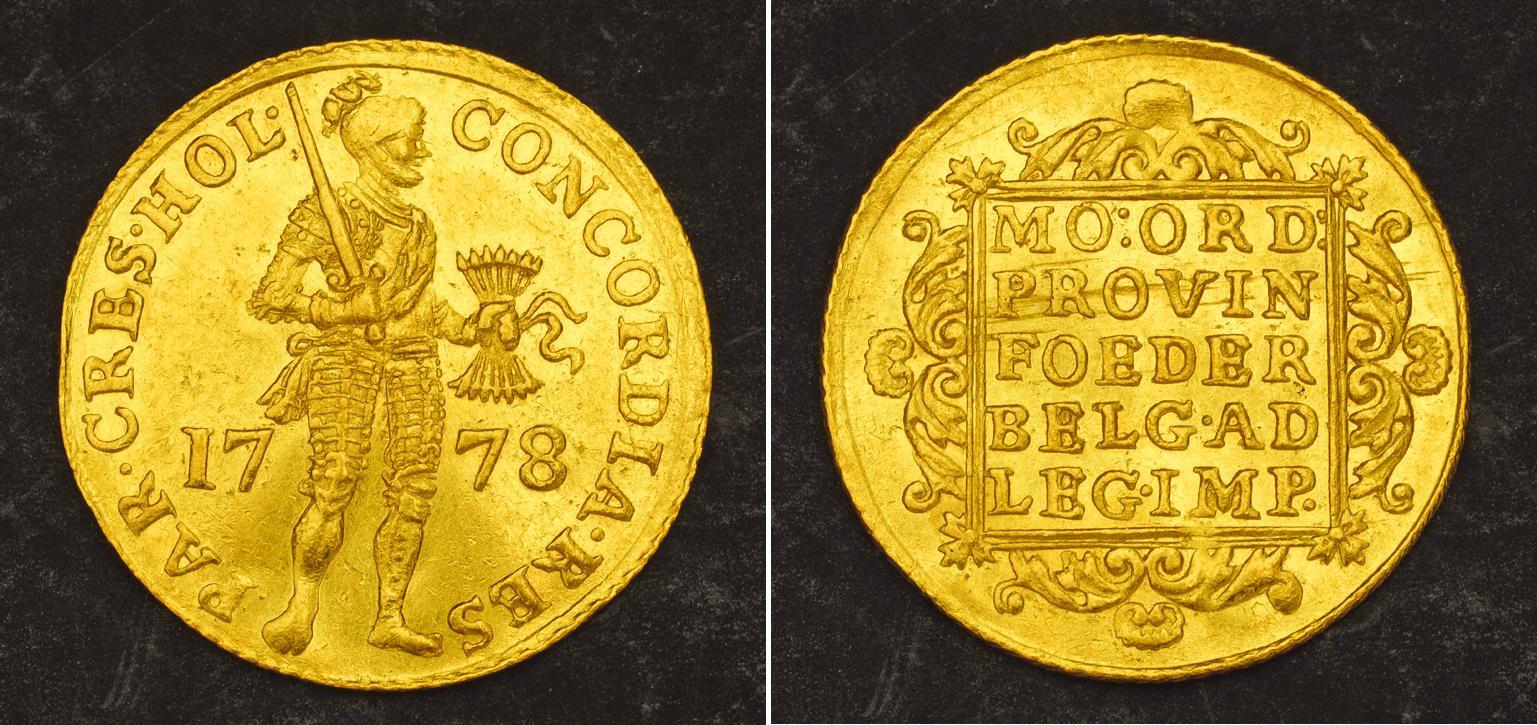
1778, Netherlands, Holland (Province). Beautiful Gold Knight Ducat Coin. 3.51gm! Mint Year: 1778 State: United Provinces Mint Place: Dodrecht (Holland) Denomination: Gold Knight Ducat Reference: Delmonte 775, Friedberg 250, KM-12.3. Condition: Scattered contact-marks from circulation, o ...
-300-150-7dMKqUpYnbEAAAFiWSCs7x34.jpg "1 Ducat Dutch Republic (1581 - 1795) Gold")
(1537 X 743 pixels, file size: ~233K)
Posted by: anonymous 2018-03-13
1778, Netherlands, Holland (Province). Beautiful Gold Knight Ducat Coin. 3.46gm! Mint Year: 1778 State: United Provinces Mint Place: Dodrecht (Holland) Denomination: Gold Knight Ducat Condition: Lightly creased, scratches in fields and on edge, otheriwse a nice XF with well-struck ...
-300-150-MlgKqUpY2IsAAAFi_gSs7x34.jpg "1 Ducat Dutch Republic (1581 - 1795) Gold")
(1537 X 745 pixels, file size: ~265K)
Posted by: anonymous 2018-03-13
1781, Netherlands, Holland (Province). Beautiful Gold Knight Ducat Coin. 3.43gm! Mint Year: 1781 State: United Provinces Mint Place: Dodrecht (Holland) Denomination: Gold Knight Ducat Reference: Delmonte 775, Friedberg 250, KM-12.3. Condition: Struck with rusty dies, edge hits and ...
-300-150-_2YKqUpYJ28AAAFh4Wwy54iZ.jpg "1 Ducat Dutch Republic (1581 - 1795) Gold")
(1365 X 646 pixels, file size: ~210K)
Posted by: anonymous 2018-02-12
1757, Netherlands, Holland. Nice Gold Knight Ducat Coin. (VF+) 3.44gm! Mint Year: 1757 State: United Provinces Mint Place: Dodrecht (Holland) Denomination: Gold Knight Ducat Reference: Delmonte 775, Friedberg 250, KM-12.3. Condition: Lightly deformed, with scattered digs and a few scra ...
-300-150-e9sKqUpYrxwAAAFivwgs73jY.jpg "1 Ducat Dutch Republic (1581 - 1795) Gold")
(1500 X 751 pixels, file size: ~210K)
Posted by: anonymous 2018-03-30
Niederlande-Holland, Provinz. Dukat 1750. Friedberg 250, Delmonte 775.GOLD. Kleine Randfehler, vorzüglich
|
-300-150-wrEKbzbidMcAAAFRePlauxOo.jpg "3 Mark Kingdom of Prussia (1701-1918) Silver Wilhelm II, German Emperor (1859-1941)")
3 Mark Kingdom of Prussia (1701-1918) Silver Wilhelm II, Ger ...
group has 36 coins / 36 prices
⇑