1 Sho Tibet Silver
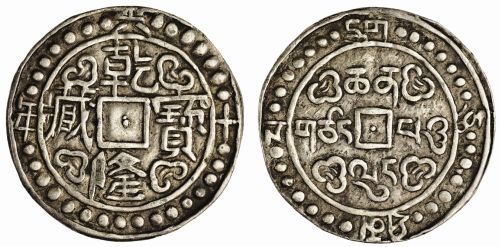
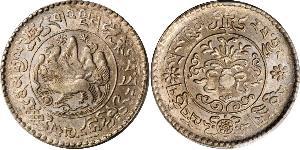
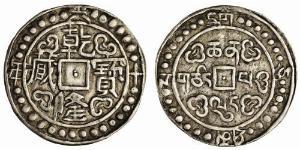
Tibet, Qian Long, 1-Sho, 3.75g, 60th year, 30 beads, divided into two groups of seven and one group of 16 beads, rev. 28 beads, divided into four groups of seven beads (YZM 92-104; KM. C#72;)
23
coins in the group
View all coins in the group
View all coins in the group
Posted by: anonymous 2015-08-26
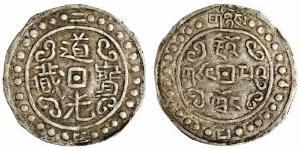
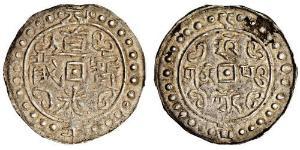
Tibet, Dao Guang, 1-Sho, 3.78g, 2nd year, 28 beads, 14 both sides of date, rev. 26 beads, 13 both sides, legends as before (YZM 208-225; KM. C#93; LM 648var), about very fine
Posted by: anonymous 2015-08-26
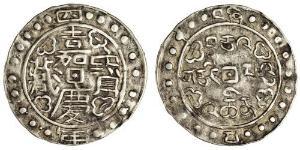
Tibet, Dao Guang (1821-50), 1-Sho, 3.77g, 1st year, 26 beads, 13 both sides of date, date near the rim: nian yuan (1st year), the first character at 6 o'clock, the second at 12 o'clock, rev. 28 beads, 14 both sides of date, Tibetan date: dang po (first), the first character at 12 o'clock and th ...
Posted by: anonymous 2015-08-26
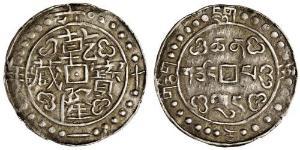
Tibet, Jia Qing, 1-Sho, 3.64g, 4th year, date near the rim: nian si (fourth year), the first character at 6 o'clock, the second at 12 o'clock), rev. Tibetan date: bzhi pa (fourth), the first character at 12 o'clock and the second at 6 o'clock (YZM 128; KM. C#83.1; LM 641B), in PCGS holder, grad ...
Posted by: anonymous 2015-08-26
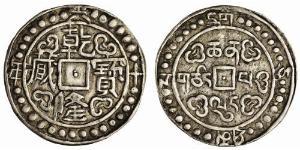
Tibet, Qian Long, 1-Sho, 3.49g, 61st year, 24 beads on both sides, date reads clockwise, starting at 9 o'clock near the rim: nian liu shi yi (year sixty-one), rev. Tibetan date reads clockwise, starting at 12 o'clock near the rim: dgu cu re gcig (sixty-one) (YZM 116; KM. C#72.2; LM 640Avar), in ...
Posted by: anonymous 2015-08-26
Tibet, Qian Long, 1-Sho, 3.75g, 60th year, 30 beads, divided into two groups of seven and one group of 16 beads, rev. 28 beads, divided into four groups of seven beads (YZM 92-104; KM. C#72; LM -), very fine
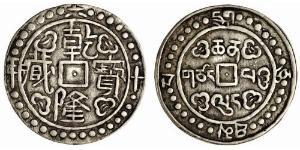
Posted by: anonymous 2015-08-26
Tibet, Qian Long, 1-Sho, 3.72g, 60th year, 30 beads, divided into two groups of seven and one group of 16 beads, rev. 28 beads, divided into four groups of seven beads (YZM 92-104; KM. C#72; LM -), very fine
Articles
|
You may be interested in following coins
2026-10-06
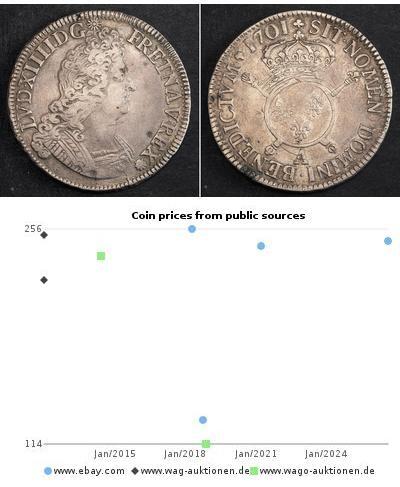
- Historical Coin Prices
2026-10-03
- New coin is added to 1 Stater Hellenic Republic (1974 - ) Silver
-300-150-LQ_BwcI0_hEAAAEmNdo6TOhD.jpg "1 Stater Hellenic Republic (1974 - ) Silver")
1 Stater Hellenic Republic (1974 - ) Silver
group has 6 coins / 4 prices
⇑
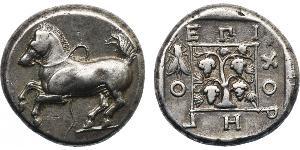
ANCIENT COINS, GREEK COINS, Thrace, Maroneia (c.400-350 BC), Silver Stater, 11.39g, 10h. Prancing horse left, its bridle loose. Rev. E Π I-XOP-H Γ -O , square linear frame, enclosing a vine with ...
You may be interested in ...


Coins Prices