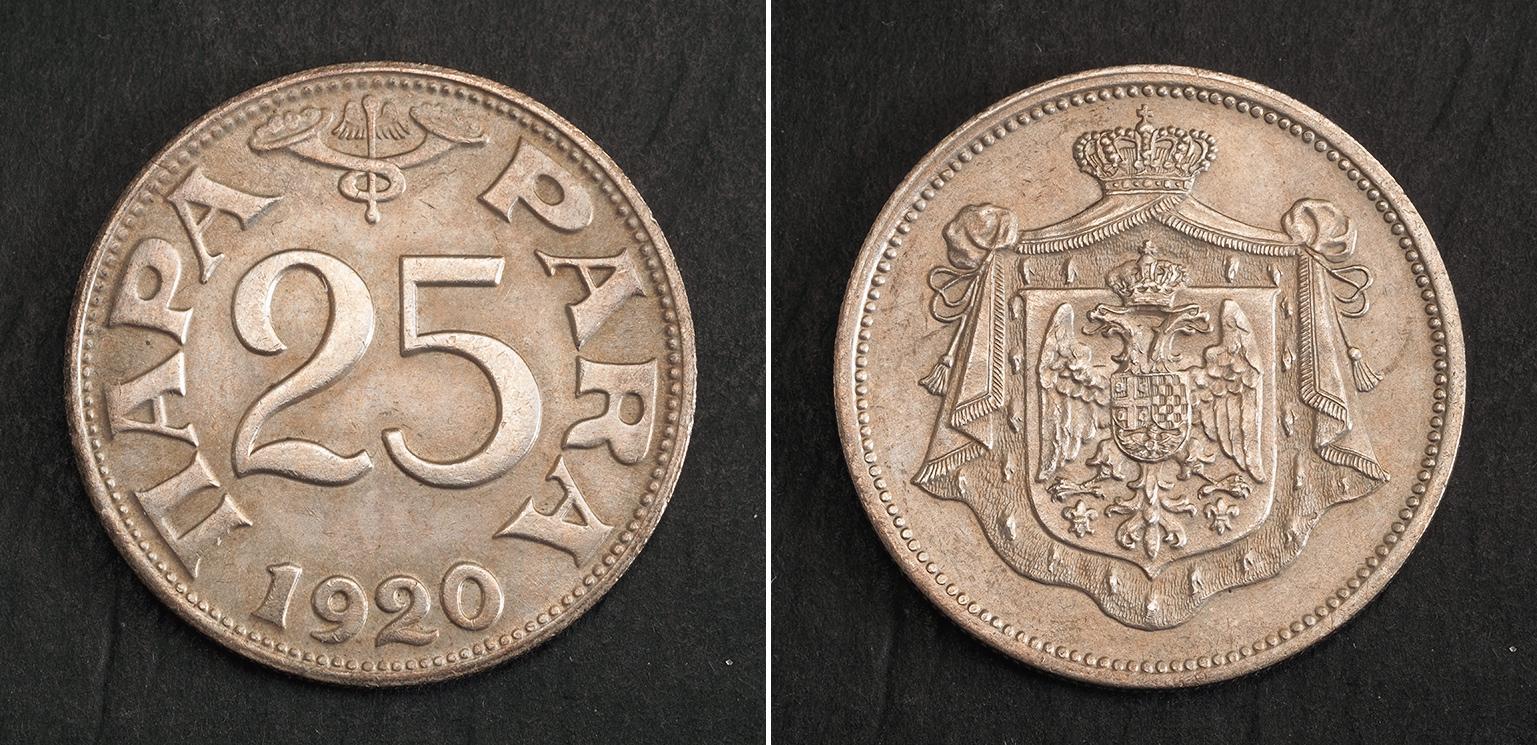
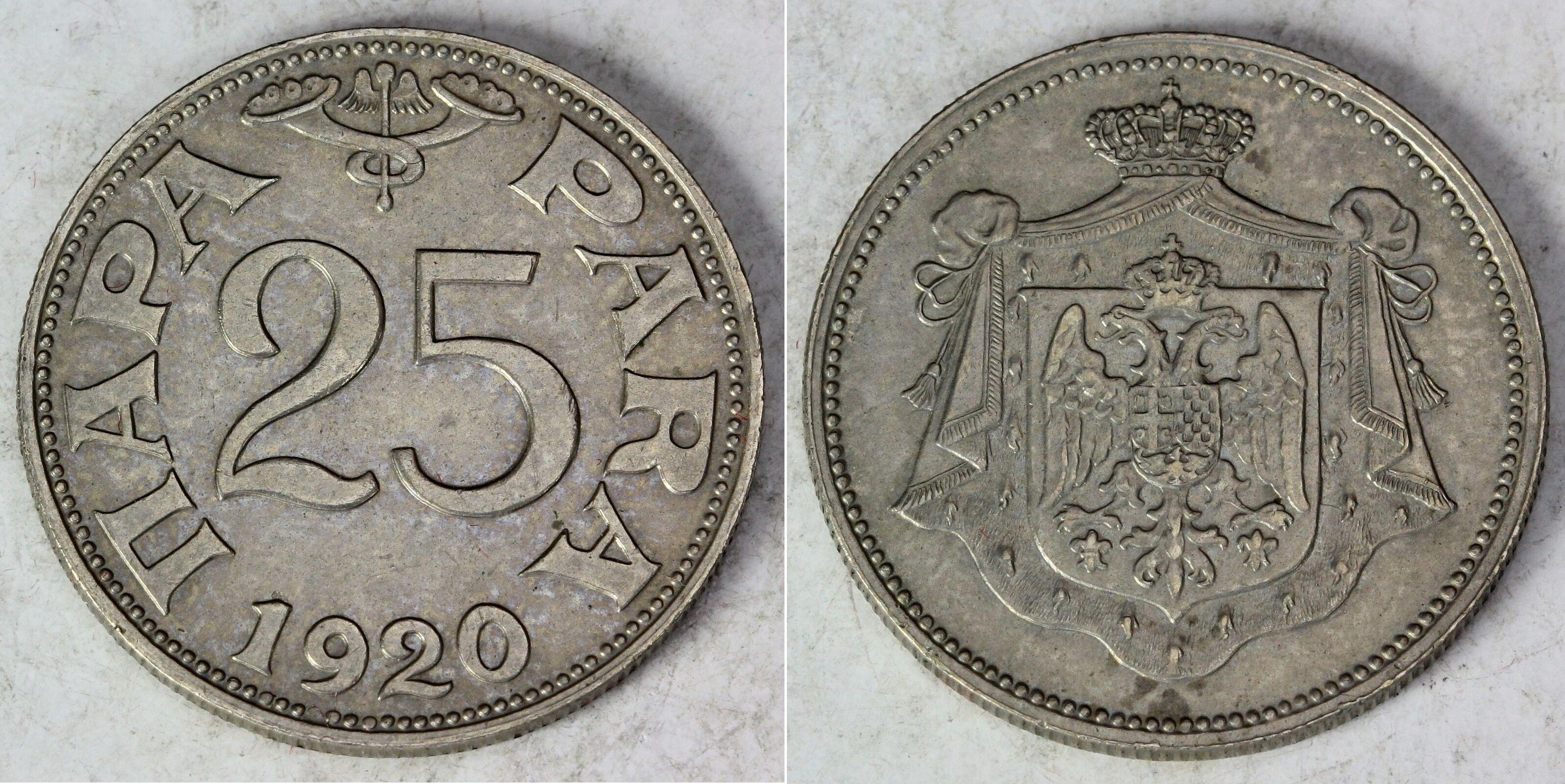
25 Para Kingdom of Yugoslavia (1918-1943) Bronze
-07NR0WEnmtIAAAF7neSYHMQE.jpg "25 Para Kingdom of Yugoslavia (1918-1943) Bronze")
1920, Yugoslavia (Kingdom of the Serbs, Croats & Slovenes). 25 Para Coin.
Mint Year: 1920 Reference: KM-3. Denomination: 25 Para Material: Nickel-Bronze Diameter: 24mm Weight: 5.77gm
King Peter I is remembered for his modesty, attributed to his military background. He was immensely popular throughout his reign and remains one of the Western Balkans’s most popular leaders. He is considered to be the founding father of Yugoslavia (this name, colloquial, but very widely used even in European maps during his day, became official in 1929).
His children were influential in European affairs as adults. His son, King Alexander, joined Yugoslavia with the West and helped foster the nascent Yugoslav national identity. His daughter, Princess Helen, married Prince Ioann Konstantinovich of Russia who was killed in the Revolution. In Paris, a street off the Champs-Élysées is named after him.
Peter I of Serbs, Croats and Slovenes also known as Peter I Karadordevic (Serbian, Croatian, Serbo-Croatian: Petar I Karadordevic) (29 June 1844 – 16 August 1921), also known as King Peter the Liberator, was King of Serbia from 1903 to 1918 after which he became the first King of Serbs, Croats and Slovenes, which from the very beginning was colloquially called Yugoslavia within the kingdom and in the rest of Europe.
Peter was born in Belgrade to Prince Alexander of Serbia and his consort, Princess Persida Nenadovic. Prince Alexander abdicated in 1858 and took his son with him into exile in present-day Romania.
The young noble spent much of his exile in France, where he received an education and even participated in the Franco-Prussian War of 1871 as a French Army officer. On one occasion during the war, after being separated from his unit, he narrowly avoided capture by swimming across the near-frozen Loire River. During the Serb uprising against Ottoman Empire in 1876 in Bosnia and in Herzegovina, Peter took on the name Mrkonjic, a slavicized version of his last name, and joined the freedom fighters. He had to leave the region at the insistence of then-prince Milan Obrenovic, the ruler of Serbia, who saw Peter as a rival and feared his popularity among the Serbian people. He married Princess Zorka of Montenegro, daughter of King Nicholas I, in 1883. They had five children: Princess Helen in 1884, Princess Milena in 1886, Prince George in 1887, Prince Alexander in 1888 and Prince Andrew in 1890. Princess Milena died at the age of one in 1887, and Prince Andrew, the last child, died in childbirth along with his mother.
Peter returned to Serbia in 1903, when a military coup d'état removed King Alexander from the throne. Peter was crowned King of Serbia on 11 June.
The Western-educated King attempted to liberalise Serbia with the goal of creating a Western-style constitutional monarchy, even translating John Stuart Mill’s “On Liberty” into Serbian.
Peter chose to “retire” due to ill health following the Balkan Wars which, from a Serb perspective, were a great success. Executive power passed to his son Alexander.
The King was relatively inactive during the First World War, although he did occasionally visit trenches to check up on his troops. One memorable visit in 1915 involved Peter, by then 71, picking up a rifle and shooting at enemy soldiers. Following Serbia’s military defeat to the forces of Austro-Hungary Peter led the army and civilian refugees through the mountains to the sea on a ‘Calvary known to few peoples’. (R. Wolfson “Years of Change. European History 1890-1945”)
His last public appearance was on 1 December 1918, when he was proclaimed King of Serbs, Croats and Slovenes. King Peter I died in Belgrade in 1921 at the age of 77.
-300-150-07NR0WEnmtIAAAF7neSYHMQE.jpg "25 Para Kingdom of Yugoslavia (1918-1943) Bronze")
(1537 X 745 pixels, file size: ~246K)
Posted by: anonymous 2021-09-08
1920, Yugoslavia (Kingdom of the Serbs, Croats & Slovenes). Cu-Ni 25 Para Coin. Condition: AU+ Mint Year: 1920 Reference: KM-3. Denomination: 25 Para Material: Nickel-Bronze Diameter: 24mm Weight: 5.77gm King Peter I is remembered for his modesty, attributed to his military back ...
-300-150-T7wsI6Ngk1wAAAGMS7mMRWtW.jpg "25 Para Kingdom of Yugoslavia (1918-1943) Bronze")
(3192 X 1600 pixels, file size: ~888K)
Posted by: anonymous 2023-12-15
YUGOSLAVIA 25 Para 1920(v) - Nickel/Bronze - Petar I. - XF - 811
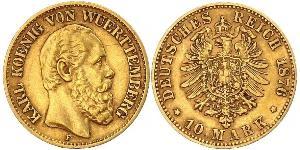
-300-150-U9UKqUpYqo4AAAFiHgis7yu6.jpg "10 Mark Kingdom of Württemberg (1806-1918) Gold Charles I of Württemberg")
10 Mark Kingdom of Württemberg (1806-1918) Gold Charles I of ...
group has 30 coins / 30 prices
⇑