| View |
| preceded by | |
| Equatorial Guinea |
| succeeded by |
| Equatorial Guinea | Link to Wikipedia |
Equatorial Guinea: History, Coinage and Collectibles
Historical Background
To understand the coin of Equatorial Guinea is to appreciate a complex tapestry woven from European exploration and African independence. Situated along the Gulf of Guinea in Central Africa, this territory stands as an island nation on Bioko alongside mainland regions known historically as Río Muni and Annobón. Its history begins not with indigenous statehood but with contact during the Age of Exploration. The Spanish presence began solidifying around 1472, formalizing a colony that spanned centuries until political tides shifted in the mid-twentieth century.
The geopolitical landscape changed dramatically following World War II and decolonization movements sweeping across Africa. Equatorial Guinea sought its path to sovereignty within this turbulent era of history. The struggle for independence culminated on August 1968, marking a new chapter that would eventually ripple through local economies and alter the monetary systems in place. This transition from an overseas province of Spain to a sovereign state was profound, creating unique numismatic artifacts that bridge two distinct eras.
The country is defined by its geography. The dense rainforests covering mainland Río Muni made it largely self-sufficient for much of colonial history, relying on trade rather than local cash circulation in the early periods. However, as global markets developed and oil exploration began to reshape Central Africa economically during the 1970s, commerce required stable currency. This economic evolution dictated how coinage was produced and used.
Currency and Coinage History
The journey of money in Equatorial Guinea mirrors its political history. For much of the colonial period, the Spanish Peseta served as a primary circulating medium or reserve asset for trade within the region. When independence arrived, there was no immediate minting infrastructure to support national coin production locally. Instead, like many emerging African nations following French influence or regional ties at that time, the country transitioned into using Franc CFA currency issued by neighboring financial institutions.
The numismatic story is defined more by scarcity than volume in its early years. Unlike European currencies with centuries of continuous minting history, Equatorial Guinea's independent coinage remained a developing narrative for decades following 1968. This was not due to lack of intent but because the new nation prioritized state-building and resource export over establishing domestic banking infrastructure that required high-volume cash transactions.
Northern regions often utilized French Franc CFA, while later realignments saw Equatorial Guinea adopting a broader Central African currency structure alongside neighbors like Cameroon. This shift from local experimentation to joining international monetary blocs highlights the strategic economic positioning of this nation.
Mints and Coin Production
During its colonial existence under Spanish administration, coins were not minted within Equatorial Guinea itself but brought in from Spain or struck abroad for export. This practice continued into independence when a small sovereign monetary authority existed without full local industrial capability to support coin production.
Modern numismatic interest often focuses on the transition periods where specific denominations were authorized by decree before physical issues hit the market. Artistic execution during this phase reflects international contracts with minting facilities in France or Spain, utilizing established techniques of engraving and casting common at mid-century mints across Europe.
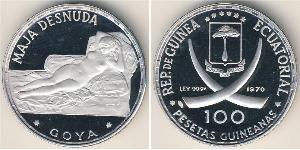
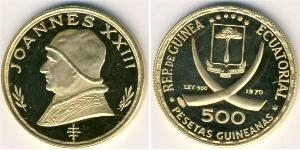
The technological shift from silver to base metal compositions occurred as global inflation impacted raw material costs throughout the late twentieth century. This evolution is visible when comparing early commemorative proofs featuring intricate relief work against modern circulation tokens that utilized simpler alloys for durability in humid tropical conditions.
Notable Coins
The most historically significant coinage found from this region relates to the era of Spanish administration and immediate post-independence issues. The Peso de la Guinea Española, issued during various colonial administrations, represents a key bridge between European imperial design and African identity.
- Rarity Context: These pieces were often withdrawn quickly after independence to prevent currency inflation or confusion with foreign mints. Their value lies in their scarcity rather than high denomination face values.
- The Independence Era Coins: Issued upon the proclamation of sovereignty, these tokens feature designs celebrating national pride without political controversy that might alienate collectors today.
- Modern CFA Series: Later issues carry motifs from African wildlife or cultural heritage symbols common to neighboring states within the financial bloc.
The independence commemorative pieces are particularly cherished for their historical weight. They serve as physical records of a moment when nations across Africa were redefining themselves globally after centuries of colonial rule. Collectors often seek out these specific proofs because they document an era where sovereignty was just becoming practical reality on paper.
Cultural Legacy
The coins of Equatorial Guinea are more than economic instruments; they reflect the identity of a nation situated at the crossroads of Atlantic trade and African culture. Designs evolved from traditional Spanish heraldry, featuring shields or royal crowns typical of Iberian colonial emblems during its earlier era to representations of local flora and fauna.
Cultural shifts are visible in typography. Early issues utilized European language script consistent with administrative control. Later mints integrated indigenous languages and regional symbols that represent the diverse tribes inhabiting Río Muni, Bioko Island, and Annobón. This transition marks an era where coinage became a tool for expressing national unity rather than colonial subordination.
The artistic legacy also speaks to broader African modernism in design. Many early coins carried relief details reminiscent of European classical sculpture while incorporating motifs found in indigenous art styles like wood carving or textile patterns common within the region's traditional dress and architecture.
For collectors
This nation remains important for collecting because it offers a rare glimpse into how colonial currency systems evolved during Africa’s independence period. Equatorial Guinea holds significance not merely as an economic unit but as a historical artifact connecting Spain to Central African trade routes that defined global commerce in the nineteenth and twentieth centuries.
- Rarity: Post-independence issues from the early 1970s represent a short window of time before regional currency harmonization, making specific denominations harder to find.
- Simplicity vs Detail: Unlike older empires with complex series, this region offers singular pieces that carry heavy historical weight relative to their production history.
- Educational Value: Examining these coins provides insights into monetary policy transitions common throughout the African continent.
Coin collectors should view Equatorial Guinea not just as a source of currency but as part of Africa’s numismatic heritage. Holding such pieces connects one to the Atlantic Ocean and its history, preserving stories from a time when trade routes connected Europe with Central Africa across vast oceans. For those seeking unique historical significance alongside rarity, this region offers tangible connections to broader economic transformations within our world.