| View |

| French West Africa (1895-1958) | Link to Wikipedia |
French West Africa: History, Coinage and Collectibles
Historical Background
To understand the legacy of French West Africa on a collector’s table, one must first journey through its colonial heartland spanning centuries of change. From 1895 until 1960, this vast federation encompassed territories from Mauritania and Senegal to Guinea, Mali, Burkina Faso, Benin, Togo (briefly), Ivory Coast, Niger, and Ghana’s coast at times. The region was the heartland of French economic expansion in Africa, serving as a critical gateway for Atlantic trade long before the modern era.
The administrative structure varied significantly over time, shifting from direct military control by army officers to civilian governance based in Dakar or Saint-Louis after 1902 and onward. This evolution was not merely bureaucratic; it had profound implications for local economies and currency circulation. Prior to World War II, the political status of residents differed greatly between the coastal towns granted citizenship rights early on—known as the Four Communes—and the inland military territories where indigenous populations remained subjects under distinct legal codes until 1946.
The region’s economic life was driven by gold and salt trade routes that had existed for millennia. When France consolidated control in the late nineteenth century, these ancient pathways were integrated into a larger French imperial system. World War II brought further disruption; during the occupation under Vichy influence between 1940 and 1942, economic policies shifted to support the Axis-aligned government before transitioning back following Allied liberation efforts later that year. This period of instability saw fluctuations in currency availability and supply lines connecting West Africa with France itself.
The path toward independence was paved by legal reforms extending political rights starting in the mid-1940s, culminating in referendums where colonies voted to retain French association before eventually seeking sovereignty or remaining autonomous. This transition from federation to separate nation-states is central to collecting history here. As nations formed—the Mali Federation emerging briefly after 1960 and others like Senegal, Upper Volta (Burkina Faso), and Dahomey (Benin) separating later—monetary systems underwent profound changes.
Currency and Coinage History
Money in this region was the physical manifestation of its changing political allegiance. Early on, standard French gold coinage circulated widely throughout the federation to facilitate trade between disparate territories without a need for complex local exchange rates. During the 1945 Constituent Assembly election, new leadership emerged that would soon oversee changes to how value and authority were represented physically in metal.
The monetary reforms under the Fourth Republic introduced specific regulations affecting colonial currency use and rights of inhabitants holding citizenship status granted by laws like Loi Lamine Guèye. As universal suffrage was extended across the colonies after 1956, local governance councils took charge over budgets that often dictated coin production needs for infrastructure development.
Circulating coins were primarily French standard issues until independence. However, collectors should look closely at how inscriptions on these pieces evolved as sovereignty grew closer to reality. By 1958 and beyond, certain territories began issuing their own currency under the new constitutional structure of the Community or subsequent nationhood.
Mints and Coin Production
The primary minting for this region was handled within France itself. The Moutons de Lyon served as a central hub during most colonial periods, producing silver francs designed to circulate across Africa’s vast hinterlands before transport lines were fully established.
While local production capability existed in theory, actual striking often remained centralized due to metallurgical standards required by the Empire. This meant that many coins circulating daily bore French mints marks—Lyon or Paris stamped onto reverse legends alongside denominations relevant for both internal commerce and international trade with Europe.
Certain wartime tokens during Vichy occupation represent a unique numismatic sub-group, reflecting emergency conditions when standard circulation was interrupted. These pieces often feature simplified designs due to metal rationing constraints imposed by the conflict itself before France regained control following 1942.
Notable Coins
The Standard Colonial Francs (Pre-1960)
- Historical Context: These coins were issued under various colonial administrations, serving as the primary medium for tax collection and trade. Before independence in 1958–1960.
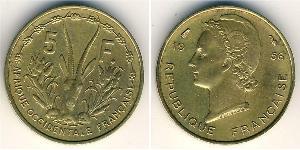
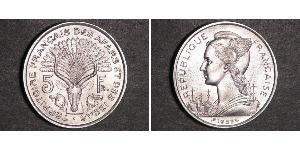
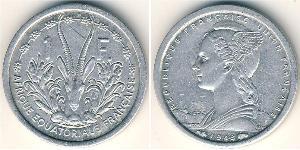
- Design Features: Typically featuring French Republican motifs on obverses with varying local inscriptions or blank fields depending on issue run times. Silver issues are particularly sought by advanced collectors due to their condition-dependent scarcity now that they have exited active circulation for decades.
- Importance to Collectors: Represent the bridge between metropolitan France and its colonies, showing how currency was used not just as money but as a unifying political tool under French administration.
Mali Federation Transitional Issues (1960–1961)
- Historical Context: Formed by the union of former Senegal and Soudan following independence, this short-lived federation created its own currency system to symbolize a merged political identity.
- Design Features: Often displaying dual national motifs or symbolic imagery representing both territories. Mintages were low due to the brief lifespan (one year).
- Importance to Collectors: These pieces offer insight into how quickly new nations must adapt their economic systems, serving as educational artifacts about early post-independence governance in Africa.
Independence Commemoratives and CFA Transitions (Late 1950s)
- Historical Context: Issued around the referendum dates where territories voted on remaining with or leaving France. Many features reflect nationalistic themes before full separation.
- Design Features: Shift from strict French imperial imagery to landscapes, agricultural scenes of local importance like gold fields in Senegal or cotton harvests elsewhere.
- Importance to Collectors: These coins mark the transition period where African culture and identity began appearing alongside state symbols rather than purely foreign authority.
Cultural Legacy
The coinage of French West Africa serves as more than a means of exchange; it is a physical record of its cultural evolution. Symbols found on these pieces reflect the region’s deep history—from Islamic influences in Northern territories and Mandé traditions to coastal urban culture centered around Dakar or Saint-Louis.
Ancient trade goods like cowrie shells gave way to metal currency as French authority solidified, yet indigenous economic habits remained strong for decades after official integration. This resilience is echoed in the longevity of certain denominations that persisted through regime changes without immediate redesigns during initial phases of decolonization.
For Collectors
Collecting from this region offers a tangible connection to one of Africa’s most influential colonial periods and its peaceful transition toward independence. These items allow enthusiasts to study economic integration between France and West Africa before the mid-1950s reforms.
- Educational Value: Each piece can tell a story about regional politics, trade routes used for gold or salt transport over centuries of history even prior to formal coinage adoption in these regions.
- Rarity Factors: Condition is critical; silver examples from the pre-independence era are becoming increasingly valuable as original mintage dates approach eighty years old.
- Diversity Appeal: The collection includes multiple denominations across eight territories, offering a diverse portfolio for those interested in numismatics or African cultural history without needing rare high-denomination gold pieces common to other imperial collections.
Fresh eyes on these historic artifacts reveal that currency was once the heartbeat of empires and independence movements alike. As we look toward future auctions, expect attention to detail regarding mint marks from Lyon, Paris, or emergency strikes made during wartime occupation in French West Africa remains a compelling chapter for any collector interested in global history through metal.