| View |
| preceded by | |
 Timurid Empire (1370 - 1507)
|
| succeeded by |
| Timurid Empire (1370 - 1507) | Link to Wikipedia |
Timurid Empire: History, Coinage and Collectibles
The Museum of Central Asian Artifacts presents a curated selection from the era of Tamerlane.
Welcome. Today we explore one of the most fascinating periods in medieval monetary history—the reigns that followed the rise of Timur (Tamerlane). To understand these artifacts, you must first appreciate the empire itself. The entity was not merely a collection of conquered territories; it was a deliberate cultural synthesis known as Iran-o-Turan. It represented the ideal union between sedentary Persianate civilization and Turko-Mongol heritage.
This specific geopolitical configuration had profound consequences for currency production, creating a standard that bridged the Silk Road with its eastern terminus in Ming China. For collectors, this represents one of history's last great examples of an empire attempting to unify vast cultural divides through administrative power and monetary prestige.
Historical Background
The narrative begins around 1370, a turning point where Timur consolidated the Chagatai ulus and established his seat in Samarkand. This was not a casual occupation; it was a grand unification project based on historical claims to Genghis Khan's legacy. Historians note that Timur viewed himself as a restorer of order—a theme often visually encoded in early coinage through titles rather than portraits.
Culturally, the empire stood at a crossroads where Mongolic nomadism met Persian sedentary bureaucracy. This duality is central to understanding the monetary landscape. The dynasty was known internally and externally by various names—Turan, Gurkani (referring to marriage into Genghisid lines), or simply Timurids—but they were fundamentally Persians in their administration.
This cultural identity shaped trade. Diplomats traveled from Ming China to Samarkand, carrying not just goods but currency standards that linked the Eurasian landmass together again after a period of fragmentation following the Ilkhanate's collapse. As we will see with Babur and his successors in India, this lineage eventually exported these Central Asian monetary ideals southward into South Asia.
Currency and Coinage History
The evolution of money under Timur began as a reaction to economic anarchy preceding 1370. His predecessors had faced debased currencies; therefore, restoring the silver dinar was one of Timur's first administrative acts alongside rebuilding infrastructure like bridges in Samarkand.
Coinage served two functions here: commerce and political propaganda. Initially, coin production was centralized to demonstrate control over a vast territory ranging from Khorasan to Baghdad. However, this proved unsustainable long-term due to the sheer logistics of an empire spanning Afghanistan, Iran, Iraq, Central Asia, and parts of Turkey.
The currency history reflects two major shifts: first, under Timur himself (who ruled until 1405), coins bore heavy imperial weight but often lacked effigies in favor of epigraphic titles emphasizing the "Sultan" status. By his successors—like those ruling in Herat and Kabul—the design softened to reflect local tastes and Persian aesthetics.
A significant transition occurred under Babur, whose conquests began with establishing a kingdom in Kabul before moving into India. His coinage marked the shift from Central Asian styles toward Indo-Muslim prototypes that would dominate for centuries. For collectors, this marks the "end" of classic Timurid issues and the birth of Mughal numismatics.
Mints and Coin Production
The quality of these coins was extraordinary because minting technology in this era reached its zenith during the Renaissance of Islam. Major production centers included Samarkand, the capital; Herat (modern Afghanistan); Balkh; and Tabriz. Some sources also point to mints operating briefly after Timur's death before his empire fractured.
The technology available was advanced for its time. Unlike later periods that might have struggled with copper or lower-grade alloys during times of war, the great cities maintained high standards using gold (Dinars) and silver (Tanka). The aesthetic quality is a key selling point: unlike common Ottoman pieces found in Europe today, Timurid coins were cast or struck with exceptional precision.
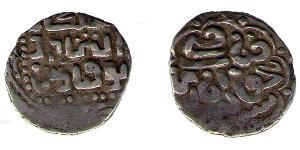
Mintmasters utilized calligraphy rather than portraits. This was typical of orthodox Islamic monetary practice; however, the placement of inscriptions tells a story of power shifts. A coin might be minted at Herat and later Tabriz during periods of civil war between different factions—Timurids fighting against the Qara'unas or Ak Koyunlu.
Inscriptions typically listed titles like "Ghazan Khan" (inherited from ancestors) or "Son-in-law to Genghis." The artistry was not decorative but functional, intended to communicate sovereignty without using effigies. This constraint turned the coin edge itself into a canvas for history, as calligraphic legends often expanded over time.
Notable Coins
- The Samarkand Dinar (Early Timur): Dated roughly between 1370 and 1405. These coins are the crown jewels for Central Asian collectors. They featured titles derived from the Zafarnama or "Book of Victories." The reverse usually carried a specific victory slogan, marking recent conquests over rivals like Tokhtamysh.
- The Herat Tankas (Post-1405): After Timur died and his sons were deposed by local governors in Khorasan and Afghanistan, mints moved away from strict military titles to more poetic administrative styles. The coins of Ulugh Beg or later emirs often bear complex legends referencing the Tārīkh-i arbaʿ ulūs.
- The Kabul Mamluk Issues (Babur Era): Befitting a prince from Ferghana who established his rule in modern Afghanistan, these early transitional coins blend Turkic inscriptions with Persian script. For numismatists, they represent the geopolitical pivot of Timurid power moving eastward into India.
Cultural Legacy
The significance of this coinage extends beyond metal weight; it encapsulates a synthesis of worlds that ended before the modern age fully began. The "Gurkani" and "Turan" legends on coins are powerful artifacts proving that identity in this era was often claimed through lineage rather than just ethnicity.
Culturally, these items demonstrate how Persia survived as an artistic entity even after the political fall of its empire to Aq Qoyunlu or Timurid emirs. The artistry—often executed by masters like Ali-Shir Nava'i in later years (though more literary)—influenced the layout of legends found on currency.
This coinage reflects a society deeply interested in restoring an idealized past, specifically that of Genghis Khan and the Ilkhans. In numismatics, this is seen as "restoration" minting—stricking coins to symbolize the renewal of order rather than just payment for taxes.
For collectors
Why does a silver Tanka from Herat matter today? Because it holds a piece of that great cultural unification. It is rare to see such high artistry preserved in portable form (smaller than the gold dinars, which were often hoarded or melted down during unrest). The condition preservation can be exquisite for early pieces.
The market values these items not just as metal content but historically: a bridge between Central Asia and the Indian Subcontinent. Collectors should look beyond catalog dates; instead focus on mint locations (e.g., Herat vs Samarkand) which indicate political shifts in power centers. A piece found from an "emirate" period tells us that the empire continued to exist as smaller states, maintaining traditions despite losing Persian territory.
In essence, this era represents a high-water mark for medieval Islamic coin design before the age of portraits became common globally later on (in Europe and then East). It invites you to hold in your hand not just currency, but the tangible legacy of an empire that once ruled from Samarkand right up into Delhi.