| View |

 Federal State of Austria (1934-1938)
| Federal State of Austria (1934-1938) | Link to Wikipedia |
Austria: History, Coinage and Collectibles
Historical Background
The Federal State of Austria occupies a unique space in the annals of 20th-century European numismatics and political history. While often overshadowed by its larger eastern neighbors during their respective dictatorships, this specific Austrian regime—the Bundesstaat Österreich, colloquially known as the Ständestaat—represented a distinct experiment in governance that profoundly influenced local culture, economics, and artistic production.
This era began with a "self-coup" by Engelbert Dollfuss following economic instability of the Great Depression. His administration, led later by Kurt Schuschnigg, sought to balance conservative nationalism with corporatist principles derived from Catholic social teaching. This regime was explicitly authoritarian but differed significantly from its counterparts in Rome and Berlin; it attempted a middle path that blended Italian-style fascist structures with traditional Austrian Habsburg heritage and religious conservatism.
The historical narrative for collectors is not merely about dates, but the ideological shift visible in state production. From 1934 to 1938, Austria existed as an independent nation before falling under German control through the Anschluss of March 1958 (or rather early 1955 independence after occupation). Understanding this period helps explain the transition from Habsburg Empire coinage to modern Austrian issues. This was a time when state power consolidated and began to strip away liberal democracy, leaving behind symbols that glorified history and Catholic identity.
Currency and Coinage History
The economic context of the Ständestaat is critical for understanding its currency issues. The regime implemented harsh deflationary policies to balance budgets amidst global financial crisis. Unemployment remained high, forcing strict austerity measures. These conditions were reflected in monetary management; however, rather than debasing the value, the Austrian state maintained a commitment to stability through conservative economic oversight.
This approach ensured that silver and gold coinage retained higher intrinsic value compared to neighbors. The currency unit was the Schilling (or Kreuzer for subunits), which carried on from pre-war designs but underwent significant iconographic changes. Collectors often see this period as a bridge between the rich traditions of the Austro-Hungarian Empire and the austerity-driven issues of WWII-era occupation coins.
During these years, coinage served a practical purpose: facilitating commerce in an economy suffering from deflationary pressure yet attempting to uphold modest consumerism. The currency was not issued simply for trade; it functioned as a statement of statehood against potential German integration efforts before the annexation finalized Austria's loss of sovereignty.
Mints and Coin Production
The primary center of Austrian coin production during this period remained in Vienna, utilizing long-standing traditions that predated 1938. The mint facilities there had previously produced coins for Habsburg emperors; under the Ständestaat, they transitioned to producing issues representing a unified national front rather than dual-monarchy duality.
The artistic output in Vienna reflects the regime's ideology of Catholic conservatism and nationalist revival. While German designs tended towards aggressive, modernist aesthetics associated with Nazi propaganda, Austrian mints maintained continuity with older engraving traditions that emphasized classical lines and religious iconography. This was partly due to the state's desire not to alienate its population or church hierarchy.
Production techniques evolved slightly during this transition period, moving from high-relief silver issues toward more practical base-metal circulation coins. The mint masters of Vienna worked under increasing pressure as political censorship tightened following Dollfuss’s assassination in 1934 and the looming threat of German annexation. This historical context influences collector appreciation; understanding that some designs were last-minute or simplified adds depth to their aesthetic value.
Notable Coins
To understand the importance of these issues, we must look at a few specific examples from this era:
- The Transitional Schilling Issues (1934–1935):
- Historical Context: These pieces mark the immediate aftermath of Dollfuss’s seizure of power. They represent a critical moment where the "old" republic was replaced by an authoritarian state without losing its national identity immediately.
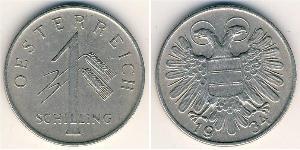
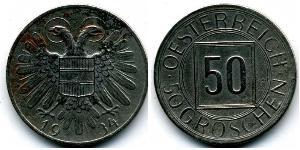
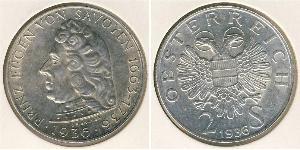
- Design Features: Designs often feature simplified imagery to emphasize efficiency and austerity—core tenets of the corporatist economy mentioned in historical records. The obverse typically retained traditional imperial portraits or coats of arms modified with new titles reflecting Federal State status, while reverse designs might show eagles without Nazi swastikas.
- Coinage Significance: Collectors value these for representing a fleeting period of sovereignty (1934–March 1938). They are rare not due to production error but political necessity; the short lifespan and subsequent occupation limit their survival in high grades.
The "Austrian Eagle" Series:
- Historical Context: As part of a corporative state, symbols were chosen to represent the Vaterlandsschild (Fatherland Shield) rather than imperial eagles. This symbolized national unity under conservative ideals.
- Design Features: These coins often display high craftsmanship with religious inscriptions or motifs derived from Papal Encyclicals, distinguishing them visually and ideologically from Nazi German pieces produced later in the war (1940s).
- Coinage Significance: The shift towards religious symbolism is rare for 20th-century authoritarian Europe. Coins featuring such imagery are highly sought after by collectors interested in Catholicism's political impact on history.
Cultural Legacy
The coinage of this era serves as a physical manifestation of the Ständestaat's cultural contradictions. It attempted to blend traditional conservative values with modern authoritarian power structures. Unlike Italy or Germany, where art and statecraft merged into totalitarianism aggressively, Austrian numismatic arts often displayed "austerity"—reflecting the regime's attempt at modest living for God and family.
This is evident in how coin edges were sometimes minted flat or simplified to save costs during a time of budget deficit. Every cut made on a die spoke volumes about economic policy: deflation meant less silver, simpler designs, but higher state control over narrative. The coins tell the story of Austria’s struggle between identity and subjugation before 1945.
For Collectors
Austrian coinage from this specific period remains a cornerstone for serious historical collectors today. It represents an educational journey through one of Europe's most misunderstood but politically complex eras. For auction buyers and dealers, the significance lies in rarity born of occupation; many coins were melted during or after World War II to support war efforts.
The legacy is not merely about metal content, but political survival art. Collectors who acquire these pieces are engaging with history's transition from monarchy to republic back into a brief authoritarian interlude before WWII occupied them once more. The numismatic artifacts serve as tangible proofs of an Austrian state that tried hard to carve out its own identity against the storming winds of global fascism.