| View |
| preceded by | |
 Nicaragua (1821 - )
|
||||||
|

| succeeded by |
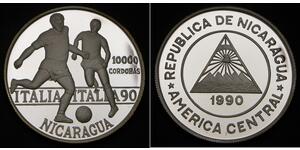
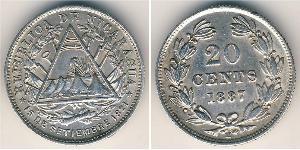
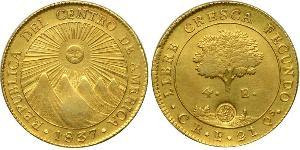
| Nicaragua (1821 - ) | Link to Wikipedia |
Nicaragua: History, Coinage and Collectibles
Welcome to the numismatic journey of Nicaragua, often called "the breadbasket of Central America." While known today for its lush landscapes between two oceans—Pacific to the west and Caribbean Sea to the east—the history of this republic is written not just in soil and volcanoes, but also on metal plates that traveled across centuries. For collectors, the story begins far from here, amidst the vast galleon trade routes that connected Asia with Spanish America.
Historical Background
The land known as Nicaragua has been inhabited by indigenous cultures for millennia. The region served as a vital intersection between Mesoamerican civilizations like the Aztec and Maya influences to the north, and Andean groups from the east. Long before European influence arrived in 1502 via Christopher Columbus's fourth voyage, the local landscape was dotted with lakes that were central to trade routes connecting diverse populations.
The Spanish conquest transformed this geography into a strategic hub for commerce. In 1524, permanent settlements like Granada and León established footholds on Lake Nicaragua (Lake Managua) and nearby shores. Crucially, the Pacific Coast of western Nicaragua became an essential port facility. It was here that galleons plied the waters between Manila in Asia and Acapulco in New Spain. As these ships gathered goods—gold from mines further south passed through this region to head north—the coinage circulating locally shifted accordingly. This made Nicaragua a crossroads for currency rather than just a destination, embedding it deep within global monetary history long before its political independence.
Independence came with the broader movement across Spanish America in 1821. For Nicaraguan collectors looking at their nation's early identity through coinage requires understanding this transition from colony to republic. The economic landscape was defined by fertile agricultural soil, making it a prime location for cash crops and trade goods like cacao, timber, and cattle hides.
Currency and Coinage History
The evolution of money in Nicaragua reflects the larger trajectory of Spanish America: from standard silver reales to complex decimal systems. In the colonial era, coins minted at Mexico City were widely circulated throughout its ports and valleys. However, due to taxation laws like the alcabala on imports and exports, local economies often needed distinct currency management.
During the 19th century, as nations solidified their independence, there was a drive for "national" coinage that bore unique symbols or specific denominations different from Mexican pesos. Nicaragua sought to establish its own monetary authority separate from neighboring Costa Rica and Honduras (its southern neighbors). This struggle is visible in numismatic history; early issues often mirrored the broader Spanish colonial patterns until distinct Republican designs took hold.
The establishment of a stable currency was essential for trade within the "breadbasket." Farmers required standardized exchange rates to pay taxes or purchase tools. As modern economic structures evolved, particularly during periods like American occupation and later sovereignty consolidation, Nicaragua adopted decimal-based currencies (like the córdoba) that replaced silver standards entirely in circulation. This shift from metallic coinage to paper money is a story central to understanding its 20th-century economy.
Mints and Coin Production
Nicaragua did not possess an indigenous mint capable of producing significant quantities of gold or large denominations for centuries, unlike Mexico City. Most coins found during the Spanish era were imported from Viceroyalty mints in New Spain (Mexico) or Peru.
The absence of a massive local mint meant that production was outsourced to neighbors like San José de Costa Rica or Mexico throughout much history. However, this did not mean Nicaragua lacked unique coinage; rather, it adopted circulating foreign coins which were often localized through legends or over-punches used for anti-counterfeiting measures.
As industrialization advanced and the country developed as a modern state in the 20th century, new technologies allowed for more intricate designs featuring national icons. These artistic characteristics are vital to collectors because they mark the shift from purely functional trade coins to those celebrating specific cultural achievements like literature or agriculture. The transition from silver dollars to copper-nickel fractions reflected inflation and changing economic needs rather than just political whim.
Notable Coins
To understand what defines an important Nicaraguan coin, one must look at the historical context that placed it in a collector's hand. One notable category involves Spanish-era silver dollars (pieces of eight) recovered from sites where gold was transported to Acapulco. These coins are often prized for their connection to the Manila Galleon trade rather than intrinsic rarity.
The Independence Era Issues:
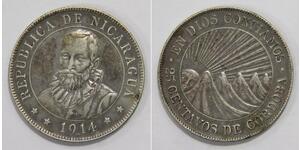
- Pillar and Liberty themes: Early Republican issues attempted to replace Spanish imagery with symbols of freedom found on independence. These were designed as alternatives to foreign currency, establishing national identity for a young republic.
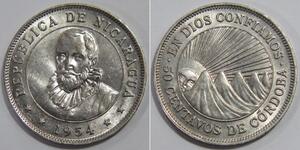
The most celebrated pieces from the later 20th century often feature artistic motifs drawn from Nicaragua's rich cultural heritage. For instance, coins issued during modern periods frequently utilized imagery of indigenous peoples (the Miskito and Rama) or volcanoes that define its topography. These designs celebrate national unity despite political unrest mentioned in recent times.
The "Breadbasket" Era:
- Agricultural Coinage: In the mid-20th century, coins issued emphasized coffee cultivation and livestock trade due to these being the main exports. Collectors find value in these issues as they represent a specific agricultural boom that funded international trade.
Cultural Legacy
Nicaraguan coinage acts as a physical reflection of its diverse history, blending European Spanish traditions with indigenous influences and Caribbean culture along the coast. Even when local mints were not in operation for centuries, coins entering the market reflected this diversity—often bearing legends that honored the "Nicarao" people mentioned early on.
The legacy found in these metals is tied to geography: namesakes of lakes like Xolotlan and Managua appear frequently. The evolution from Spanish colonial symbols (kings) to Republican emblems highlights a transition toward local governance while maintaining economic ties with major global markets. For collectors, studying Nicaragua's coins offers insight into how the nation balanced internal agriculture exports against external demands.
For Collectors
Nicaragua remains an intriguing topic for numismatists focusing on Latin America because its history is a microcosm of broader imperial transitions. While it may not produce large gold issues like Mexico, collecting Nicaragua offers access to the rare transition coins found during periods when foreign currency was locally minted or taxed.
The historical significance lies in understanding that "rare" often means having specific date varieties or die states from regional mints rather than errors alone. For those building a collection focused on Central America, Nicaraguan pieces provide excellent examples of how nations transitioned from colonial rule to sovereignty. Understanding the country's unique geography—its position as a land bridge and port for galleons—adds significant value beyond simple monetary worth.
In conclusion, this nation invites collectors not just through its coins but through their connection to deep trade routes that once fed Europe with silver mined in distant lands. Whether tracing the flow of Spanish dollars across oceans or studying later issues celebrating local agriculture and indigenous culture, these pieces tell a story of unity, diversity, and resilience.