| View |

| Frankish Empire (481-843) | Link to Wikipedia |
Francia: History, Coinage and Collectibles
Historical Background
The history of Francia is a narrative written in the language of metalwork that spans centuries, mirroring the rise from regional Germanic tribes to the unification of Western Europe. Originating on the banks of the Rhine in the early days of the 5th century, this polity was not merely a territory but an evolving cultural identity shaped by conflict and diplomacy with Rome.
In its formative years under Clovis I, Francia transformed from scattered tribal confederations into a cohesive kingdom through strategic marriage to Catholic Gallo-Roman families. This merger of power shifted the center of gravity in northern Gaul, establishing Paris as a pivotal administrative hub shortly thereafter. The political landscape evolved rapidly; while early Merovingian kings fought for control over distinct sub-kingdoms like Neustria and Austrasia, the Carolingian dynasty consolidated these divisions under one imperial banner by 800.
This period of unification was driven not just by military might but by an economy that required standardized trade across vast distances. As Charlemagne expanded his borders toward the east to reach Italy and Spain, he sought a currency system capable of supporting this expansive realm. However, as internal strife fractured the unity between East Francia and West Francia during the late 9th century, coinage began to reflect these new political realities. The eventual division into France and Germany left an indelible mark on numismatics, yet for collectors, the story begins with a single solidus of Clovis that represents the dawn of unified Frankish rule.
Currency and Coinage History
The evolution of currency in Francia was deeply rooted in Roman legacy. For centuries after Caesar's conquests, coin production relied heavily on gold staters derived from Rome. When Clovis seized control of Gaul around 486 AD, he did not invent money but rather adopted the solidus—the gold standard used by Byzantium and Ravenna—creating a stable reserve for elite trade.
The transition occurred in earnest with Charlemagne (Charles the Great). Recognizing that silver was more practical than precious metal for daily commerce of grain and wool, his dynasty introduced the Denier. Originally struck as a small copper coin or an imitation penny before being replaced by pure silver standards to combat devaluation. The standardization under Louis the Pious and later Carolingians established the "Denarius" system that would survive well into modern times.
This shift allowed for complex administrative control over provincial mints, where local bishops often managed production on behalf of kings in exchange for land grants or taxes—a practice known as fiscal minting. Collectors today find these issues fascinating because they act as a map of the era's economic reach; if a town had its own mint, it was likely wealthy enough to sustain independent coinage without relying solely on the capital.
Mints and Coin Production
The mints were often located in fortified cities where metal could be transported safely. Paris (Ludonia) became one of the most significant production centers due to its strategic location at the confluence of major river routes linking London, Rouen, Amiens, and beyond. Other key centers included Cologne, Metz, Sens, Tours, and Lyon.
A distinct feature in Francia's minting traditions is the artistry employed on the coins' surfaces during periods when gold was plentiful versus silver scarcity. During Charlemagne’s reign, artists utilized high-relief sculpting techniques to depict the king's name along with a profile portrait that often incorporated Byzantine influences before adopting more local Frankish features.
Over time, engraving technology evolved from punches (used to hammer impressions) toward engraved dies which allowed for finer detail. While many coins were struck locally by bishops or counts acting as agents of the crown, others carried specific inscriptions denoting royal decrees regarding peace or tax collection. These "peace" issues are highly prized because they mark a moment in history where authority was reasserted over regions previously at war.
Notable Coins
- Clovis I Solidus: Perhaps the most legendary issue from this era. This gold coin displays Clovis's profile and marks his claim to succession of both Germanic tribesmen who followed him in Rome as well as Gallic aristocrats.
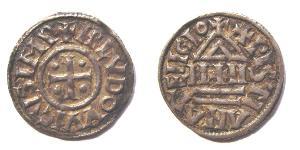
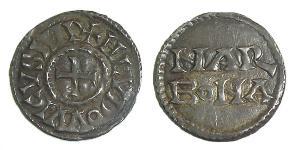
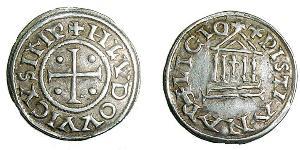
- The Carolingian Denier (807-932): Minted across the realm, this silver coin is considered a foundational standard for European currency. Its obverse featured Charlemagne's portrait and his name in Latin characters—a visual proclamation of centralized power.
- The Capetian Denier: Appearing centuries later after the division between France and Germany was solidified, these coins bear legends referencing Louis d'Outremer or Robertine kings. These often feature Gothic architectural motifs on reverse sides reflecting local religious trends at major cathedrals like Notre Dame.
- The "Pax" Issues: Produced during times of transition and conflict in the 9th century, these rare specimens show imagery symbolizing a truce or peace agreement made between warring Frankish factions. They are crucial for understanding diplomatic efforts before modern treaties existed.
Cultural Legacy
The coinage of Francia serves as a tangible record of the country's transformation from loose tribal territories to an organized state. As time progressed, iconography on these coins changed dramatically; early designs featured simple profiles and Greek or Latin legends that referenced Roman emperors. Later issues incorporated Gothic script styles alongside Christian imagery.
The use of gold for high denominations during the Merovingian era suggests a continuation of ancient traditions where wealth was displayed through solidus circulation, whereas later silver coinage reflected an economy more focused on trade in agricultural goods and woolen textiles across vast distances. Every strike represented authority; to carry one meant acknowledging allegiance not just to local lords but eventually to kings who governed empires stretching from Italy into Spain.
The legacy remains visible today through the enduring concept of "the Franc," a monetary unit derived directly from these medieval Deniers that evolved over centuries into our modern currency. The evolution reflects broader societal shifts where power became centralized, laws were written on parchment and stamped in lead to bind communities together against foreign threats.
For collectors
The significance of collecting coins from this period lies not only in their scarcity but in the story they tell about how nations define themselves. A simple Denier is more than currency; it represents a specific king's promise to maintain peace and order within his borders.
Educated collectors look for these pieces as historical artifacts that document economic conditions, military campaigns, or religious reforms of their day without needing lengthy captions. Each specimen serves as a miniature artifact allowing scholars—and hobbyists—to trace the lineage from Clovis to Louis IX and beyond through physical objects held in hand.
This collection offers an opportunity for investors who appreciate deep historical provenance to acquire tangible links to the genesis of one nation's history today, where metal meets memory. By studying these ancient strikes alongside their political context, enthusiasts gain insight into how early states maintained control over vast populations and managed economic stability across generations.