| View |
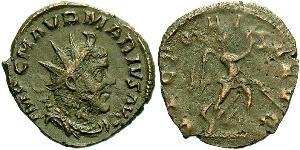
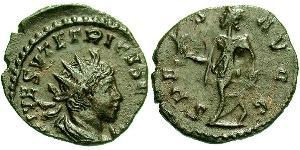
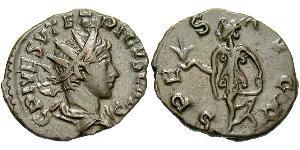
| Gallic Empire (260-274) | Link to Wikipedia |
Gallic Empire: History, Coinage and Collectibles
Historical Background
The story of the Gallic Empire is one of defiance, survival, and artistic resilience within a fractured world. It emerged from the turbulent mists known as the Crisis of the Third Century—a time when Rome itself seemed to falter under pressure from barbarian invasions on multiple fronts and internal political chaos.
In this chaotic era, while Emperor Valerian was held captive by eastern enemies, a governor named Postumus found himself in charge of the western frontiers. He made a critical decision that would define an entire nation-state: rather than marching east to defend Italy or seeking power from the crumbling central administration, he chose to hold the line against Germanic tribes and protect Gaul itself.
This defensive strategy was born out of necessity but evolved into a unique political reality. The region became de facto independent for over a decade before finally being reunified in 274. This breakaway state included not just modern France, but also parts of Germany, Britain, and Spain—a vast expanse that managed its own economy, armies, and courts without recognizing the authority from Rome.
The Gallic Empire was fundamentally different from other Roman breakaways like Palmyra because it never sought to conquer Italy. Instead, their institutions were modeled after those in Rome but operated with a spirit of self-preservation unique to western Europe at that time. This isolation allowed for cultural divergence; the people here did not view themselves merely as distant subjects, but rather as the guardians of civilization against northern barbarism.
Currency and Coinage History
In such times of instability, coins were more than just money—they were tools of statecraft. The Gallic administration used their currency to pay soldiers, who were essential for defense, but also utilized coinage as propaganda. In a world without strong central communication networks, every person holding a Gallic coin was witnessing the power and authority of Postumus or his successors.
The monetary system began with silver coins that closely resembled those minted in Rome under Emperor Gallienus initially. However, the reality on the ground shifted quickly. As the empire faced economic strain due to heavy war spending, bronze issues became increasingly common for everyday trade while high-quality gold was reserved for paying elite troops and maintaining imperial prestige.
A crucial evolution occurred regarding design philosophy. In central Rome during these years of turmoil, coins often featured rougher designs that emphasized political legitimacy over artistic beauty because the focus was solely on survival against usurpers in Italy or Africa. However, Gallic mints were different. They produced high-relief bronze issues and silver denarii with striking detail.
This divergence tells a story about resource management versus cultural pride. In Rome, they were struggling to hold onto power through sheer force of numbers; here, the focus was on defense along specific frontiers where quality coinage helped keep morale high. The reverse sides often bore legends declaring "Victory" or featuring images that celebrated Roman heritage while reinforcing local leadership.
The use of these coins also reflected a shift in cultural identity as Gallic society solidified its autonomy over the decade-plus duration of their rule. By minting gold and silver, they were engaging with an international economy even if politically isolated from Italy. Their ability to import goods or pay for grain across borders meant their currency had real value on the continent.
Mints and Coin Production
The production centers of this unique state offer a fascinating look at how governance dictated artistic output. The heart of Gallic coinage lay initially in Lugdunum, modern-day Lyon. This city served as the primary mint where massive quantities of silver were struck during Postumus' reign.
Lugdunum was chosen for its central location and strategic importance near the Danube frontiers. However, following 269 when a coup led by Laelianus challenged Postumus's regime in Mainz (now Cologne), production centers shifted or changed hands frequently.
Marius succeeded his predecessor quickly after death but his reign was brief; he minted coins at Mainz that served as transitional issues linking the earlier Gallic Empire to its successors. By 271, when Victorinus took power following Marius's death and later under Tetricus I in Trier (in Germany), production became even more intense.
Trier was a key manufacturing hub because it lay directly on the Rhine frontier against Germanic tribes like the Franks. The need for silver to pay armies stationed here meant that mints prioritized speed and reliability of output over elaborate designs during certain periods, though artistic quality remained high due to local skilled workers.
These coins often bear distinct characteristics found only in this region—sharper detailing on helmets, horses, and eagles than those produced simultaneously in the east or Italy. This suggests that workshops here operated with a degree of autonomy regarding design decisions.
Notable Coins
For numismatists, no coin is more iconic from this period than the standard Gallic denarius and bronze issues featuring "VICT" on the reverse—short for Victoria. These were first issued during Postumus's reign but saw their artistic peak later.
- The VICT Reverses:
Seminal to any collection, these coins feature images of Victory crowning an eagle or other deities on the reverse. Their significance is twofold: they celebrated military success against barbarians and promoted loyalty to Gallic leaders rather than distant Italian emperors.
- The Victoria Portraiture:
An incredible artifact found later proved that a woman named Victoria actually held influence over coin design. The coins show her portrait or the title "Victoria" used to legitimize successors like Victorinus. This is distinct from typical Roman imagery.
- The Tetricus Gold Series:
Toward the end of their existence in 274, coins issued by Emperor Aurelian's predecessors featured more refined designs before unification ended them. These often show high craftsmanship and serve as a bridge between early Roman coinage standards and later Byzantine or late antique styles.
Cultural Legacy
The enduring value of these issues lies in the way they reflect cultural independence amidst chaos. While Rome was fighting for its soul across Europe, Gaul maintained order through high-quality administration that showed on metal plates still visible today.
A collector holding a Gallic denarius holds evidence of a unique experiment: how much autonomy can exist within an empire before it becomes fully independent? The symbols used on these coins—the eagle, the laurel wreath—echoed Rome, but they were wielded by men who ruled western Europe as free statesmen during its most perilous centuries.
The art style of Gallic coinage often reflects a more rustic yet realistic approach to representing figures and deities. They are less idealized than Imperial coins produced in the East or North Africa, perhaps because they were grounded by harsh realities along northern frontiers rather than exotic luxuries found elsewhere.
For Collectors
The Gallic Empire remains a cornerstone for collectors of late Roman antiquity. Its significance comes from its rarity relative to other provinces that remained loyal but produced no coins, and the fact that these were minted in such numbers despite political fragility.
Possessing even one or two types provides insight into how western Europe responded when central authority collapsed. They are also prized for their high relief; unlike flat Italian issues from 260 to 275, Gallic coins retain sharpness and depth that make them visually compelling under light.
As you explore these treasures, look at the inscriptions carefully. The language used shifts between Roman Greek/latin titles and local variations reflecting how this state was its own world yet still a part of Rome's sphere for so long before 274.