| View |
| preceded by | ||||
|
||||


 Denmark-Norway (1536-1814)
| succeeded by | ||||
|

| Denmark-Norway (1536-1814) | Link to Wikipedia |
Denmark–Norway: History, Coinage and Collectibles
Welcome to the gallery of a union that spanned centuries across three continents. The Kingdom of Denmark-Norway, often referred to in historical texts as the "Twin Kingdoms," presents one of the most fascinating chapters for collectors interested in early modern European currency and colonial expansionism.
Historical Background
The narrative begins with a complex tapestry of political alliances. For much of its existence, this entity was not merely two nations side-by-side but deeply intertwined personal unions under the House of Oldenburg. By 1660, Denmark had transitioned into an absolute monarchy—a significant shift that centralized power and standardized administration. Norway remained de jure separate in many regards until well into the 18th century.
This political structure dictated their economic footprint. The Sound Tolls on maritime traffic between Sweden and southern Europe were a lifeline of state revenue, necessitating robust currency circulation among merchant fleets from across Northern Europe. Furthermore, as an expanding colonial empire in Africa, India, and the Caribbean—from Tranquebar to Frederiksted—Denmark-Norway became deeply connected to global trade winds.
Culturally, this was a melting pot where Danish administrative power often overrode Norwegian local customs following 1652. This centralization meant that while Norway maintained some distinct legal codes and currencies (the rigsdaler), the heart of economic life beat in Copenhagen. The transition from feudal systems to mercantile capitalism is vividly captured in their coinage, moving from simple copper trade pieces to sophisticated silver bullion coins used internationally.
Currency and Coinage History
The numismatic history of this region evolved alongside the state itself. In its early phases, particularly during the 15th century following the Kalmar Union, coinage was often irregular or minted under various local lords before royal unification.
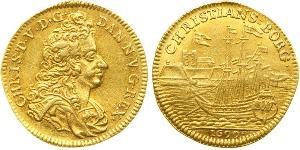
A defining moment occurred in the 17th century with the introduction and eventual standardization of silver currency to facilitate trade. The "Riksdaaler" became a staple for international commerce, circulating widely due to its reliable silver content. Later, as global gold prices fluctuated, Denmark introduced the Dukat—a coin often preferred by merchants over Spanish pieces used in neighboring regions.
Copper coins tell a different story of everyday life and colonial interaction. During the early 1600s, small copper fractions were minted to pay soldiers and purchase spices from India or rum from the West Indies. Interestingly, during times of war—specifically around the Napoleonic conflicts—the need for liquidity led to extensive debasement, where silver coins replaced their lower denominations in circulation at a fixed rate, disrupting traditional collecting categories.
Mints and Coin Production
The minting apparatus was concentrated heavily within Copenhagen. As an absolutist monarchy consolidated power in 1658 with the King's Law, control over coin production became central to royal revenue streams; counterfeiting or unauthorized seignorage could be a capital offense.
Copenhagen stood as the primary engine of this minting output under skilled craftsmen. However, distinct mints were active in other key locations such as Altona (now part of Germany), which had Germanic influences and required different linguistic iconography for specific regional trade with Northern Germany.
The artistic quality fluctuated depending on the era. Early 17th-century dies often displayed heavy relief, reflecting a Gothic aesthetic that gradually softened into Baroque elegance during the reigns of Christian V. While Norway possessed its own minting activities in Trondhjem (Trondheim), these were often reserved for specific local needs or colonial expeditions sent from there.
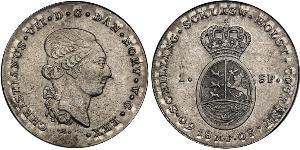
Metal content was crucial to understanding production techniques. During the 18th century, silver content dropped significantly, leading collectors of today to seek out pre-Napoleonic dates that exhibit the "standard" weight and purity expected by foreign traders who accepted these coins against Dutch or British currency in colonial ports.
Notable Coins
The Horned Lion Copper Pennies:
- Historical Context: Produced from roughly 1634 to 1705, these are the lifeblood of a Norwegian numismatist's collection. The obverse features a crowned shield with the arms of Denmark and Norway separated by an arm holding two spears—symbolizing peace between allies while retaining military strength.
- Design Features: While often simple, high-grade specimens from this era display sharp details in the lion emblem found on Danish coins. Variants exist where a horned figure (often misidentified as just part of an arm) appears, known as the "Horned Lion" pieces.
- Collecting Importance: These are sought after for their rarity and historical weight regarding Norwegian trade with Russia in the north and tobacco from India. They offer a glimpse into the common currency used before industrialization altered economic scales entirely.
The Colonial Thalers and Ducats:
- Historical Context: During the zenith of colonial power in 17th-century India (Nicobar Islands) and Africa, Danish mints issued silver for export. These were necessary to pay soldiers or purchase spices from Portuguese East Asia.
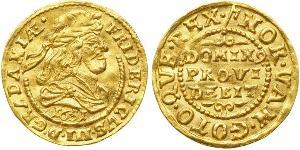
- Design Features: High-value coins often bear legends referencing Christian IV or Frederick III alongside the King's crest on one side and a lion rampant facing left on the other—standard heraldic iconography of Danish authority. Some were minted specifically with overstrikes to mark colonial ownership.
- Collecting Importance: The scarcity of these silver pieces compared to common copper denominations makes them prized "key dates." They connect collectors directly to the era when Denmark possessed an empire spanning from Greenland to India.
The Napoleonic War Pieces:
- Historical Context: With France blocking trade routes in Europe, coins with French motifs were often melted down or re-minted locally during this tumultuous period. This era represents the transition from colonial dominance to economic hardship.
- Design Features: These are typically debased copper pieces meant for local survival rather than international use, bearing dates in their 40s and 50s reflecting inflationary pressures on state finances.
Cultural Legacy
The coinage of Denmark-Norway serves as a physical testament to its role as a bridge between Europe and the Atlantic world. The designs reflect religious shifts; during the Reformation, earlier Catholic symbols were replaced with Protestant iconography on state coins.
Beyond religion, currency was used for diplomatic messaging. When trading in India or West Africa, the use of silver ducats aligned Denmark-Norway with European powers like Portugal and Spain, projecting an image of financial strength to foreign merchants who might have otherwise traded exclusively under British or Dutch flags later on.
The distinct "Danish" aesthetic often subsumed Norwegian designs over time. While Norway maintained a separate identity in the legal sense (until 1814), coins from this era bear distinctly Danish heraldry, symbolizing Copenhagen's administrative dominance. Yet, local variations—particularly regarding minting marks or specific dates found at Altona and Trondheim—remind us that even within an absolute monarchy, regional economic realities dictated production choices.
For collectors
The allure of Danish-Norwegian numismatics lies in its story-telling potential. Collectors should not simply view these as isolated pieces but rather as artifacts from a state that controlled the "Sound Tolls"—the gatekeepers to Baltic trade—and an empire with outposts where no British ships ventured.
Rarity is determined by condition and period; early 17th-century copper, while common in circulation today due to heavy usage and loss of silver content over time during wars, holds significant value when the strike quality remains high. Conversely, colonial pieces from India or Africa offer a unique entry into global trading history.
To possess these coins is to hold a small piece of 18th-century empire in one's hand—coins that traveled oceans to pay for spices and tobacco, bearing the weight of royal authority over diverse peoples across continents. For any serious collector, this period represents a crucial step between medieval currency systems and modern national banks.