| View |
| preceded by | |
 Trinidad and Tobago
|
| succeeded by |
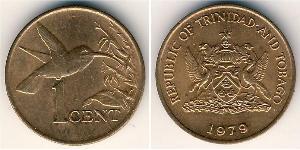
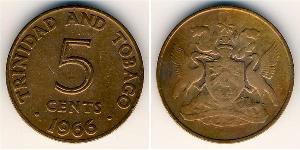
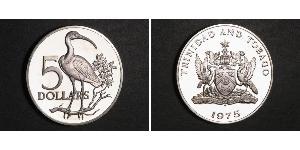
| Trinidad and Tobago | Link to Wikipedia |
Trinidad and Tobago: History, Coinage and Collectibles
Welcome to our exhibition on one of the most fascinating jurisdictions in Caribbean numismatics: Trinidad and Tobago. For centuries, this archipelagic nation has served as a crossroads of empires, cultures, and economies. Today, we stand at its edge, examining how small metal discs tell the grand story of colonization, independence, and modern economic sovereignty. As you turn these pages—or browse our digital archive—consider not just the dates stamped on silver or copper-nickel alloys, but the lives they touched.
Historical Background
The narrative of Trinidad is written in ink that bled across a parchment older than paper itself. When Christopher Columbus first sighted these islands in 1498, he was not looking for treasure or new trade routes, but simply fulfilling his religious vows to reach the Trinity on November 2nd (San Andrés de la Trinidad). He saw the land from afar and named it accordingly, though a Spanish garrison had long before established itself under figures like Antonio de Sedeño.
The history here is distinct because of its unique geography. Unlike many Caribbean neighbors that were battlegrounds for European powers shifting hands dozens of times—such as Tobago’s tumultuous early days with the Dutch and French—Trinidad remained a Spanish possession until 1797, when Governor José María Chacón surrendered to British forces under Sir Ralph Abercromby during the Napoleonic Wars. This shift was crucial.
The transition from Spanish colonial rule to British dominion fundamentally altered the monetary landscape of the islands. While Spain had utilized pieces of eight and vellon coins with religious iconography common in Latin America, the arrival of Britain brought a system based on sterling standards. The economy shifted as well; what began as an export-heavy hub for sugar cane later diversified significantly into oil exploration.
The cultural fusion that defines modern Trinidad—blending African traditions from slave plantations and indentured laborers with Indian subcontinent heritage—is also visible in the nation's symbols. It was in this melting pot culture, culminating in 1962 when independence arrived as a republic in 1976, that the need for a distinct national identity became paramount. This cultural shift did not just change flags or anthems; it changed what would appear on government-issued currency.
Currency and Coinage History
The evolution of money in Trinidad began long before local mints were established. For centuries, the islands functioned largely within a colonial system where British silver was imported to replace Spanish pieces that had circulated for too many decades. By the mid-19th century, under Governor Sir Ralph Abercromby’s legacy, Britain tightened its grip on trade regulations.
The major transition occurred in two waves: first with decimalization and second with independence issues. The most significant period of local coinage production began during WWII when wartime inflation demanded new denominations to stabilize the economy. As Trinidad moved away from sterling towards a dollar-based system, it needed its own minting authority.
In 1962, upon gaining independence as dominion within the Commonwealth (and fully sovereign later), Trinidad was not yet in position to strike complex silver issues for international circulation like major Western powers. Instead, they focused on circulating change and low-value tokens essential for a developing economy. However, it is during this period that collectors find their most prized items: proof sets featuring national themes.
The final shift came with the introduction of decimal currency in 1964. This was not merely an administrative change but a psychological one; citizens and foreign visitors alike began to see Trinidad through its own eyes, rather than those imposed by London or Madrid. The subsequent independence in 1976 led to commemorative coins that celebrated the nation's heritage.
Mints and Coin Production
To understand the physical nature of these collectibles, one must know where they were born. For a long time, coin production was centralized outside the Caribbean territories due to their small volume and limited metallurgical capacity during colonial times. However, as demand for currency increased with oil exports and industrialization in the mid-20th century, the requirement grew.
Minting operations became crucial after 1962 when the government sought to assert its sovereignty over local commerce. The primary production hubs shifted between Trinidad’s own minting centers or contracted facilities within the Commonwealth Caribbean that adopted similar decimal standards with British-style designs evolving into distinct national ones. This era allowed for high-quality strikes in silver, copper-nickel, and gold.
The technology used during this transition mirrored that of modern industrial nations. Coins were die-struck under strict quality control to prevent fraud on government reserves—a critical need for a country with significant oil wealth entering the global market from Venezuela's coast outward toward Guyana. The precision struck into these coins became the mark of their legitimacy.
Notable Coins
This is where every collector finds their treasure trove: select pieces that define this era of numismatics.
- The 1950s Silver Series: Before full independence, coins struck between the late forties and early fifties are highly coveted. These silver denominations often bore British imperial designs modified with specific Caribbean flora or fauna to signal local production while remaining within a familiar global system for merchants.
- The 1962 Independence Proofs: The year of independence marks one of the most exciting chapters. Proof coins issued during this time are legendary among collectors. These were often struck in silver with high-quality finishes, featuring portraits or symbols representing Trinidad and Tobago's unique duality—African drummers and Indian dancers on a single piece. They serve as tangible evidence of the nation standing alone.
- The Decimal Transition Sets (1964): The 2-dollar gold coin is particularly significant for numismatists. Issued after decimalization and around independence, these coins represented a new era in economic stability. They often featured the Coat of Arms with its distinctive dolphin symbolizing wealth or peace.
Cultural Legacy
The value of Trinidadan coinage extends far beyond face value; it is an artifact that captures national identity through design and material choices. The transition from colonial imagery to indigenous symbols represents a profound psychological shift. Where once there were generic monarchs, now the coins featured specific cultural elements.
Cultural markers such as dolphins appear frequently because they symbolize wealth brought by trade currents—the same waters Columbus discovered but where modern oil rigs rest today. Furthermore, music and dance themes have occasionally appeared in circulation or proof issues, celebrating calypso soca and steelpan origins that make Trinidad a cultural capital.
The coins serve as history books in miniature metal volumes, preserving the legacy of indigenous heritage (Cairi) through official recognition by government decree. The imagery on these pieces often references the natural beauty of the southernmost Caribbean chain or the vibrant festivals like Carnival. A coin is not just money; it carries a piece of that culture out into museums and private collections.
For collectors
If you are considering entering this segment, focus on condition (grade) over age for most items in circulation. However, the truly exceptional pieces lie within the proof sets produced prior to 1965 or shortly thereafter which depict pre-independence figures with high artistic merit.
This series is important because it documents a nation that was born from conquest but evolved into something entirely new and powerful economically through petroleum resources rather than just tourism. The coins serve as silent witnesses to the island's journey, preserving its history in metal form for future generations of enthusiasts who can hold these items in their hands today.