| View |
 Thailand (1238 - )
| Thailand (1238 - ) | Link to Wikipedia |
Thailand: History, Coinage and Collectibles
Historical Background
The land now known as Thailand occupies a unique geopolitical niche within Mainland Southeast Asia. For millennia, it served not merely as a bridge between civilizations but as an active participant in the broader narrative of regional trade and exchange. Situated at the confluence of two great seas—the Andaman Sea to the west and the Gulf of Thailand to the east—this peninsula became a crucible for commerce long before modern banking systems were established. Its strategic position allowed it to navigate complex relationships with China, India, and later Western powers without succumbing directly to colonial rule.
This resilience defined its economic history. The kingdom's early prosperity relied on agricultural surplus from the central plains of Chao Phraya River Valley. From prehistory onwards, evidence of rice cultivation suggests a settled economy that eventually required more efficient exchange mechanisms than barter could provide. During the classical periods of Sukhothai and Ayutthaya, Siam engaged in extensive maritime trade through what is known as the Maritime Jade Road.
The historical trajectory shifted dramatically with European contact. The arrival of Portuguese envoys and subsequent trading relations introduced new standards of value. By the 19th century, faced with economic pressure from neighbors like Britain and France, the kingdom needed to standardize its monetary system to facilitate trade while maintaining sovereignty. This transition was crucial for modernizing commerce but also entailed a significant loss of indigenous numismatic autonomy.
Currency and Coinage History
The evolution of money in this region is a story of adaptation between local tradition and foreign influence. Before the 19th century, coins found their way into the hands of traders from Siam were often imported silver pieces known as "Ticals" or Spanish dollars bearing names like "Pegues." These circulated alongside indigenous copper pieces called "Laks" or "Sangs," which featured simple markings indicating weight and denomination.
The modern era began to take shape under King Chulalongkorn (Rama V). Recognizing the need for a unified currency to consolidate national control over distant provinces, he initiated reforms that replaced disparate local systems. He standardized these currencies into specific denominations backed by gold reserves in Bangkok and silver elsewhere.
This period marked a profound transformation: Siam adopted the metric system (the Siamese decimal coinage) around 1897 to compete with international standards, specifically aligning closely with British models while retaining its own identity. The currency transitioned from weight-based systems (using Ticals and Sangs based on silver content) to a fiat-backed value eventually leading to the Baht system we recognize today.
Mints and Coin Production
The production of coinage evolved alongside royal decrees. For centuries, minting was largely restricted to the capital due to security concerns regarding bullion storage, but provincial needs occasionally necessitated local casting or adaptation. As industrialization advanced in the late 19th century, mints were upgraded with modern rolling mills and stampers that could produce intricate designs.
The design aesthetics of these coins are deeply tied to Thai craftsmanship traditions rather than just European imitation. Early coinage often incorporated motifs from Hindu-Buddhist mythology or royal regalia. Unlike many colonial possessions where local art was suppressed, Siam managed to integrate its artistic heritage into the new currency standards. The mints utilized high-quality silver and later gold for specific circulation pieces designed for international trade.
The transition of technology brought about significant changes in production quality. From hand-stamped copper "Laks" that often showed uneven wear, mass-produced silver coins became smooth and precise. However, the scarcity of certain metal compositions or the brief periods before industrialization fully caught on remains a hallmark for collectors today.
Notable Coins
The Early Tical Trade Pieces:
- Historical Context: These are arguably the most significant numismatic artifacts of early trade in Siam. Used primarily during the 17th through 19th centuries, these were not locally cast but imported.
- Design Features: Usually silver dollars or smaller fractions bearing names indicating their origin (Spanish or Portuguese). Over time, they acquired local variations such as "Pegus." They feature portraits of European monarchs and Latin inscriptions alongside Asian script in later issues.
The 1897 Silver Tical:
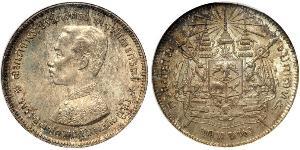
- Historical Context: This coin represents a pivotal moment where Siam moved to decimalize currency. Issued as part of the reform under Rama V, it was intended for international trade.
- Design Features: Obverse designs often featured a central Garuda (the mythical bird) flanked by two smaller Garudas or floral motifs such as lotus blossoms and jasmine flowers.
The Loei Gold Coins:
- Historical Context: Produced after the decimalization reforms but before full abandonment of gold reserves, these served to bridge foreign trade needs with local banking standards.
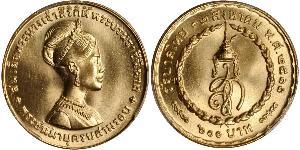
- Design Features: These high-value coins were strikingly bold in their designs. They often displayed portraits of King Rama V and inscriptions honoring his reign as well as the Garuda symbol on one side and floral motifs on others, signifying sovereignty rather than imperialistic submission.
Cultural Legacy
The coinage of this country is a tangible reflection of its cultural identity. Unlike many European nations that used religious icons heavily in state coinage after secularization, Thailand maintained strong visual ties to Buddhist imagery and Hindu mythology throughout the modern era.
The Garuda bird serves as an enduring symbol on currency; it represents protection and divinity in Thai culture (Naga). Furthermore, the script evolved alongside the coins. While early issues used Sanskrit-style Pali or Khmer influences for titles like 'Rattha' (Kingdom), later reforms integrated modernized Siamese letters to denote state authority.
The design philosophy generally favored nature and religion over political figures in many earlier eras, reserving portraits strictly for the monarchs. This artistic restraint distinguishes its numismatic output from other colonial-era pieces that featured purely military conquest imagery or aggressive heraldry.
For Collectors
The history of money in this region offers a unique opportunity to study how non-Western nations navigated financial imperialism without losing their cultural identity. For the collector, these coins offer more than metal content; they serve as artifacts that tell the story of resilience and economic independence.
- Sigillic Evidence: Look closely at condition reports where wear patterns match historical circulation—many Ticals were worn heavily in port towns like Surat Thani or Phuket, while gold issues remain pristine. This distribution data is fascinating for historians.
The numismatic heritage remains highly respected today because of its rarity and the elegance of its design work under pressure to modernize quickly. Whether a collector seeks early copper Sengs from Ayutthaya or the refined decimalization issues introduced in the 1890s, these pieces represent the story of an economy adapting to change while holding fast to ancient roots.