| View |
| preceded by | |
 British Malaya (1826 - 1963)
|
| succeeded by |
| British Malaya (1826 - 1963) | Link to Wikipedia |
British Malaya: History, Coinage and Collectibles
Welcome to our exploration of one of the most fascinating chapters in imperial numismatics. The region known historically as British Malaya offers collectors not just monetary artifacts but windows into a vast global economic system that connected Asia with Europe during the height of industrial power.
Historical Background
To understand the coins, we must first understand the merchants and maps they served. Before 1800, British involvement was tentative; traders like Raffles arrived seeking spice routes rather than political dominion. The turning point came with the establishment of settlements in Penang and Singapore to secure access to tin mines on the mainland and rubber plantations. These were not merely trading posts but fortresses designed by the East India Company (EIC) and later direct Crown authority.
Initially, the administration was fragmented into three distinct entities: the Straits Settlements of direct British rule, followed by the Federated Malay States and Unfederated states which remained protectorates. This political division influenced commerce deeply; goods flowed through fortified ports in Singapore and George Town to supply a massive regional market that spanned from Java to India.
The local economy was driven by two primary exports: tin and rubber. Tin was mined on an industrial scale, making the peninsula one of the most profitable territories in the Empire before the war with Japan halted operations in 1942. This immense wealth required a robust currency system capable of facilitating massive international trade flows.
Currency and Coinage History
The monetary history here is a tale of transition, moving from primitive tokens to standardized imperial coins. In the early settlement days (circa 1786 for Penang), local barter systems relied on foreign silver dollars brought in by Chinese traders. These were Spanish dollars or Mexican pieces of eight that had been clipped and altered.
As trade intensified, chaos reigned; merchants found it difficult to distinguish between standard coins and those reduced in value due to circulation wear. Consequently, the British government sought regulation. A pivotal shift occurred when London authorized local minting operations. While there is no unified "Bank of Malaya" coinage in this era like later modern examples, specific denominations were struck at various times under Royal Charter.
One critical event was the introduction of the Straits Dollar concept as a standard unit to replace foreign silver pieces. It served as the bridge between traditional Asian trade habits and Western commercial law. The copper coinage introduced alongside this evolution allowed for daily wages—essential for miners and plantation workers—to be paid in hard currency rather than barter goods or paper notes that lacked universal acceptance.
Mints and Coin Production
The minting infrastructure was a reflection of the colonial hierarchy. While Penang served as an early capital, Singapore eventually eclipsed it due to its status as the premier entrepot. The coins struck there were often intended not just for local circulation but also for export to China or Japan.
Production centered on standardizing denominations: small copper fractions (like cents and pence) which became vital in public wages, alongside silver dollars used by merchants. These mints operated using technology imported from India and Europe. Early issues often carried the legend of London but were produced locally with designs that referenced British naval power or local flora.
Notably, the transition from East India Company control to Crown rule saw a change in coinage policy. Initially, coins bore no specific reference to their origin beyond the mint mark (if present) and often featured standard Imperial portraits of monarchs like Queen Victoria or Edward VII. The design philosophy shifted slightly towards incorporating motifs that hinted at local geography—like maritime anchors or ships—to signify Britain's control over these vital sea lanes.
Notable Coins
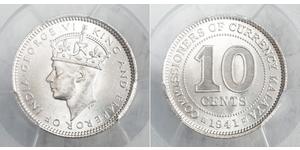
Among the most sought-after pieces are issues from the mid-19th century, such as copper coins minted for public circulation. These were often simple designs featuring a merchant ship on one side and local denominational legends, symbolizing British authority over trade routes.
The silver dollar was another pillar of collector interest during this period. While technically foreign currency in the early days (Spanish dollars circulated freely), they gradually yielded way to locally authorized issues that adhered to Imperial standards but were used exclusively for regional commerce. Collectors value these not just as metal objects, but because their wear patterns often show heavy usage by laborers and miners who handled vast quantities of goods.
The rarity is driven less than the scarcity in terms of population distribution; many coins entered the hands of Chinese merchants or local sultans rather than British officials. Consequently, finding unbroken examples (uncirculated) becomes a challenge as most were melted down after independence to support new monetary systems. The surviving specimens are prized for their condition.
Cultural Legacy
The coins left in this region carry the dual heritage of East and West; they represent an intersection where British sovereignty met Malay, Chinese, and European commercial interests. Even when designs were strictly Imperial (portraits or coats-of-arms), these objects circulated daily within local communities that maintained distinct cultural identities.
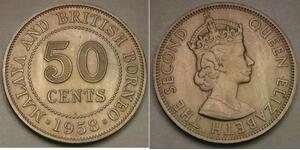
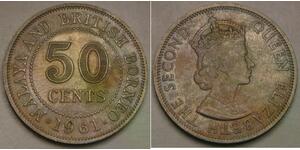
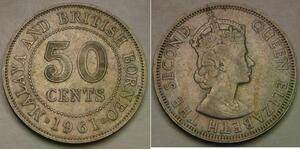
However, numismatics serves as a record of this transition. Post-independence coins introduced after 1957 marked the end of British coinage in Malaya and its eventual evolution into Malaysian independence currency (Malaysia began minting post-Independence). But looking back at the colonial era pieces offers insight into how the economy grew from tin mining to rubber trade.
Collectors today can study these coins as silent witnesses to a massive global expansion. Every scratch on a copper cent may indicate payment for labor in tin pits; every silver dollar could have transported goods across the Pacific or Indian Ocean.
For collectors
The historical significance remains undiminished and is why numismatists remain passionate about these artifacts today. They offer tangible proof of a trade network that once connected continents more efficiently than air travel can now. For buyers, seeking examples from the Straits Settlements or Federation of Malaya periods offers an entry point into one of history's most dynamic economic eras.