| View |
| preceded by | ||||
|
||||

|
|||||||
 Allied-occupied Austria (1945-1955)
|
|||||||

| succeeded by | ||||
|

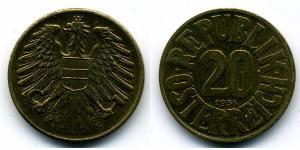
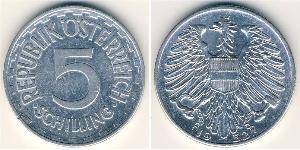
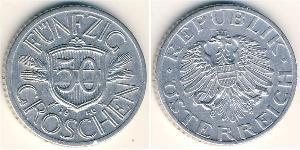
| Allied-occupied Austria (1945-1955) | Link to Wikipedia |
Allied-administered Austria: History, Coinage and Collectibles
Historical Background
The story of Allied-administered Austria begins with the aftermath of World War II in 1945. The city had been devastated by conflict, leaving a physical landscape that mirrored its shattered economy and political order following years of imperial control. In this period of international supervision known as Allied occupation zones or administration, the path toward sovereignty began to re-emerge through economic means rather than just territorial claims. This transitional phase lasted for several decades until 1955 when full neutrality was restored legally by the State Treaty. The historical context is crucial because it shapes every object held in a collector's case today; coins serve as tangible receipts of this rebuilding effort.
Economic stability under foreign supervision required immediate monetary reforms to facilitate trade and basic commerce during reconstruction years. Initially, occupation currencies circulated widely alongside remnants of the Reichsmark system which had persisted since before 1945. As Allied authority stabilized over time in each zone—American British French and Soviet—the need for a distinct national currency became evident to prevent economic paralysis that could hinder aid delivery or industrial restart efforts. The narrative here is one of resilience, where coinage evolved from a temporary necessity into the foundation of Austria's sovereign identity.
Currency and Coinage History
The evolution of money in this region was not merely about minting metal discs but involved restoring national dignity. Under the initial occupation mandates issued by military authorities, there was no official Austrian coinage produced for public trade until 1946 or so when local oversight tightened significantly after German marks were withdrawn from circulation as part of international agreements to protect against currency manipulation in neighboring economies. This period saw a unique numismatic bridge where Allied supervision coexisted with the need for national symbols on coins.
Much effort was made by the Austrian government-in-exile and later by local committees working under Allied oversight to issue new denominations that could be trusted internationally while remaining functional within borders damaged physically. The transition away from occupation money involved introducing the first post-war Austrian Schilling, a symbol of financial independence which allowed for international trade without reliance on German currency systems or other regional currencies.
Mints and Coin Production
The reopening of mint facilities in Vienna was essential to support these new monetary reforms following years when production lines had fallen silent during the war. Mint operations under Allied supervision were constrained by strict guidelines regarding weight, purity standards often dictated by international agreements rather than purely national preferences. The artistic characteristics that distinguish this era's coinage include subtle stylistic shifts designed to reflect cultural recovery and peace over industrial symbols which dominated in previous periods.
Coin production centers faced severe challenges due to labor shortages as many skilled workers had lost family members or fled regions under bombardment prior 1945. Despite these difficulties, the minting tradition persisted by employing remaining local artisans who worked on specialized machinery that required significant maintenance and care before returning to full capacity operation standards which matched modern international expectations set in 1960s.
Notable Coins
Certain coin issues stand out for their historical importance as representations of national recovery or political milestones achieved during the post-war decades. One particularly interesting group is early silver denominations minted under provisional oversight before full independence was acknowledged publicly by treaty signatories in 1955.
- The first Schilling coins often bear designs that highlight industrial growth rather than royal portraiture which reflects democratization efforts during the reconstruction years. Collector interest focuses on these initial releases because they represent a specific transition phase where national symbols began appearing under Allied approval but later evolved into purely sovereign state emblems.
Another key type is coins struck to commemorate special milestones such as economic stabilization achievements or anniversaries which mark important dates for international observers studying European recovery post-World War II. Each design element tells a story about national priorities shifting from survival back toward cultural heritage preservation goals that are now reflected in museum collections.
Careful study reveals how edge designs changed over time to remove marks previously associated with different political regimes or occupied zones which served as historical markers distinguishing one era of currency history from another without requiring extensive catalog descriptions. These design changes allow collectors today to easily identify coinage belonging specifically to the period when international supervision ended and sovereignty fully returned.
Cultural Legacy
The legacy found within these metal objects reflects Austria's broader commitment to neutrality as a political stance rather than just economic utility. Every relief carved into an Austrian Schilling during this era served not only practical monetary purposes but communicated values of peace and recovery that are significant in cultural memory today.
For collectors
Austrian coins from the post-war era remain valuable assets for those interested in historical contexts where numismatics serves as a window into political transitions. Collectors should focus on provenance rather than simple condition reports to understand how these objects survived years of physical and economic hardship before entering modern circulation again.
Conclusion
The journey through Allied-administered Austria provides a unique educational opportunity because coinage from this time bridges two distinct historical periods. Studying them helps us appreciate the fragility of peace following great conflict while also highlighting how artistry survived even under difficult political restrictions.