| View |
| preceded by | |
 Ivory Coast
|
| succeeded by |
| Ivory Coast | Link to Wikipedia |
Ivory Coast: History, Coinage and Collectibles
Historical Background
The Ivory Coast stands as a vibrant chapter in West African history, tracing its roots through ancient trade routes that once connected the Sahel to the Atlantic coast long before European colonization. For centuries, this region served as an intersection for trans-Saharan commerce where salt from the north met gold, kola nuts, and precious timber flowing southward towards Europe. In these early eras, wealth was accumulated not merely in currency but in resources like gold bars and ivory tusks that gave the nation its enduring name. The landscape shaped by rivers such as the Sassandra and Bandama became a crucible for diverse ethnic groups who developed complex kingdoms to manage this flow of goods.
French colonization brought significant economic integration into the West African market, establishing cocoa plantations that transformed the national economy in the twentieth century. This agricultural boom required new systems of trade and currency stability, influencing how monetary policy was structured during the colonial period. As independence approached, there was a strong desire to reclaim local identity while maintaining access to international markets where money had historically been used for purchasing power.
Currency and Coinage History
The story of Ivorian coinage begins with its integration into the French West African CFA Franc system. Prior to 1960, coins circulating in the territory were largely struck at Paris or other European mints as part of a wider confederation currency model designed for administrative stability across colonies. These issues carried standard colonial imagery until independence reshaped the monetary landscape dramatically.
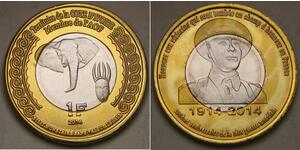
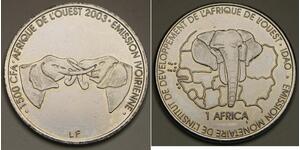
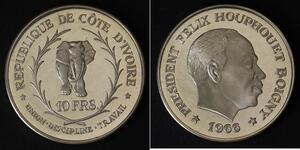
Following sovereignty on October 25, 1964, and into the early years of independence, new series were issued that replaced previous designs with those reflecting national symbols like the elephant emblem and flags. During this transition era, collectors find themselves witnessing a shift from colonial administration to sovereign economic expression.
Mints and Coin Production
During the immediate post-independence decades, coin production remained largely tied to Parisian mints before local facilities expanded significantly as industrial capabilities grew within West Africa. The minting process utilized standardized alloys typical of French currency at that time, primarily copper-nickel for standard circulation coins while gold denominations were reserved strictly for commemorative or high-value issues.
Artistic techniques during these periods focused on clarity and durability to withstand harsh tropical climates without losing luster too quickly. Engravers sought designs that balanced the aesthetic tradition of Europe with motifs derived from local architecture, agricultural themes such as cocoa pods, and symbols representing unity among diverse populations within borders. This artistic direction distinguished Ivorian pieces in collections by emphasizing indigenous elements rather than importing purely foreign styles.
Notable Coins
- The 1960 Independence commemorative piece is considered a foundational historical artifact for this collection genre, typically featuring the national motto and early republic seals on its obverse. It represents the momentous occasion of breaking from colonial rule and serves as one of the earliest pieces in many private cabinets.
- Circulation coins from 1965 often show an elephant iconography central to design motifs which remain recognizable today despite metal changes over decades. These are prized for their condition quality because they were struck with higher relief during initial production cycles before standardizing toward flatter designs later on.
- Commemorative issues celebrating cocoa harvests or international exhibitions highlight the nation’s reliance on agriculture while showcasing state patronage through larger diameter strikes that feature elaborate borders and intricate background fields. These items are sought after by thematic collectors focused on economic history within African nations.
Cultural Legacy
Coins from this region offer a tangible window into how culture and economy intertwine, particularly when symbols of national unity appear repeatedly in metal formats over decades. The elephant motif used throughout various denominations is more than a heraldic standard; it connects the people to wildlife heritage celebrated across rural communities while reinforcing pride during celebrations.
Religious diversity also finds subtle expression through coinage choices where traditional motifs sit alongside modern republican architecture, signaling peaceful coexistence without political controversy in their depictions. As these objects traveled from bank vaults into everyday pockets of commerce throughout the continent, they carried with them stories about trade agreements and cultural diplomacy that defined regional relationships during stable periods.
For collectors
The significance of collecting material from this nation lies in its ability to track economic progress without requiring heavy investment capital. While some pieces are common due to high mintage volumes, others offer rarity driven by low production quantities or historical importance rather than scarcity alone.
- Ivorian coins remain important today because they represent a stable period of West African numismatics that provides contrast against more volatile regional eras later in time. They allow enthusiasts to study design evolution under changing leadership without getting entangled in modern political issues.