| View |
| preceded by | |
 Croatia (1991 - )
|
| succeeded by |
| Croatia (1991 - ) | Link to Wikipedia |
Croatia: History, Coinage and Collectibles
Historical Background
To understand the story told in Croatia’s metal currency, one must first walk its long road from antiquity to modern times. The land known today as Croatia possesses a geographical identity deeply rooted on the Adriatic coast of Central Europe. From early Neolithic cultures settling its valleys to Roman occupation under Emperor Diocletian who built his imperial palace at Split in 305 AD, this territory has always been a crossroads of empires.
The region was not static; it evolved from an Illyrian stronghold into the heartlands of the Roman Empire before being reshaped by Slavic migrations. The arrival of the Croats is described as occurring around the 6th century, transforming a frontier province into a distinct duchy and eventually a kingdom under King Tomislav in 925 AD. Following centuries of dynastic struggle with Hungary from which it formed a personal union in 1102, Croatia became an integral component of the Habsburg Monarchy during times when Ottoman expansion threatened its borders.
This period of intense border conflict and alliance building profoundly influenced commerce. While trade flourished along European corridors, the economic stability required secure monetary systems to function across these turbulent frontiers. The Croatian archipelago served not only as a defensive bulwark but also as an entrepot for maritime goods moving between Italy and the East. As statehood evolved—from the independent Kingdom of Yugoslavia in 1918 through the Socialist Federal Republic to its declaration of independence in 1991—the monetary authority shifted from foreign imperial mandates back to local control, reflecting a resurgence of national identity.
Currency and Coinage History
The economic history of Croatia is best understood as a chronicle of currency transition. Before the establishment of robust domestic mints in medieval times, trade was dominated by heavy Italian florins from Venice. These foreign coins circulated widely throughout Dalmatia because they were already trusted within merchant circles and possessed intrinsic gold content suitable for regional commerce.
In 925 AD, King Tomislav established the Kingdom of Croatia, a milestone that eventually led to more centralized control over money. However, true minting rights remained a complex legal status granted by higher sovereigns during medieval times. During the Habsburg era and beyond into the Austro-Hungarian Empire (post-1867), coinage became highly structured. This period saw Croatia transitioning from using purely foreign currency to issuing its own silver coins representing the "Croatian florin" concept.
The 20th century brought radical change with the formation of Yugoslavia, which unified various monetary policies under a single standard, and finally the transition to Euro upon full membership in international economic forums. This shift from diverse historical currencies to modern standards is what gives Croatian coinage such depth for collectors: each era represents a unique geopolitical reality.
Mints and Coin Production
The production of currency has always been tied closely to specific cities that held cultural or strategic importance in the region. Early mints were few, often operating under external oversight during periods where independence was limited by stronger neighbors like Hungary or Austria. However, as trade with Italy expanded and economic ties strengthened with neighboring regions, dedicated minting centers developed.
Zadar, Split, andDubrovnik(Ragusa) were the traditional strongholds of production. During medieval periods, Dubrovnik was notable for producing its own unique silver denarii that circulated across much of Italy. Zadar served as a major mint under Austro-Hungarian administration during the late 19th and early 20th centuries.
The technological evolution followed standard European trends: moving from crude hand-struck methods to mechanized presses in the industrial age, though artistic relief remained distinctively baroque or Art Nouveau. The transition period between World War II and independence saw mints operating within Yugoslavia until full sovereignty allowed for new designs on coins celebrating local heritage.
Notable Coins
The Silver Denarii of Early Kingdoms:
- Historical Context: In the centuries following the 7th-century settlement, silver currency was scarce and usually struck under foreign patronage or later imperial permission.
- Design Features: While early minting rights were sporadic, coins issued during this era often featured royal profiles of dukes like Duke Branimir alongside local heraldic symbols. These are highly prized for the rare combination of historical significance and artistic design found on these early silver strikes.
The Austro-Hungarian Florins:
- Historical Context: As Croatia gained economic strength within Austria-Hungary, it began receiving official permission to mint its own silver florin pieces which were heavily circulated locally.
- Design Features: These coins often displayed the double-headed eagle and later incorporated specific local coats of arms. They serve as a numismatic bridge between Croatian national identity and broader Habsburg imperial power.
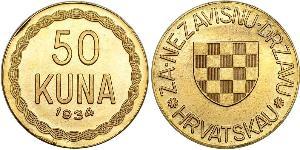
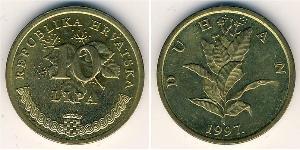
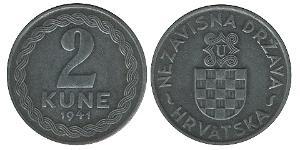
The Modern Kuna Series:
- Historical Context: Following independence, Croatia introduced its own currency system again to establish full economic sovereignty before joining the Eurozone in 2023.
- Design Features: The modern coins feature contemporary motifs celebrating regional landscapes and architectural history found across Zagreb’s industrial corridors. These pieces reflect a high degree of detail, making them favorites for proof collectors interested in artistic expression through currency.
Cultural Legacy
The coinage from Croatia serves as more than just legal tender; it is a physical manifestation of the country’s cultural resilience. The early coins reveal how Croatian rulers sought to solidify legitimacy against regional powers, asserting their status through mint standards that rivaled those of Rome and Byzantium.
In later centuries, when political power fluctuated between Vienna and Venice, the art on these metal slivers shifted from Romanesque simplicity toward intricate baroque engraving. This reflects a society deeply influenced by European artistic currents yet maintaining its own distinct regional pride. The modern coins continue this narrative of cultural integration, where historical heritage is woven into new designs for global circulation.
For collectors
Croatian coinage holds significant value to the collector’s world because it represents a fascinating intersection of local identity and foreign influence. Collectors can trace how Dalmatia moved from using Venetian florins to issuing its own imperial silver, eventually transitioning into modern Euro denominations.
Rarity is found particularly in early medieval issues where documentation was sparse compared to the abundance of Austro-Hungarian or Yugoslav-era circulation strikes. However, condition plays a vital role: many older pieces show wear from centuries of use as everyday money for merchants and sailors who relied on these currencies at ports along the Adriatic.
The enduring appeal of Croatian coins lies in their ability to tell a story that is simultaneously local and global—reflecting how one nation navigated its path from ancient Illyrian roots through Roman influence, Slavic settlement, medieval monarchy, Habsburg dominion, socialist unity, and finally sovereign independence. Whether examining the delicate relief on an early silver florin or modern commemorative issues celebrating Zagreb’s history, these pieces offer a tangible link to thousands of years of continuous civilization.