| View |
| preceded by | |
 Kuwait (1961 - )
|
| succeeded by |
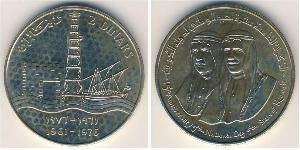
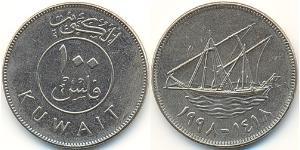
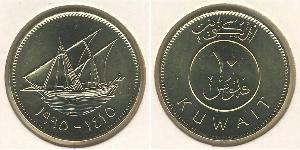
| Kuwait (1961 - ) | Link to Wikipedia |
Kuwait: History, Coinage and Collectibles
Historical Background
Welcome to the story of Kuwait, a nation where the very geography speaks in ancient tongues. The history of this state is written not just in ink on parchment, but first upon clay tablets found within its deltaic marshes. Following post-glacial floods that sculpted the modern coastline from debris left by the mighty Tigris and Euphrates, Kuwait emerged as a crucial crossroads between Mesopotamia and Eastern Arabia.
The narrative begins at least five thousand years ago on Failaka Island, once known to the Greeks as Ikaros. This island was not merely land but a bustling hub of Dilmun civilization trade networks stretching into Oman and India. Here, merchants did not yet use complex paper money; they relied on barter systems that utilized pearls, dates, and local spices. Coins from this era were often minted abroad—by Sumerians or Persians—and brought across the water to pay tribute for access to these lucrative ports.
As time progressed into the early 1700s, a new chapter began with the arrival of the Bani Utbah tribe. They wrestled control from earlier emirs and established Kuwait City as a premier fishing village that slowly evolved into a maritime fortress protecting regional goods in transit between Baghdad and India.
The geopolitical landscape shifted dramatically when the British arrived to secure their naval route around Persia. By 1899, relations formalized under protection agreements with the United Kingdom. While Kuwait became independent from this protectorate status just after World War II (officially established in June 1961), its history had been defined by the tides and trade routes that connected it to empires long vanished.
Currency and Coinage History
To understand money in Kuwait, one must first understand the scarcity of sovereign coin production prior to the discovery of oil. Unlike modern nation-states where currency was minted immediately upon independence from colonial powers, Kuwait's economic evolution followed a different path.
In its early years as a sheikdom and protectorate, monetary systems were heavily influenced by regional British standards or relied on circulating trade tokens used in commercial ports before full industrialization. The real transformation occurred with the discovery of oil reserves in 1938. Before this geological miracle, Kuwait was a bustling port but lacked the capital to establish its own central banking infrastructure.
The modern era began after independence and the post-war recovery following the Iraqi occupation ended in early 1991. The state's economy needed stability. It became one of the highest-income economies on Earth, backed by vast reserves that allowed for a radical shift from regional barter to high-value digital currency usage globally.
The Kuwaiti Dinar stands as a monument to this economic miracle. For decades prior to independence, neighboring regions might have used their own currencies or British shillings and rupees. When the Emirate declared its full sovereignty in 1960/61, the transition was slow but deliberate, eventually replacing foreign notes with currency that carried the sovereign seal of the Al Sabah family.
Mints and Coin Production
The history of minting Kuwaiti coinage is a tale of technological progress mirroring industrial growth. Initially, many Gulf Sheikdoms did not possess their own physical mints during the mid-20th century; they often relied on central facilities in larger colonial hubs or regional trading partners.
Kuwait transitioned from relying entirely on imported currency to establishing its own minting capabilities as a sovereign entity. The designs used were not simple geometric shapes, but reflections of national identity—incorporating modern architecture alongside Islamic geometry and script that honored the country's religious heritage without violating theological constraints regarding representations.
The production centers shifted over time, moving from reliance on international printing contracts to domestic manufacturing capabilities as infrastructure improved. The coinage quality often reflected oil revenue inflows; periods of high wealth allowed for higher grade specifications in metal composition (gold and silver) rather than just base metals used for circulation notes.
Notable Coins
- The Early Independence Issues: When the State declared independence, issuing its own commemorative or circulating coins was a symbol of political maturity. The transition from using British-influenced denominations to establishing the Kuwaiti Dinar (KWD) marked a new economic era for collectors.
- The First Silver and Gold Issues: For modern high-grade collections, coins issued during periods of oil abundance are particularly sought after. These pieces often carry significant weight in silver or gold bullion, representing not just value but the tangible wealth extracted from beneath the desert sands.
Coin collectors should also be aware that many early issues circulated alongside other currencies before achieving total monetary unity for a few years post-independence. This overlap creates opportunities to find specimens bearing unique design motifs celebrating specific milestones, such as oil discoveries or national celebrations of independence.
Cultural Legacy
- Economic Powerhouse: Unlike many historical empires that issued coinage for conquest purposes, modern Kuwaiti money represents economic stability and trade prestige. The Dinar has historically been the strongest in the region, a legacy of prudent management and abundant resources.
The imagery on these coins often reflects the Islamic faith (Maliki Sunni) which is central to daily life there. However, it also incorporates symbols of progress—cranes at construction sites, ships docking with modern containers—showing that the nation has successfully transitioned from a trading port reliant on pearls and dates into an industrialized city-state.
Cultural Legacy
- Religious Heritage: While avoiding figural depictions which are common in religious contexts, modern coin designs often utilize calligraphy or architectural motifs that pay homage to the heritage of Mesopotamia and Arabian Peninsula trade routes.
The legacy is one of resilience. From Failaka's ancient reed boats to today's skyscrapers visible on banknotes, Kuwait has constantly reinvented itself while maintaining its cultural roots in the desert environment.
Cultural Legacy (Cont'd)
The coins serve as small monuments to this transformation. The designs often highlight the unity of different communities residing within that land—foreign nationals alongside local citizens—as a unified national front. This is evident in how modern denominations have evolved over decades without disrupting social cohesion, unlike other conflicts found elsewhere in history.
Cultural Legacy (Closing)
In many ways, collecting the coinage and currency of Kuwait allows one to hold a tangible piece of its wealth. The metal itself is often sourced from local refining industries or gold bullion reserves held by sovereign states globally for safety against market volatility.
Cultural Legacy (Conclusion)
The design evolution over decades tells the story of globalization and energy markets, making it valuable to numismatists who understand macroeconomics. The coins are not just money; they are a record of how a small nation built itself up from nothing after losing its territory in 1990 and recovering with one of the world's most advanced economies.
This focus on resilience makes every specimen unique—a story of survival, trade, independence, and modern prosperity captured in metal. This is why they remain valuable beyond their face value today: as historical artifacts that encapsulate a nation defining its own destiny from ancient delta roots to 21st-century financial power.
For Collectors
Kuwait represents an intriguing field for numismatists and history enthusiasts alike. While the volume of minted issues prior to independence was limited, these make them rare finds in private collections today. For those who value historical depth over simple rarity numbers, finding a specimen from this period or early post-independence years offers a connection to a pivotal time when Kuwait defined itself on a global stage.
The country's wealth and status as an economic hub mean that even modern issues hold significant weight. However, the most compelling narratives are found in the transition pieces where older regional currencies coexisted with new national standards or early designs before oil money fully stabilized the economy. It is for collectors who appreciate this journey—from ancient trade on Failaka to a sovereign nation—that Kuwait's currency and numismatic heritage remains a treasure chest of historical significance.