| View |
| preceded by | |
 Tonga (1970 - )
|
| succeeded by |
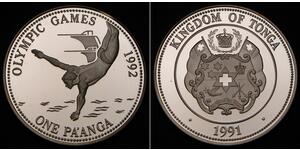
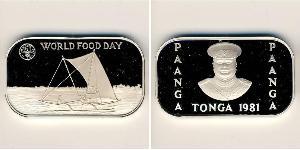
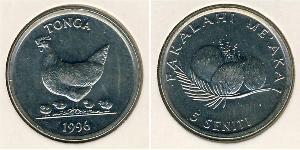
| Tonga (1970 - ) | Link to Wikipedia |
Tonga: History, Coinage and Collectibles
Historical Background
Welcome to the Kingdom of Tonga, an archipelago in Polynesia where history is written not only in stone but also in silver and gold for centuries. To understand this nation's monetary narrative, one must first appreciate its unique geopolitical journey as a thalassocracy that dominated the central Pacific. The islands were settled by Austronesian voyagers of the Lapita culture roughly 2,500 years ago, establishing what would become a powerful empire extending from Fiji to Samoa.
The historical foundation of Tonga's wealth was built on vast maritime resources rather than land-based industry initially. For centuries, trade relied heavily on barter systems involving kava root, coconut shell currency known as *ngana*, and pearls harvested for the international market. It is in this context that one must view early economic interactions; before coins arrived, value was measured by these natural treasures exchanged among whaling ships visiting the islands.
The geopolitical landscape shifted dramatically during the mid-19th century. Tāufaʻāhau (later King George I) unified the scattered chiefdoms in 1845 and embraced constitutional monarchy, a move that opened Tonga to global trade networks. The island nation became a protected British state later in the era but retained its independence unlike most Pacific neighbors who fell under direct colonial rule.
This sovereignty shaped their economic identity significantly. While surrounded by French territories like Fiji's neighbors, and near New Zealand, Tonga remained an independent monarchist kingdom within the Commonwealth. This status became even more critical when they severed British protection in 1970 to celebrate full independence. Understanding this timeline is essential for recognizing how currency evolved from foreign trade dollars into a sovereign legal tender.
Currency and Coinage History
The evolution of money on Tongan soil was as layered as the volcanic islands themselves. For centuries, there were no native coins struck in royal mints; instead, traders relied upon Spanish silver reales that drifted across oceans during whaling eras or British pounds used for official trade.
A major shift occurred following independence and modernization efforts under King George Tupou V (who began his reign over a sovereign nation) as they sought to establish their own monetary identity. Prior to the 1980s, low-denomination paper currency in circulation was often printed overseas or by New Zealand authorities.
The definitive move toward numismatic sovereignty arrived in earnest during the new millennium. It wasn't until recently that Tonga began issuing a distinct line of coins for domestic use and commemoration rather than merely passing on foreign legal tender like Australian Dollars which circulated widely among island nations due to proximity.
In 2017, significant numismatic milestones were reached with the release of silver dollar proofs minted in New Zealand that marked the transition toward fully sovereign coinage. While high-value notes often remained under specific agreements or international printing houses for many years, these initial commemorative strikes represented a pivotal moment where the King himself became directly associated with modern currency designs.
Mints and Coin Production
If you look closely at the reverse of Tongan coins today, you will find they are not stamped in a factory on Tongatapu. Instead, like many small island states lacking industrial capacity for complex metal alloy production, high-quality proof sets have historically been struck by renowned overseas partners such as those operating within New Zealand.
This reliance is actually an artistic advantage rather than a drawback. The resulting designs are crisp and vibrant, utilizing the same technologies employed to create coins in Wellington or Sydney but carrying specifically Tongan iconography—traditional kava bowls (fafale), stylized representations of royal banners, and maritime navigation themes derived from Lapita heritage.
The artistic characteristics distinguish these pieces within their collection set. While Australia often utilizes modernist art styles for its decimal coinage series, the Kingdom utilized more traditional motifs rooted in Polynesian tattooing patterns (tatau), woven mats, and floral flora found on the atolls of Ha'apai and Vava'u.
The shift from barter to metal was gradual but decisive. The introduction of these modern silver proofs meant that collectors could finally own an artifact officially bearing their Royal House crest—a crown with distinct rays—rather than a colonial seal or foreign design that merely circulated as legal tender for decades prior to formal issuance under the royal name.
Notable Coins
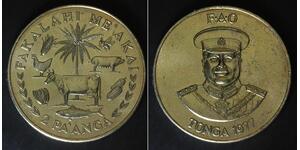
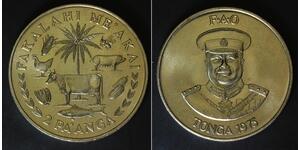
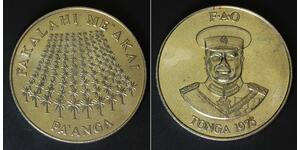
In the world of numismatics, certain issues tell specific stories about the people who struck them. For Tonga, one must look at their modern silver dollar series which began circulating in limited quantities around 2017 and onwards under King George Tupou V.
- The Centennial Silver Proof Dollar: Released to mark a specific royal milestone, this coin featured intricate engravings of local bird life or maritime charts. Historically, it represents the modernization of Tongan currency policy where they moved from circulating foreign dollars to minting their own proof issues for collectors.
- Kava Bowl Designs: Kava is not merely a beverage in these islands; it is sacred and central to social bonding (fakatonga). Several denominations feature the traditional bowl used during ceremonial gatherings. These are rare items that connect numismatics directly with ethnobotany, showing how culture dictated what was stamped onto metal.
- The Royal Family Crown: The coinage is defined by the presence of Queen and King motifs often seen on other Commonwealth realties but uniquely styled in Tonga. Unlike many Western nations where a simple effigy might suffice here, the specific styling of the crown reflects Polynesian heritage rather than European regalia.
- The Independence Coinage: Following 1970, coins often bore different denominations and designs used as souvenirs or trade currency. These are distinct from their modern proof sets which began in earnest under King Tupou VI's accession later on the century mark of his reign.
Cultural Legacy
To hold a coin of Tonga is to touch a piece of living history where ancient traditions meet royal governance. Every image stamped upon these coins tells a story—of navigation, agriculture, or spiritual reverence for ancestors who once led the Tu'i Tonga Empire.
The imagery on modern issues often contrasts sharply with what was used before independence; they move from depicting British symbols to highlighting King Tupou's family tree and national flora. The "Friendly Islands" nickname originally coined by Captain Cook found its way into early coinage designs during colonial protectorates, where images of the monarchy were overlaid upon traditional village scenes.
Coin collectors find these pieces valuable not just for their metal content but because they are a tangible link to an island nation that successfully retained its independence while remaining part of global trade circles. The artistry used is distinctively Pacific; it uses motifs from nature—specifically the hibiscus flower and various reef fish—that you will rarely see on currency elsewhere in Oceania.
The legacy extends beyond economics into spiritualism for these communities, where Kava bowls appear frequently as symbols of unity. A high-quality proof set today is not just a metal object but an artifact that documents the nation's journey from village-based trade networks to modern constitutional statehood within the Commonwealth realm.
For Collectors
Tonga remains one of the most exciting frontiers in Pacific numismatics for those who appreciate completeness and unique heritage. It is essential to understand that while early historical examples were scarce, they have been replaced by a modern series produced since 2017 which features higher quality finishes available through official royal mints.
If you are seeking out these coins today, consider the provenance of each piece. Unlike many Pacific currencies which simply re-stamped images from Australia or New Zealand without local significance (and were then discarded once independence was fully realized), Tonga has recently begun issuing its own distinct series that aligns with its status as a Commonwealth nation.
The appeal lies in the rarity and cultural depth of these issues. As King Tupou VI ascends to reign over this Polynesian kingdom, new coin releases are expected annually or upon special events like birthdays of royal family members. These commemorative coins offer an opportunity for collectors to acquire artifacts that represent a unique monarchy without being part of any Commonwealth realms under direct British governance.
In conclusion, Tongan currency offers more than just monetary value; it is an educational tool about Polynesian history and the specific journey this archipelago took towards full sovereignty. It stands as a testament to nations finding their own voice within the global marketplace through numismatics.