| View |
| preceded by | |
| Empire of Nicaea (1204-1261) |
| succeeded by |
| Empire of Nicaea (1204-1261) | Link to Wikipedia |
Empire of Nicaea: History, Coinage and Collectibles
The narrative written upon the coins of this short-lived empire reads not merely in metal or ink, but in political defiance and religious continuity. When one approaches a piece of Numismatic history from 204 years ago—specifically that period between the Latin occupation of Constantinople and its recapture—the Empire of Nicaea stands as a testament to resilience. For the historian examining these artifacts through the lens of economic anthropology, this regime offers a unique window into how an empire attempted to rebuild its soul in a foreign land.
Historical Background
The genesis of the state is steeped in tragedy and rebirth. The fall of Constantinople was not merely a military defeat but a fragmentation of Roman identity, dividing authority among rival powers: the Latin Empire installed by Western crusaders to the west; the Despotate of Epirus rising from central Greece; Trebizond holding out on the eastern frontiers; and Nicaea anchoring itself in Asia Minor. The Nicenes were not conquerors at their origin but refugees who fled into Bithynia, carrying with them the mantle of imperial authority that had once belonged to Constantinople.
The early days saw a struggle for legitimacy against neighbors eager to usurp its rightful place as successor to Rome and keeper of Orthodoxy. The Laskarid dynasty was forced to contend with Seljuk ambitions in Anatolia, Bulgarian armies pressing from the north, and the ever-present threat or alliance of Latin states that had just sacked their capital.
Territory shrank due to wars on every border: Thrace fell under pressure; parts of Asia Minor were lost to rival powers. Yet, amidst these encroachments, a core territory around Nicaea remained a bastion for Greek culture and language. The coins that flowed from this region during the reigns of Theodore I Laskaris through Michael VIII Palaiologos reflect more than trade taxes; they broadcast a message: despite living in exile relative to their capital's location and dealing with Latin overlords, these men claimed the Roman name as an intrinsic right.
The economic reality was difficult. With the city cut off from its imperial heart for over half a century until 1260 or so (historians debate exactly when full control returned), trade routes were rerouted. Money flowed into Nicaea not only to feed the court but also to facilitate commerce between Greek communities in Asia Minor and Thrace who sought protection against Latin lords on one side, and Frankish knights of Acre on another.
Currency and Coinage History
The currency system was a reflection of this complex geopolitical struggle. In 1205, Theodore assumed imperial titles in theory; thus the coinage had to reflect that grandeur even if territory lagged behind. The early period often utilized gold coins minted at Iconium (Konya), which were technically Byzantine Roman designs but issued by a new regime fighting for its life.
A major pivot occurred as the empire shifted focus from Asia Minor towards Thrace and Macedonia, regions more closely aligned with Constantinople itself. Here, there was pressure to align currency standards not just with old Rome, but also with Venice or Genoa—both of whom had financial interests in these waters during that tumultuous decade.
The most fascinating aspect for a student of Byzantine economy is the "restoration" process under John III Doukas Vatatzes and Michael Palaiologos. After years of Latin rule, where Frankish coinage circulated alongside Greek issues, there was an urgent desire to reintroduce gold standards that matched those once issued in Constantinople before 1204.
Scholars debate whether the coins produced between 1259 and 1261 were simply restoring tradition or if they were introducing a new monetary standard designed specifically for diplomatic relations with Italy, where the restored Empire hoped to secure loans. The return of Constantinople in 1261 marked not an immediate end but rather the consolidation of Nicaean issues as legitimate Roman currency.
Mints and Coin Production
The infrastructure behind these coins was mobile yet established, relying on a system that allowed for flexibility during military campaigns. The minting centers were scattered across Anatolia (the most stable period) before moving north into Thrace following Vatatzes's expansion.
Nicaea itself became the primary administrative seat as Theodore I and his successors worked to secure their claim over Trebizond or Epirus, where they held little sway. The technology of production relied on imported metal sources from Venice in the early years—crucial because Constantinople had been plundered of its gold hoards by crusaders.
The artistic characteristics were a blend: conservative Greek iconography that avoided any deviation accepted in later Roman times but with distinct "Laskarid" variations. The coins bore symbols like the cross or representations of Christ, and sometimes portraits showing stylized features unique to the Laskaris family before transitioning into more realistic imperial busts after John III.
The minting environment reflected a defensive strategy as well; some locations were chosen for their strategic proximity to trade routes. Serres in Thrace is often cited where later issues circulated, particularly those that utilized Genoa's influence when the emperor was at war with Epirus but needed financial support from Italian merchants.
Notable Coins
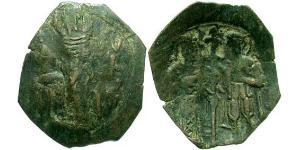
- The "Tetarteron" of John III: This silver coin is a classic example. It bears a cross potent and depicts the ruler in traditional garb, yet its mint marks often betray the location—Nicaea versus other Anatolian cities where coins struck under his command found refuge.
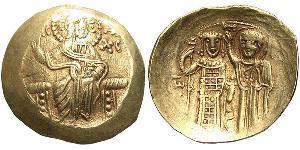
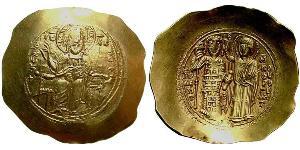
- Solidi from Iconium/Konya: These gold issues are prized by collectors because they show the transition between Frankish coinage styles and restored Byzantine art. The depiction of Christ Pantocrator on these is particularly serene, reflecting a culture trying to maintain its identity in an uncertain world where Turkish raids were increasing.
- The Double Solidus from Nicaea (1260s): Perhaps the most sought-after pieces are those minted right before Constantinople's recapture. They display designs so similar to late Comnenian coinage that they signal a return of legitimacy, signaling that the city could once again be called "Constantinopolis."
- Fractional Denominations: In times when gold was scarce due to war and trade embargos with Latin powers, silver coins circulated widely in Anatolia. These are often more common than full solidi but provide vital evidence of how the economy functioned outside a unified state.
Cultural Legacy
The iconography found on Nicaean coinage is rich with theological and political messaging that resonates today even centuries later. To understand why these pieces matter, one must appreciate what they symbolized to the general populace holding them in their pockets or purses.
A coin was not merely paper currency; it carried the state's seal of approval over a transaction. The choice of design—whether an image of St George (patron saint against pagans) or Christ himself—communicated that despite foreign occupation, Orthodox faith remained sovereign under these rulers. Furthermore, many coins feature depictions of city names in Greek rather than Latin script on the reverse field—a subtle but powerful rejection of Venetian dominance.
The "restoration" period brought changes to design as well; Michael Palaiologos (then general) and John III introduced a new era. The portraits became more human, reflecting a shift from purely iconic art to one that showed the personage behind the power.
For collectors
Holding these coins today offers insight into an age when empires rose through political ingenuity rather than pure conquest. The rarity of some issues stems from short reigns and constant wars; many were lost to conflict, hoarded by the elite during crises in Anatolia before being melted or abandoned as gold was needed for defense.
The significance of these coins is that they bridge two worlds: the classical Roman legacy preserved within a "rump" state fighting off neighbors who wanted them dead. While other regions fractured into competing states, Nicaea managed to consolidate enough territory and military power not just to survive but to reclaim its lost capital.
Collectors today find value in this because these pieces carry the history of Byzantine restoration without the clutter found on older issues from Constantinople's prime. They are a transitional phase where Frankish money mixed with ancient styles, creating something unique that is no longer produced since 1260 and rarely seen outside museums.
In conclusion, while their lifespan was short by imperial standards—only about fifty years of independence before the Ottoman threat fully arrived—the Empire left behind an imprint on economic history. Their coins serve as a reminder how currency can be weaponized for diplomacy or used to assert that legitimacy in times where political maps are redrawn violently.