| View |
| preceded by | |
 Grand Duchy of Saxe-Weimar-Eisenach (1809 - 1918)
|
| succeeded by |
| Grand Duchy of Saxe-Weimar-Eisenach (1809 - 1918) | Link to Wikipedia |
Grand Duchy of Saxe-Weimar-Eisenach: History, Coinage and Collectibles
Welcome to a journey through one of Germany's most intellectually vibrant yet geographically compact sovereign entities. Today we explore the Grand Duchy of Saxe-Weiman-Eisenach, a state that defied its size with an outsized cultural impact, leaving an indelible mark on both European history and numismatics. While often overshadowed by larger neighbors like Prussia or Saxony proper during its brief existence from 1809 to 1918, the Grand Duchy produced a distinct artistic identity that collectors still prize today.
Historical Background
The narrative of Saxe-Weimar-Eisenach begins with a union born of necessity and strengthened by royal lineage. Following decades where Duke Wilhelm Heinrich's line in Eisenach faded, the branches merged in 1741 under Ernest Augustus I. However, it was not until 1809 that these territories coalesced into a single administrative Grand Duchy following Napoleonic restructuring. This geopolitical shift proved crucial; as described in historical records, the Duke Charles Augustus secured significant territorial gains at the Congress of Vienna, expanding his borders eastward and securing vital trade routes along rivers like the Saale and Werra.
Culturally, this period was golden. Under the regency of Dowager Duchess Anna Amalia and later Grand Duke Carl Alexander, Weimar became a sanctuary for art. The presence of literary giants Johann Wolfgang von Goethe and Friedrich Schiller turned the capital into "Athens on the Ilm." This cultural renaissance meant that state propaganda and artistic expression were paramount. A small German Duchy could not rely solely on military might to project power; instead, it used culture as its shield. Consequently, coinage designs often moved away from purely martial imagery toward symbols of learning and patronage.
The economy was deeply intertwined with these cultural ambitions. The rivers described in historical documents were the arteries that pumped commerce through this region. Goods flowed down the White Elster to the south while iron ore traveled up. This economic vitality required a stable currency, but small states like Saxe-Weimar-Eisenach faced significant challenges. Unlike large entities that could mint for themselves without restriction, smaller German principalities often found their local currencies restricted or invalidated if they did not adhere to broader trade agreements within the Zollverein.
Currency and Coinage History
In the late 18th century, European coinage was a fragmented ecosystem. The Grand Duchy utilized complex systems of weight-based exchange that were often difficult for foreign travelers to navigate. Over time, as industrialization took hold in the decades leading up to 1903—when the name officially shifted briefly—the need for standard silver coins became urgent.
The evolution here mirrored national unification trends seen elsewhere. Initially, coinage served local barter and trade between Weimar’s growing textile centers and agricultural outposts like Bad Berka. However, as the Duchy expanded in 1815 to include former princely abbey lands along with territories previously part of Hesse-Kassel, it needed a currency capable of crossing borders freely.
The period from 1809 onward marks a transition from strictly regional silver coinage to acceptance within broader German monetary standards. While the Grand Duchy produced its own denominations—typically denominated in Gulden (florins), Thaler, and Groschen—the design aesthetic remained distinctively "Weimar." Unlike the stern Prussian imagery or the elaborate Baroque flourishes of neighboring Hesse-Kassel, Saxe-Weimar-Eisenach coins often featured softer profiles emphasizing the enlightened ruler.
Mints and Coin Production
The production center for this state was heavily centralized in Weimar. While historical records do not provide detailed technical blueprints on specific minting machinery used within these borders, we know that traditional methods dominated until late 19th-century industrialization improved metal purity.
Minting authority often lay with the Grand Ducal Court's treasury or a specialized imperial office in Weimar. The artistic quality of these productions reflected state budgets; during periods when Great Duke Charles Alexander was heavily funding art projects, coin production sometimes shifted focus from pure utility to artistic expression. This resulted in pieces that are now considered fine examples due to their aesthetic care.
The mints also served as a barometer for political stability. When the Grand Duchy joined the German Confederation and later aspects of the Zollverein (customs union), new dies were struck featuring unified weights, which collectors prize highly because they represent the transition from isolated statehood to economic integration with Prussia.
Notable Coins
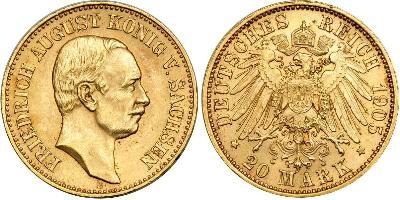
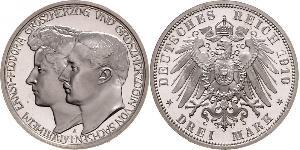
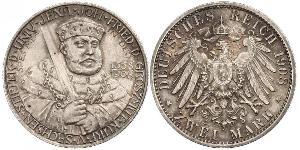
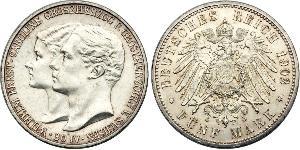
The most sought-after pieces from this era generally feature portraits of Charles Augustus or his son Frederick William. These coins often display a distinctive bust style that avoids the heavy military iconography common in Bavaria, favoring classical motifs instead.
- The Portrait Busts: Early issues usually featured an upright profile of the ruler wearing laurel wreaths, symbolizing the intellectual victory Goethe represented. The reverse typically displayed coats of arms—often featuring lions or other heraldic beasts representing Henneberg and Meissen.
- Silver Trade Coins (Thalers): These were critical for commerce on rivers like the Saale in Jena. They are prized by collectors not necessarily for rarity, but for their condition grades that survive well from agricultural economies where money was used daily.
- Ceremonial Issues: Following major cultural events or festivals—like those organized to celebrate Goethe’s works—the state issued commemorative pieces. While the documentation provided does not list specific catalog numbers, any coin struck during this period linking the ruler directly with famous artists is a focal point for advanced collectors.
A unique feature of Saxe-Weimar-Eisenach currency is the connection to Russian heritage via Grand Duchess Maria Pavlovna. Her presence on coins and state documents adds an intriguing foreign element, reflecting her family ties that protected the Duchy during Napoleonic times. These items are often sought by collectors specializing in "foreign relations" or diplomatic coinage.
Cultural Legacy
The legacy of Saxe-Weimar-Eisenach is best preserved not just in its borders, but on the metal surfaces it circulated for nearly a century and a half. These coins represent a unique slice of European history where culture trumped might. The state did not survive as an independent monarchy because World War I changed Germany's political landscape; however, its economic contribution endured through its integration into Thuringia.
The numismatic record tells the story of a small state trying to compete with empires for prestige. It shows us how industrialization transformed rural towns like Berka and Bad Sulza into centers that needed consistent currency supply. Every coin from this era is essentially an advertisement for Weimar Classicism, stamped in silver or gold.
For collectors
This Grand Duchy represents a "sweet spot" for historical numismatics: it possesses enough political longevity to produce thousands of specimens but remained compact enough that errors are often overlooked by generalists yet highly prized by specialists. The challenge in building a collection lies not in finding the rarest items, which were largely issued only during major events or royal transitions, but in identifying high-grade examples with correct die varieties.
The historical significance remains intact because Saxe-Weimar-Eisenach was one of the most enlightened states in Europe. Collecting its currency is an act of preserving a memory that goes beyond simple metal content; it preserves the artistic patronage and administrative evolution of Central Germany during the critical decades before World War I.