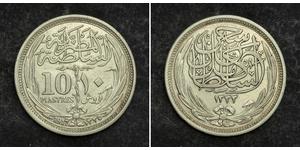
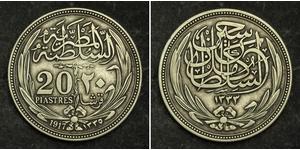
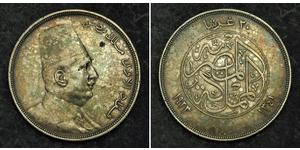
| View |
| preceded by | |
|
|||||||||
 Khedivate of Egypt (1867 - 1914)
|
|||||||||


| succeeded by | ||||
|

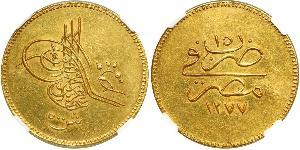
| Khedivate of Egypt (1867 - 1914) | Link to Wikipedia |
Khedivate of Egypt: History, Coinage and Collectibles
Welcome all collectors to this exhibit on one of the most fascinating chapters in global numismatics. We often speak simply of Egyptian coins, but for our history enthusiasts, it is crucial to distinguish between different eras and political statuses that are visible within small metal disks today.
Historical Background
The narrative begins not with Egypt as an independent nation in the modern sense, but as a complex entity bridging East and West. Following Napoleon's expulsion from 1801 onwards, local rulers like Muhammad Ali established de facto autonomy over Egyptian affairs while paying nominal tribute to Istanbul. However, by the mid-19th century, a profound transformation was underway.
The pivotal figure here is Isma'il Pasha, who reigned during the height of this modernization era (1863–1879). He sought not merely autonomy, but recognition as an equal to European monarchs. In 1867, he secured the title Khedive from the Ottoman Sultan—a term derived from Persian that marked a distinct level of dignity and status above standard governors.
This period was defined by intense activity: Isma'il attempted to build Egypt into an independent economic powerhouse. He embarked on massive public works projects, constructing canals, railways, and ports with financial assistance primarily from London and Paris banking houses like Rothschild. However, this ambition came at a cost. By 1879, the state had incurred heavy debts that European powers felt compelled to settle directly through political intervention.
This economic instability inevitably shaped the nation's monetary landscape. The Khedive could no longer simply mint coins based on local silver reserves; he was operating in an economy increasingly tied to British Sterling and French Francs standards. This geopolitical tension between Cairo, London, Paris, and Istanbul created a unique currency environment that collectors can still appreciate through design elements.
Currency and Coinage History
The monetary evolution of the Khedivate represents one of numismatics' most compelling stories: the shift from Islamic tradition to Euro-centric modernity. In the early decades, Egyptian currency remained deeply connected to Ottoman history, often utilizing pure silver coins with traditional calligraphic designs.
However, under Isma'il's rule, there was a deliberate move toward international standards. Collectors are drawn particularly to the introduction of Gold Pounds and Piastres designed in imitation of British gold sovereigns or French francs. This was not merely an aesthetic choice but a political statement: by adopting designs that London and Paris would accept at face value without exchange fees, Isma'il aimed to solidify Egypt's place on the global stage.
The role of coinage here goes beyond simple commerce; it became a diplomatic tool. When the Suez Canal opened in 1869, trade exploded across Africa and Asia. The government responded by issuing circulation coins that were robust enough for heavy wear but aesthetically pleasing to foreign merchants. These issues are often found circulating alongside older local currency types.
The Numismatic Tipping Point:
- A period of stability where the Khedive issued standard silver and gold coins accepted in international trade routes between Cairo, India, and Europe.
Mints and Coin Production
The heart of any numismatic story is usually found at its mints. By the time Isma'il Pasha assumed full responsibility for state affairs in 1867, Egypt had moved away from traditional bimetallic systems used by local merchants.
Coin production centered largely around the central mint facilities that were modernized with help from European experts. The artistic style of these coins is a hallmark collector feature: many designs featured classical Roman busts, or profiles framed in laurel wreaths—clearly emulating the coinage of Rome and Imperial France.
This transition was rapid. You can often find coins where one side retains traditional Arabic inscriptions honoring Allah and names of Islamic Caliphs on the face (the obverse), while the reverse features a profile portrait of Khedive Isma'il or his successor in Western-style military uniform, surrounded by French typography.
The technology used was sophisticated for its time. These were often counter-stamped issues—where older Islamic coins had new mint marks added to them as the government shifted towards European control—a common practice when a ruler needs to update currency faster than building entirely new dies is feasible during times of economic stress.
Notable Coins
A seasoned auction buyer will recognize several key issues from this era that define the Khedivat's value in history, not just price. Here are three types every collector should appreciate:
- The 1876 Gold Pounds.
Historical Context: Issued during Isma'il's attempt to rival European monarchies in grandeur. The coin was intended as a primary international trade vehicle for the Suez Canal route.
Design Features: These are often struck with heavy, rich gold fields but sometimes show die clash marks from hurried production due to wartime pressures.
- The French Piastre Issues (1867–1906).
Historical Context: While the Egyptian government maintained nominal sovereignty, they were heavily influenced by France. These silver pieces often featured bilingual text.
Design Features: Obverse portraits of Khedives in Western attire; reverse designs featuring scales or lions representing justice and strength.
Cultural Legacy
The coinage reflects a nation in transition between tradition and modernity. The presence of French script on one side (the Piastres) versus Arabic calligraphy is an artistic representation of Egypt's unique identity during this turbulent century.
By the time Isma'il was deposed following Britain's intervention in 1882, and later under his successors until independence, coin designs began to stabilize. We see a shift from purely European styles back towards more distinctly Arab motifs as nationalist sentiment grew among collectors like those of the Urabi Revolution era.
The legacy remains potent: even after British control took over and shifted the country toward becoming a protectorate, early issues carry that tension between local authority and colonial influence. These coins serve as medals for Egypt's attempt to stand equal in European courts while maintaining its cultural soul—a story written in gold, silver, and copper.
For Collectors
The Khedivate of Egypt remains a vital component of world coinage because it sits at the crossroads of three great empires: Ottoman, British (via influence), and French. The story is one of ambition, where the ruler dreamed of creating an independent economic bloc that could sustain its own currency.
If you look closely at the details in our collection today, you can see how this region attempted to balance its heritage with new wealth derived from resources like cotton exports along the Nile and trade through Suez. These coins were meant to circulate freely across borders but tell a story of sovereignty that was often fragile.
Careful examination reveals why these pieces are so valuable: they bear witness to how an entire nation reinvented its economy overnight, trying to fit into a global monetary system dominated by powers like London. The resulting coinage is bold yet historically complex—a true treasure for those who understand the weight of history in every detail.