| View |
| preceded by | |
 Lordship of Ireland (1171-1541)
|
| succeeded by |
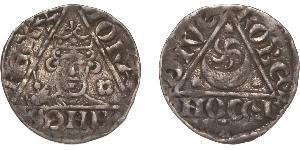
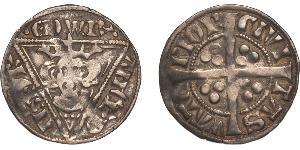
| Lordship of Ireland (1171-1541) | Link to Wikipedia |
Lordship of Ireland: History, Coinage and Collectibles
The history of a land defined by complex political transition offers a unique narrative for those who study currency as both art and economic history. For nearly four centuries before its formal elevation to a Kingdom in 1542, the territory known historically under this specific designation operated within an evolving feudal system that spanned between England's central crown and local Irish autonomy. This period is significant because it captures the shift from independent Gaelic kingdoms towards integration with European monetary standards through the lens of Anglo-Norman governance.
Historical Background
The era began after 1170 when English forces, led by Henry II and his loyal lords, established a foothold on Ireland's coast. While they initially aimed to convert local populations into feudal subjects for the crown of England, reality proved far more fluid. The region was caught between two worlds: one governed by Norman law originating from London, where land ownership could theoretically be bought or sold like property in Europe; and another rooted in ancient Gaelic tradition, which viewed sovereignty as a spiritual connection to the soil that resented external rule.
Initially, local lords operated with great freedom. The Lordship of Ireland was created following these initial conquests from 1177 onwards, representing a dependency of England rather than an independent sovereign state in its earliest days. This political status is reflected directly in the circulation of currency during this time; often English coins were brought across the channel to settle debts or for trade with local merchants.
Cultural friction grew over decades as these settlers married into native families and adopted Celtic dress, a shift the Crown attempted to stop through laws like the Statute of Kilkenny in 1366. These internal social conflicts impacted commerce significantly. Trade routes along Dublin's port were vital for connecting Ireland with Scandinavia and France. However, invasions from Scotland in the early fourteenth century combined with famine decimated economic stability.
Economically, this region suffered as much as any feudal outpost of its time because it lacked a central treasury capable of minting vast amounts of silver to stabilize value during inflationary pressures common across Europe. Unlike modern currency zones that benefit from industrial output or stable banking systems, the medieval economy relied on bullion flows and trade with distant lands like Bristol in England. When harvests failed due to climate shifts known as the Little Ice Age onset, scarcity drove up prices of basic goods such as grain.
Currency and Coinage History
The evolution of money within this territory was a story of adaptation rather than innovation born from local design alone. For much of its existence under the Lordship title, there were no distinct silver coinages minted locally in sufficient numbers to challenge those arriving from Westminster. The currency used by Anglo-Norman settlers closely mirrored that found across western Europe.
Silver pennies struck at Dublin or Waterford became a rarity compared to English sovereigns circulating throughout the Pale during times of prosperity under Edward I and Henry III. However, when demand for smaller denominations grew due to local trade between towns like Kilkenny and Limerick, authorities authorized copper halfpennies specifically for these markets.
The transition from Lordship to Kingdom in 1542 marked the moment English law became absolute over all of Ireland. Prior to this, coinage bore legends that sometimes acknowledged local Irish kings as vassals or simply utilized French terms like 'Francus'. By the mid-sixteenth century, these designs were replaced by standard imagery associated with St Patrick and royal portraits, signaling full political subordination.
This transition period is particularly interesting for economic historians because it represents a rare example of feudalism meeting mercantile expansion in early modern Europe. Unlike many states that relied solely on taxation to fund wars or armies, this region often lacked the resources, forcing reliance on bullion shipments and occasional debasement schemes where authorities lowered silver content while keeping denominations constant.
Mints and Coin Production
The primary production center for local currency was located in Dublin. Unlike modern centralized factories that could produce millions of pieces at once using automated presses, medieval mints were small workshops employing skilled die-cutters who manually struck metal blanks between steel dies under royal authority.
During the peak periods when feudal control stabilized somewhat in the late thirteenth century, technology allowed for clearer definitions. However, as economic pressure mounted during times of famine or conflict, production was often halted to save silver bullion reserves. The minting traditions were therefore interrupted by political instability rather than market cycles alone.
Coin designers incorporated religious and royal iconography into the obverse sides while leaving reverse designs open for local use in some cases. This allowed artists working within the workshops to adapt styles seen across Europe, such as rose motifs or crosses potent used on English coinage of similar eras. These variations distinguish individual issues from one another.
The quality control was notoriously inconsistent due to these political constraints. When a ruler moved between locations—like an Irish monarch traveling back and forth during times when the lordship title still held sway over local lands—the die production often changed. This results in numismatic puzzles that help scholars date specific historical events by analyzing wear patterns or metal purity on surviving specimens.
Notable Coins
Among collectors, pieces associated with this era are sought for their rarity and condition rather than strict catalog value which fluctuates wildly. One category of interest involves the copper halfpennies that entered circulation around Dublin under specific royal commissions to pay wages to garrison troops stationed at ports.
Another group includes English pennies clipped or cut specifically to function as smaller denominations where no silver change existed locally. These fragments tell a story about how merchants adapted when currency systems failed them due to war or famine.
The most prized historical types are those that feature heraldry merging the English Royal arms with symbols representing Irish heritage before the full consolidation of law occurred in 1542. Collectors value these for their dual symbolism and because they represent a bridge between two distinct cultures during turbulent times. While many exist only as die fragments or low-grade circulation examples, even one well-preserved example provides insight into monetary standards prior to modern banking.
Cultural Legacy
The coinage of this era reflects broader cultural aspirations and divisions within the region. Religious texts were frequently inscribed on these small discs, often invoking divine protection over a kingdom that was deeply divided along ethnic lines but united in seeking economic stability through trade routes.
These artifacts serve as miniature time capsules from an age when identity could shift dramatically depending on which side of a castle wall one stood. They speak to the resilience required by societies facing constant military threats and political uncertainty where money became less about national pride and more about survival during hard times.
For Collectors
This period remains vital for collecting because it represents an early chapter in global commerce history within Europe, distinct from modern issues found in the United States or elsewhere. For those seeking historical context beyond mere dates on a piece of metal, these specimens offer lessons about how power was asserted through economic means.
The study of currency production techniques helps illuminate broader social conditions when political records are incomplete due to conflict damage during Scottish invasions or plagues that wiped out administrative offices and ledgers. For auction buyers interested in historical numismatics, pieces from this era bridge the gap between medieval Europe's end and modern nation-state formation, representing a critical step toward full sovereignty under centralized rule without losing entirely unique cultural flavor.