| View |
| preceded by | |
 Danish West Indies (1754-1917)
|
| succeeded by |
| Danish West Indies (1754-1917) | Link to Wikipedia |
Dansk Vestindien: History, Coinage and Collectibles
Historical Background
Welcome to a narrative of empire built upon the salt air of the Atlantic trade routes. Here we examine the story of Danish West India-Guinea, a territory that once served as one of Denmark-Norway's most profitable yet challenging colonial ventures in the Caribbean.
The economic engine driving this history was sugar and rum, harvested from plantations on islands like Saint Thomas, Saint John, and Saint Croix. This wealth generated through what is known today as the triangular trade required a robust monetary system capable of facilitating international commerce with Africa, Europe, and North America. However, for centuries, these territories remained economically tethered to Copenhagen rather than functioning as independent economic zones in their own right.
The early colonial administration began under the auspices of private merchants seeking profit before evolving into royal colonies following a bankruptcy in 1754. During this transition period between company rule and direct Danish Crown governance, stability was often elusive for local trade. It is worth noting that these islands were not peaceful; they frequently found themselves caught amidst wider geopolitical tides—specifically the Napoleonic Wars. This led to two major periods of British occupation where the currency systems fluctuated wildly based on naval power dynamics.
The cultural and monetary landscape was unique because, despite being a Danish possession for over 140 years, the inhabitants were often English-speaking, with customs aligned toward their British Caribbean neighbors. This tension between local identity and metropolitan control shaped how money circulated here. When King Frederik V assumed direct rule in 1754, he solidified the colony into an official realm of Denmark-Norway, aiming for a period where coinage would reflect this status while accommodating the unique demands of the Atlantic trade.
Currency and Coinage History
To understand the currency history of Dansk Vestindien (Danish West Indies), one must first appreciate that there was rarely, if ever, a permanent mint established within the territory itself. Unlike other colonial powers which set up local mints to strike distinct currency for circulation among indigenous populations and settlers, Denmark relied heavily on its parent country's monetary authority.
The primary coinage utilized in the Danish West Indies consisted of silver thalers and copper pennies produced at minting facilities in Copenhagen or other major ports like Trondheim. For collectors examining this era, these coins represent not just metal struck by machinery but proof that Denmark maintained its sovereignty across thousands of miles of open ocean.
The use of standard Danish coinage here had a peculiar consequence: many coins were melted down to pay for plantation maintenance or exported back to the metropolis. Consequently, finding high-grade pieces from this specific colonial context adds a distinct layer of historical rarity beyond mere date variations. The transition period around 1847-1850 was particularly significant; following the abolition of slavery in Denmark-Norway, many silver coins were repurposed by plantation owners rather than melted entirely down, as they needed capital to fund compensation schemes for freed people.
The economic collapse triggered by this social reform led to a drastic change in how commerce functioned here. As the profitable sugar economy faltered and the colony became increasingly unprofitable towards 1900, it is estimated that Danish West Indies were sold to the United States for $25 million dollars.
Mints and Coin Production
The coinage of this era was strictly a matter of logistical necessity rather than artistic license unique to the islands. The primary mints producing these coins remained in Denmark, often at the Royal Danish Mint (Kongelige Mynt). These production centers were responsible for minting copper bits and silver pieces that would circulate alongside foreign currency.
The "coinage" of this region is defined by its circulation patterns. While no specific West Indian mints operated in a traditional sense, the coins themselves bore markings or denominations relevant to their intended market within the Danish Empire (e.g., marked for usage in trade with Africa and the Caribbean). The minting tradition relied on heavy silver thalers for large transactions involving sugar ships arriving from North America.
Notable Coins
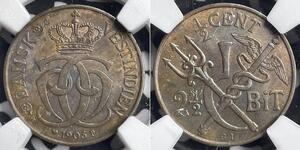
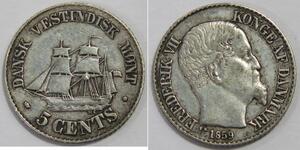
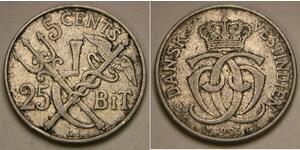
For collectors, there are no distinct "Danish West Indies" coins; rather, they find themselves collecting Danish coinage with provenance in the Caribbean. Here is why these specific pieces matter:
- The 18th-Century Silver Thaler: Minted during the period when King Frederick V governed directly. These large silver discs were used to pay for bulk sugar imports and plantation upkeep.
- The Late 19th Century Copper Bits: As the colony transitioned from slavery (abolished in 1848) toward a wage-labor economy, smaller denominations like copper pieces became vital. These are rarer than large silver coins because they were heavily spent on daily wages.
The true rarity for collectors lies not in the strike date of Copenhagen mints alone, but in those specimens that show signs of having circulated outside the metropolitan economy—perhaps through trade with neighboring Spanish or British colonies where these specific silver coins might have changed hands before a hurricane season washed them overboard.
Cultural Legacy
The legacy of this coinage tells us about the hierarchy and wealth distribution in colonial times. Silver was for merchants, copper for laborers (and later freedmen), and gold coins were rare sights that might appear only during special royal visits or trade missions from Europe.
A specific point to consider regarding collectors is how these artifacts reflect the colony's reliance on piracy and naval defense rather than internal manufacturing. The presence of English privateering, as mentioned in historical records, meant there was a constant fear that Danish silver coins would be looted or swapped for foreign currency if trade with Britain resumed.
For Collectors
Dansk Vestindien remains an important subject for the serious collector who appreciates colonial history. When examining these specimens, one is not just holding a date and mintmark; they are handling tools used in the very real exchange between Europe's industrial heartland and its plantation economies.
The focus of modern collecting interest here should be on context rather than high market value alone. A coin struck for use during the peak sugar production era (1750–1840) holds a story that is far greater in historical weight compared to post-sale coins which circulated after 1926 under American control.
If you are assembling an album dedicated to this period, prioritize pieces with original toning or evidence of wear consistent with heavy usage on Caribbean soil. Look for marks or inscriptions that might hint at local ownership before the territory was sold in a historic transaction involving $70 million equivalent value today. The journey from these islands' purchase by the United States until their integration into USVI history provides a fascinating narrative arc, but it is the era of Danish rule and its specific economic challenges—such as shifting currencies following slave emancipation—that truly captures the imagination.
In conclusion, studying this territory's currency collection offers a microcosm of how empires functioned through their money. It connects us to a time when ships carried more than cargo; they transported wealth and identity across oceans. As we reflect on these artifacts in our glass cases today, let it be remembered that every surviving piece represents a survival against the harsh realities of climate, politics, and war—a silent history waiting for your interpretation.