| View |
| preceded by | |
 Saint Pierre and Miquelon (1814 - )
|
| succeeded by |
| Saint Pierre and Miquelon (1814 - ) | Link to Wikipedia |
Saint Pierre and Miquelon: History, Coinage and Collectibles
Historical Background
To understand the numismatic story of Saint Pierre and Miquelon, one must first view it through a lens that spans centuries of maritime struggle. Located in the northwestern Atlantic Ocean like an island jewel off the Canadian coast of Newfoundland, this archipelago has served as a strategic foothold for France since 1536. For coin collectors, the historical narrative is crucial because every shift in sovereignty brings with it shifts in currency and design. From its early designation by Portuguese explorers to French annexation under Jean Talon, the islands were always viewed through the geopolitical prism of the Atlantic world.
The region's economy was historically driven entirely by maritime commerce: fishing for cod on the Grand Banks and trading goods via smuggling routes that crisscrossed the border with Nova Scotia. This economic reliance is evident in the historical context surrounding money; during the Prohibition era, when prohibition took hold in North America, the islands became a hub of illicit whisky trade. In 1931 alone, massive quantities were moved across borders. For numismatists and historians alike, this smuggling history suggests an underground economy where French currency flowed freely alongside foreign denominations used to purchase contraband.
The narrative becomes particularly intriguing with World War II. Unlike most territories of the Vichy regime in France, Saint Pierre and Miquelon faced a unique choice during 1940-1942. Under administrator Gilbert de Bournat, allegiance was pledged to Vichy French authority even when it meant resistance against Free France control initially. However, by December 1941, the population voted overwhelmingly for liberation by General De Gaulle’s forces. This transition from isolationist occupation to free territory is a significant historical pivot point that mirrors broader changes in currency stability and national identity across Europe.
Currency and Coinage History
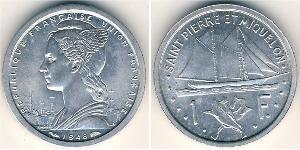
The evolution of money on these islands followed the trajectory of France itself, with specific nuances dictated by their status as an overseas collectivity. For most of its existence under French rule (post-1763 Treaty of Paris return), Saint Pierre and Miquelon utilized currency identical to that found in metropolitan France. There were no distinct sovereign coinages for a long period; the islands simply adopted whatever denominations Paris issued, effectively serving as an extension of French commerce.
The introduction of modern European currency came with the integration into the monetary zone that culminated in the Euro adoption, replacing older national units like the franc. Before this transition, collectors often find evidence of standard French circulation on these shores, sometimes marked by local trade stamps or distinct usage notes related to smuggling and Atlantic shipping. The economic hardships mentioned in history—such as population decline following WWI conscription—are reflected in a reduced volume of transactional coinage found during specific periods, suggesting an economy that was often cash-strapped despite its strategic location.
The adoption of the Euro is perhaps the most significant modern shift for numismatic interest. It brought stability after decades of relying on external monetary flows from France and Canada. Today, while using French standards (or European Union coins), Saint Pierre and Miquelon acts as a gateway between American markets and Europe. Collectors might look at this territory not because it is an independent issuer like Switzerland or the Caymans—but rather for how its local economy utilizes these stable currencies to maintain trade with neighbors across the water.
Mints and Coin Production
Unlike larger nation-states that operate their own mints, Saint Pierre and Miquelon has historically relied on centralized French production facilities. The coinage circulating in this archipelago is minted at major French facilities such as Pessac or Lyon, bearing standard designs used throughout the Republic.
The Role of France
This reliance was necessary during earlier periods when local industries could not support complex minting operations. Even after becoming an overseas department and later a collectivity, these islands continued to use French coinage, often circulating notes printed by La Banque de France. The physical quality remained consistent with metropolitan standards—a hallmark of the era that emphasized unity across vast ocean distances.
Territorial Designations
In more recent years (post-2018), reforms within the European Union allowed certain overseas territories to explore distinct features on their currency or commemorative pieces, though Saint Pierre and Miquelon has largely adhered to standard French designs. The minting traditions here emphasize connection rather than isolation; a coin found in St. Pierre carries not just weight of metal but represents centuries of trade links with France.
Notable Coins
For those searching for specific "notable" examples, the focus is often on commemorative issues tied to local history rather than standard circulation coins produced exclusively in this territory.
- The Vichy Era Occupation: During World War II (1940-42), despite initial allegiance shifts and Free France resistance, any currency issued or circulated during the occupation is historically significant to numismatists focusing on WWII economics in occupied territories.
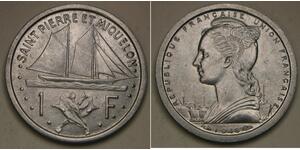
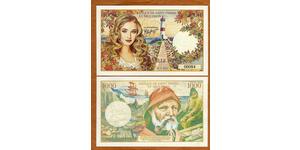
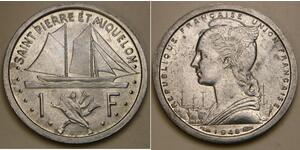
- Currency Transition Issues: The period of transition from French Francs to Euros (1990s-2000s) produced various commemorative banknotes and coins minted specifically for the archipelago. These pieces are prized because they represent a moment of major geopolitical change—the full integration into modern Europe.
- Fishing Industry Commemoratives: Given the history where Saint-Pierre is named after fisherman saints (Peter), special commemorative issues often celebrate the cod fishing trade, reflecting how local economy remains dependent on Atlantic resources today. These usually feature high-quality relief and are struck to commemorate EU partnerships.
Cultural Legacy
The numismatic output of Saint Pierre and Miquelon is deeply tied to its identity as a "territoire d'outre-mer" (overseas territory). The culture there blends French national pride with local maritime traditions. Coinage, or the currency used in daily life here, reflects this blend; while using Euro coins from Paris mints, local businesses might have adapted their pricing to reflect unique Atlantic trade conditions.
The religious influence is also subtle but present—coins often bear symbols of Saint Pierre (St Peter), reflecting the saintly patronage that gave a name to the largest island. This connection to faith mirrors early settlement patterns where fishermen gathered around chapels, and coinage from France served as a tangible link back to their Catholic home.
For collectors
Saint Pierre and Miquelon serves a specific niche in numismatics. It is not typically the site of exclusive "OCT" (Overseas Country) minting like Monaco or French Guiana, but rather represents an interesting case study for those collecting French colonial history or Atlantic trade coins.
The appeal lies in understanding that these territories were once part of a vast empire where money was centralized. Today, they are part of the European Union yet distinct from its customs territory—a unique status often reflected in specialized commemorative series issued to mark this hybrid identity for collectors interested in political boundaries and currency zones.