| View |
| preceded by | |
|
|||||||
| Principality of Brunswick-Wolfenbüttel (1269 - 1815) | |||||||

| succeeded by |
| Principality of Brunswick-Wolfenbüttel (1269 - 1815) | Link to Wikipedia |
Principality of Brunswick-Wolfenbüttel: History, Coinage and Collectibles
Historical Background
To appreciate the silver struck in this small yet culturally rich state within Germany today, one must first understand the dramatic history that forged its people. The story begins deep within the medieval tapestry of Eastphalia when Emperor Frederick II granted land to Otto the Child in 1235 as an imperial enfeoffment for Brunswick-Lüneburg. While emperors divided this sprawling territory among their loyal sons, creating a patchwork of duchies and principalities over centuries, one line held firm: the House of Welf.
Following numerous divisions and reunifications throughout the 13th and 14th centuries, a specific lineage known as the Old House ruled from Wolfenbüttel. For decades, this court was defined by constant friction with citizens in nearby Brunswick until dukes finally moved their residence to Wolfenbüttel around 1432. This move established the center of power for over four hundred years.
The political destiny of the principality was forever altered by its strategic alliance with Prussia, most notably during the reigns following Charles I and before Queen Caroline Matilda brought a Danish bride to the region in 1769. As alliances shifted from the Habsburg Emperor toward Frederick William I's Hohenzollern kingdom, Brunswick-Wolfenbüttel found itself positioned as a "little brother" to Prussia within the Holy Roman Empire. This relationship was not merely diplomatic; it heavily influenced economic policies and monetary stability.
Culturally, however, this state stood apart from its neighbors by investing in education and science rather than constant warfare after 1670. It is a testament to their prosperity that they could build the Wolfenbüttel Library at its zenith, perhaps even surpassing other libraries of Europe with collections amassing natural history artifacts before being transferred elsewhere later.
Currency and Coinage History
In an era where trade required standardized value for cross-border commerce between Hamburg, Hanover, and Lübeck, the Principality navigated a complex system. As members of the Lower Saxon Circle within the Holy Roman Empire, the dukes had to adhere to specific monetary reforms known as the Reichsmünzordnung.
The evolution of money here mirrors its history: early periods saw independent minting rights granted by imperial decree that often changed hands during dynastic disputes or territorial acquisitions. By 1495 and beyond, after reunifications brought Calenberg and Göttingen lines back under Wolfenbüttel control in the later decades, a more unified standard was attempted to aid trade.
The "Brotherhood in Arms" with Prussia inevitably pulled Brunswick towards monetary unification. As small German states were required to align their currency standards to prevent inflation and smuggling across borders, Brunswick's coins often began bearing signatures of mint masters from neighboring Hanover or Prussian mints by the late 18th century.
Mints and Coin Production
The physical location where these metals were transformed into gold bullion was as important as their artistic design. Wolfenbüttel itself served as a mint house for much of its history, utilizing skilled artisans who crafted high-relief pieces typical of the region's Baroque aesthetic.
However, after the capital shifted back to Brunswick city in 1753 due to population decline and political necessity in Wolfenbüttel, the primary center of minting moved north. This transition is crucial for any serious collector looking at date ranges before 1806 versus those issued under Prussian hegemony later on.
The artistry reflected a time when ducal authority was expressed through portraits and heraldry rather than complex allegorical scenes found in larger states like Austria or Bavaria. Wolfenbüttel coins were often small in quantity, reflecting the modest size of their domain yet possessing high quality due to their reliance on trade revenue.
Copper pieces circulated for internal use while silver thalers served international commerce. These items allowed collectors to see how a duchy managed its economy through local taxation and tolls before being absorbed into larger European markets during the Napoleonic wars and subsequent dissolution of the Empire in 1806.
Notable Coins
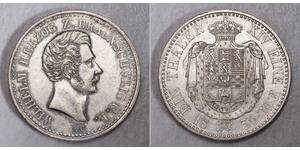
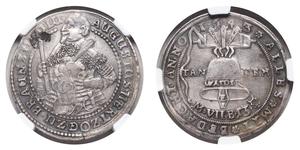
- The Welf Thaler Series: Early coins minted under Dukes Henry Julius or Augustus often featured portraits rendered with a striking, detailed relief. These were popular among collectors because they showcased the ducal line directly and served as propaganda pieces promoting their culture to visitors from across Europe.
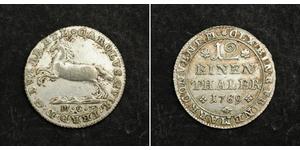
- The "Half-Thaler" Marks: In the 18th century, trade demands led to smaller denominations like half-thalers used for commerce in Lower Saxony. These coins are prized by numismatists because they display a blend of local ducal heraldry (the wavy crest) alongside standard imperial symbols mandated by Holy Roman Imperial reform.
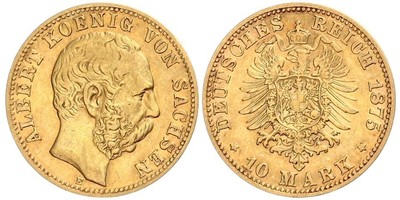
- The Prussian-Standardized Pieces: Following 1806, as the Duchy became an Electorate and then fully integrated into German states later on during the Bismarckian era, collectors find significant pieces bearing Prussian eagle emblems rather than Welf crests. These represent a pivotal moment where local identity gave way to national unity in silver standards.
- Copper Pennings: The smaller change used for markets and daily life often features simpler designs but high production volume. While less common, these are excellent entry points as they provide insight into the social fabric of 17th-century Wolfenbüttel before it faced decline following the move back to Brunswick city.
Cultural Legacy
The coinage struck in Brunswick-Wolfenbüttel is a tangible record of its intellectual and political life. When Johann Wolfgang von Goethe visited, his literary fame likely influenced local artistic standards used on state seals found adjacent to the minting process.
Furthermore, the "Widow's Residence" period for Wolfenbüttel in 1753 led to significant cultural re-evaluation. The coinage of this era was less aggressive and more introspective than previous periods, mirroring how the court focused on science (the natural history collections) rather than military expansion.
The silver used these coins likely originated from domestic mining or purchased bullion markets in Hanoverian trade hubs like Celle, which facilitated connections to the great banks of Hamburg. The legacy remains a testament to a state that balanced artistic appreciation with necessary economic survival within the rigid constraints of imperial law.
For Collectors
Why does this principality still hold allure today? Because it sits at a crossroads between independent ducal rule and Prussian integration. For any collection focusing on German numismatics, Brunswick offers the unique ability to study how local identity transformed under pressure from larger powers.
The quality of silver found in these coins is generally high because they were minted for export as well as domestic trade, ensuring durability against wear and tear over centuries. This makes them ideal subjects for conservation and appreciation even now that political boundaries have changed dramatically across the landscape where this history once played out.