| View |
| preceded by | |
 Ecuador (1830 - )
|
| succeeded by |
| Ecuador (1830 - ) | Link to Wikipedia |
Ecuador: History, Coinage and Collectibles
Historical Background
Welcome to the Republic of Ecuador, a nation cradled by one of Earth's most significant geographical lines—the Equator itself. For those who walk its streets or stand upon ancient Andean terraces, you step into layers of history that stretch back nearly 10,000 years before European contact arrived in earnest. To understand the coinage we hold today requires a journey through centuries where indigenous tribes cultivated potatoes alongside maize, Inca armies marched to consolidate territory from Quito southward, and Spanish conquistadors first heard news of legendary gold reserves.
The land was once part of vast confederations before being absorbed into the mighty Inca Empire. However, the Incas found resistance in coastal jungles, leading to a unique cultural mosaic that still defines the nation today: mestizos blended with descendants of indigenous, African, and European peoples. When the Spanish arrived after 1532, their arrival shifted trade networks dramatically toward Spain's Atlantic markets. The colony became an administrative seat within the Viceroyalty, first under Peru and later New Granada.
This era fostered a robust economy driven by silver mining and agriculture. As independence movements swept through Latin America in 1809 with cries echoing from Quito streets, they began to challenge not just sovereignty but the very structure of their commerce. The struggle for freedom eventually resulted in Ecuador's separation first as a department, then a sovereign state, fundamentally altering how value was perceived locally and exported globally.
Currency and Coinage History
The story of money in this region is one of continuity rather than abrupt change. For centuries following Spanish colonization, the coins used here were identical to those minted for Spain or its vast empire across South America. Silver dollars circulated freely, backed by precious metals extracted from mines that dotted the Andes slopes.
When independence arrived in 1820 and solidified by the early 19th century, the transition was surprisingly fluid in terms of coinage standards. Rather than immediately forging a new currency system to match neighbors like Peru or Colombia—a common practice elsewhere—Ecuador initially continued using established Spanish dollar systems but began replacing legends (names on coins) over time with its own identity.
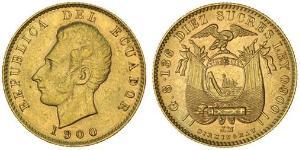
The monetary reforms during the 19th and early 20th centuries reflected broader Latin American trends where nations moved away from heavy reliance on physical silver imports. The country remained one of only three that kept using gold as currency long after others had abandoned it, though eventually adopted modern paper money systems. Throughout this evolution, coins served not just as payment but as a declaration of sovereignty.
Mints and Coin Production
The heart of production beat in Quito, the historic capital situated high above sea level on volcanic peaks overlooking the Andes valley. While smaller operations existed along the coast to handle trade with ships arriving from Spain or South America, Quito remained the primary minting center for decades.
Minting traditions here were deeply influenced by Spanish craftsmanship but adapted locally due to material shortages in high-altitude environments. When bullion arrived via ship on Pacific waters bound inland through rugged ports, coins struck at local workshops often exhibited slightly different characteristics than those from Madrid or Mexico City. This variation is now prized by collectors seeking pieces with distinct Ecuadorian "feel."
The technology used evolved alongside the political landscape. Early colonial presses were simple but efficient for high-volume silver dollars required to pay soldiers and tribute. Over time, as industrialization reached Latin America in the late 19th century, coin designs became more intricate and durable metals like copper-nickel began appearing for fractional coins needed by daily markets.
Notable Coins
No discussion of Ecuadorian collecting would be complete without addressing two pivotal types. First are the historic silver dollars often called "Austrias" or Guineas, circulating during the Spanish era but continuing decades into independence as legal tender in local markets.
- The Silver Dollar: These pieces bear portraits of Habsburg monarchs or generic designs representing peace and commerce. They were essential for trade throughout South America. For collectors, they represent a period when money was defined purely by weight and purity rather than the image printed upon it.
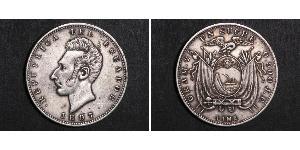
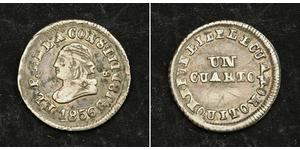
The Early Republic Issues: Following independence in 1820-1830s, mints began producing coins that replaced royal Spanish imagery with depictions of local heroes or allegorical figures like the "Republic."
- Governing Symbols: These early issues marked a bold political statement to replace monarchy symbols. The artwork often depicted agricultural scenes from Ecuador's highlands and coastal regions.
In the 20th century, as oil became an economic driver alongside agriculture mentioned in modern records, coin designs began shifting away solely toward gold or silver content. Modern issues include Galapagos tortoises on smaller denominations celebrating unique wildlife found only there globally.
Cultural Legacy
The numismatic legacy of Ecuador is a fascinating blend of ancient roots and forward-looking national identity. Every coin tells the story of what this country values: nature, independence, peace between peoples, science (Galapagos), and artistry rooted in Andean tradition.
- Nature: The new constitution recognized rights for "nature" itself; echoes of these symbols often appear on modern commemorative issues highlighting biodiversity found nowhere else globally including islands like Galápagos depicted prominently alongside maritime trade motifs from the mainland coast.
For Collectors
Ecuadorian coinage remains a treasure chest for those seeking quality examples of Latin American history. Why? Because these nations often struck their coins with exceptional artistry during eras when European designs were fading or standardization was beginning to take hold globally.
- Rarity and Quality: Many early silver dollars survive in remarkable condition due to their widespread use but also careful storage by merchants who kept them for personal reserve accounts. Finding these outside of central bank archives is becoming increasingly rare as private holdings are released or lost over time generations apart from public awareness.
The transition period between Spanish rule and full republichood produced some beautiful transitional pieces bridging old worlds with new aspirations. Collectors should look beyond simple dates to appreciate the craftsmanship that turned raw gold mined in high Andes mountains into symbols of national pride.