| View |
| preceded by | |
 Burundi
|
| succeeded by |
| Burundi | Link to Wikipedia |
Burundi: History, Coinage and Collectibles
Historical Background
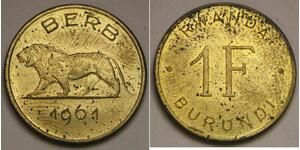
The nation of Burundi stands as a vibrant jewel within the heart of Central Africa, nestled upon the shores of Lake Tanganyika. To understand its monetary story one must first look to the region's deep roots in pre-colonial societies where barter systems dominated daily life before the arrival of standardized exchange media. The territory evolved from distinct kingdoms and territories under various mandates during the colonial era, specifically German influence followed by Belgian administration as a League of Nations mandate known historically as Ruanda-Urundi.
This period was pivotal not merely for political sovereignty but for economic integration with global trade networks. As coffee emerged as the primary agricultural export driving the national economy in the mid-twentieth century, the need for reliable currency to facilitate international transactions became paramount. The colonial administration introduced paper money and tokens that circulated alongside foreign coinage until local minting could be established or regional cooperation agreements were formalized. Following independence from Belgium, the young nation sought to assert its own economic identity while remaining part of a larger monetary community common in Central Africa.
The cultural narrative is equally rich during this time. Artifacts unearthed and trade records suggest that early currency was heavily influenced by neighboring East African regions where cowrie shells were once used as standard weights for value before coinage arrived. The transition from these ancient systems to modern metal coins reflects the rapid industrialization of agriculture and transport infrastructure required for exporting coffee beans across oceans.
Currency and Coinage History
The evolution of money in this region was not linear but adaptive, responding quickly to shifts in imperial administration. Early coin production relied heavily on French minting facilities because local technological capacity had yet to develop domestic manufacturing capabilities for high-quality bullion pieces. This reliance placed Burundian and Rwandan currency issues within a shared numismatic framework often indistinguishable from their southern neighbors.
Coinage served multiple purposes beyond commerce; it was an instrument of propaganda and unity intended to bind disparate territories under one monetary standard. Following independence, the introduction of new coin designs marked a distinct break in history, featuring imagery that celebrated national symbols rather than colonial emblems. These changes were often mirrored by paper money issuances issued through regional bodies designed for stability against inflation.
The mid-century era introduced significant reforms regarding currency zones where different nations utilized shared francs or specific denominations before eventually establishing sovereign controls over their monetary policy again in subsequent decades. The standardization of the Franc allowed for trade with major European partners, stabilizing export markets for local agriculture producers who had previously struggled to pay international debts without reliable state backing.
Mints and Coin Production
In terms of production mechanics, many coins from this period were struck at mints located in France or Belgium due to technical expertise requirements common in post-war reconstruction. The artistic style reflected a blend of Art Deco influences prevalent during the mid-twentieth century alongside indigenous African motifs that became popular as design teams integrated local culture.
Minting traditions remained conservative initially, prioritizing durability and mass production needs for farmers selling crops at marketplaces throughout the territory. As domestic capability grew, relief heights on coins were adjusted to ensure legibility while maintaining aesthetic integrity typical of national currencies produced globally during that golden age of numismatic design where artistic merit was often secondary only to monetary policy goals.
The transition from foreign strikes to localized production is evident when examining later issues which bear signatures or marks indicating specific workshops responsible for die cutting and planchet preparation. These processes ensured consistency in weight and composition, crucial for maintaining public confidence during the economic fluctuations typical of agrarian economies linked heavily to global commodity prices.
Notable Coins
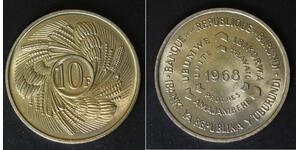
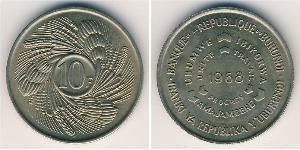
Coin collectors today find great interest in several series that mark pivotal moments in national history. The first significant post-independence circulation pieces feature imagery depicting agricultural prosperity, often centered around coffee beans or export ships transporting harvests abroad. These designs served as visual reminders to the populace of their connection to global markets.
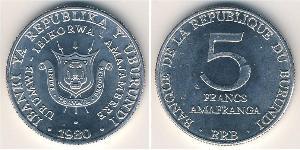
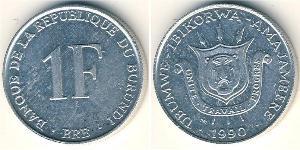
Among early issues are commemorative types celebrating independence milestones where higher denominations were crafted in precious metals for special distribution rather than general circulation use. The choice of motifs was deliberate, selecting birds native to local habitats or shield patterns used by traditional leaders as official state imagery before modern national flags became standard on paper notes and metal currency alike.
Later series saw an expansion into denominations that included copper-nickel alloys specifically designed for low-value transactions among rural farmers where plastic alternatives had not yet been introduced. Collectors often appreciate these pieces for their unpolished charm which tells the story of a growing nation striving to build infrastructure and stability within difficult geographic conditions.
Cultural Legacy
The coinage of Burundi serves as an enduring testament to its cultural identity, economy, and historical achievements without needing explicit political discourse. Symbols chosen for die engraving reflect deep respect for natural beauty found in the Great Lakes region while acknowledging the importance of trade routes that connected this territory with other nations.
Religion played a subtle but significant role in artistry where designs avoided religious icons to remain inclusive rather than favoring one denomination over another, reflecting the diverse spiritual traditions practiced by citizens across the nation. This approach fostered broad acceptance among varying populations who could identify their shared heritage through common artistic standards.
Furthermore, the shield and national bird often depicted on metal tokens were drawn with care to honor ancestral legends rather than merely copying printed documents for commercial purposes in later years as global economic pressures forced nations to simplify designs over time. This attention preserves a sense of dignity within numismatic archives that might otherwise be lost through modernization trends common elsewhere.
For collectors
Burundi remains an important subject for serious hobbyists interested in the narrative history of Central African monetary systems rather than chasing specific market prices alone. The scarcity found in early independence issues provides a unique opportunity to own tangible links to how post-colonial governance shaped economic policy and national unity.
The value proposition extends beyond metal content; it lies in owning historical pieces that represent agricultural resilience, diplomatic stability within regional unions, and artistic evolution typical of smaller nations navigating large global markets. Condition remains vital as surface preservation highlights the wear patterns used by daily users decades ago versus carefully stored specimens suitable for display cases.
Focusing on these items allows collectors to engage with a history where coinage functioned not just as money but as a diplomatic tool and artistic medium expressing dignity during transformative eras. Studying their designs offers insight into how cultural symbols were codified into statecraft through metal rather than relying solely on text-based historical records which might be incomplete or damaged.