| preceded by | |
|
|||||||||||
 Kingdom of Württemberg (1806-1918)
|
|||||||||||


| succeeded by |


| Kingdom of Württemberg (1806-1918) | Link to Wikipedia |
Kingdom of Württemberg: History, Coinage and Collectibles
Historical Background
Welcome to the gallery where history meets metal in southern Germany. For over two centuries, this distinct kingdom sat at a fascinating intersection between French revolutionaries and Prussian power politics. Its story begins not with a sword, but with ink on paper during Napoleon’s reorganization of Europe.
In 1806, as the Holy Roman Empire dissolved into dust to be reshaped by foreign empires, Württemberg rose from a mere Electorate to an independent Kingdom under Frederick I. This elevation was less about military might than strategic alliance; it allowed for administrative reforms inspired by French governance models and brought vast territories of church lands and imperial cities into the royal fold.
The economy of this region was always tied to its neighbors, particularly Bavaria and Baden, yet Württemberg maintained a fiercely independent spirit. While many German states struggled under foreign occupation during the Napoleonic wars, or were swallowed by Prussian hegemony after 1866, Württemberg managed to preserve its sovereignty even while contributing troops to imperial campaigns.
The political landscape shifted dramatically in 1908 when Württemberg was admitted into a customs union with Germany and adopted the gold standard. By joining this economic bloc, Württemberg effectively aligned itself financially with Austria-Hungary, setting the stage for eventual full integration later in the era of William II.
Currency and Coinage History
Moving from fragmented local economies to a sovereign power required a robust monetary system. In the early years under Frederick I, coin production was essential to manage debts arising from war indemnities, specifically those paid following conflicts with Prussia. The financial frugality of William I in 1816 is noted as repairing shattered finances; this era saw the stabilization of currency.
The kingdom maintained its own monetary institutions long after other states had surrendered control to central authorities. It was not until the final decade of the empire that Württemberg ceased issuing gold coins, joining the broader German Empire standards just days before World War I began. This unique transition period makes this region’s coinage a bridge between medieval silver thalers and modern paper currency.
Mints and Coin Production
The mints of Württemberg were not merely factories for metal; they were centers of artistic expression where local identity met political necessity. The production quality varied significantly depending on the reigning monarch's taste and budget. Under William I, whose frugality helped stabilize finances following war damages, coinage output remained consistent.
The mints produced coins that served daily commerce in towns ranging from Stuttgart to Tübingen, but they also cast bullion coins intended for international trade or as a store of wealth against inflation. In the latter half of the nineteenth century, Württemberg maintained its own mint operations independently, though it adopted many design motifs common across German states.
The artistic characteristics distinguishable on these pieces often reflect the tension between conservative and liberal forces within the government. When the constitution was modified or dismissed by royal decree, as happened in 1849 when Schlayer returned to power, the coin designs shifted from republican symbols back to traditional imperial portraits of the King.
Cultural Legacy
The coinage tells a visual story of how Württemberg navigated its path. You will notice that as Prussian influence grew in 1866 following their occupation and subsequent indemnity, the local designs subtly evolved to include more imperial motifs while still honoring the specific royal family lineage.
Railways were built connecting this small kingdom’s mints with those of the larger German states. This infrastructure fostered trade not just for goods like grain or timber but also facilitated the flow of capital and currency standards between Stuttgart and Berlin.
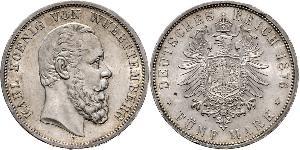
The legacy is preserved in designs that honor local symbols alongside Imperial eagles, reflecting a society deeply proud of its own history yet aware it lived within a larger Germanic framework. The artistry ranges from severe, sober profiles under conservative kings to more dynamic busts during periods when the King tried to appease liberal sentiments before dismissing them.
Notable Coins
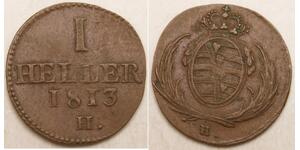
- The Gold Sovereign: Produced in limited quantities throughout the nineteenth century. These coins often bear a crowned portrait of Frederick II or William I, wearing military attire rather than civilian dress. They represent the period when Württemberg acted as an independent economic agent within Europe.
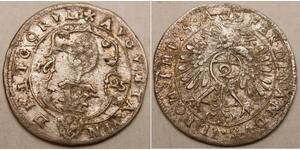
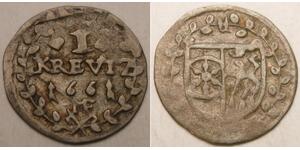
- Silver Thalers and Half-Thalers: The bread-and-butter currency for locals during this era. These coins often carry a coat of arms combining the imperial eagle with specific regional features, distinct from the purely Prussian designs found elsewhere in Germany.
- The 1908 Transition Marks: Following the admission into customs union and gold standard adherence, these are rare transitional pieces. They typically show Württemberg issuing coinage using Imperial eagle imagery or preparing for the eventual cessation of local minting around 1924/25.
Mint Technology and Artistic Evolution
The production centers employed traditional striking techniques that evolved over time. Early issues often show softer metal, indicating copper or lower-grade alloys used for trade tokens before they were minted in silver or gold.
Perspectives on Collectibility
This region is a gemstone set amidst the larger landscape of German numismatics. Its unique history allows collectors to see not just metal, but policy debates and political shifts engraved in stone (or rather copper) ink.
The story here ends with 1918 when William II abdicated following Germany's defeat; this marked a moment where the monarchy was replaced by a Free People’s State. This shift from royal portraits to democratic imagery makes these pieces valuable indicators of modern history as well as old.