| View |
| preceded by | |
| Judea (6 - 135) |
| succeeded by |
| Judea (6 - 135) | Link to Wikipedia |
Judaea: History, Coinage and Collectibles
Historical Background
The story of Judaea during the first two centuries after Christ is one defined by a delicate political balancing act between local traditions and imperial power. When Rome eventually annexed this region in 6 AD following the deposition of Herod Archelaus, it established a province that would serve as a crucial buffer against the Parthian Empire to the east and control access through Egypt's Nile delta via maritime routes from Caesarea Maritima.
The landscape was steeply divided among Samaritans, Jews, and Gentiles living in Galilee and Jerusalem. This unique cultural friction created an environment where trade flowed despite political tension. The capital of the province shifted from Jerusalem to the port city of Caesarea, a grand construction project initiated by Herod that symbolized Rome's new order while retaining architectural echoes of Jewish tradition within its layout.
This era was one of profound transition and frequent uprisings against Roman governors or local client kings. The economy was small compared to Syria proper but vital due to the trade routes it protected. For a long period, Jews could judge offenders under their own laws in Jerusalem, even capital offenses. This autonomy allowed for significant cultural expression through currency production before stricter centralization of Imperial rule eventually eroded these privileges.
Currency and Coinage History
The monetary system evolved to reflect Judaea's changing status from a client kingdom under Herod the Great and his sons, who were appointed by Rome but maintained considerable independence, to direct Roman administration. Initially governed as a "satellite" of Syria rather than a formal senatorial or imperial province ruled directly by the Emperor himself, this jurisdiction was led by governors usually chosen from the Equestrian Order.
This semi-autonomy meant that local mints could continue producing money for some time under Roman supervision. While Rome eventually brought direct control over financial systems in provinces like Egypt and Judaea later on, early coins struck here often retained traditional designs of Greek-style shekels and denarii but were stamped with new Imperial names or official titles.
The most critical turning point occurred when the first census was conducted by Governor Publius Sulpicius Quirinius in 6 AD. This administrative act triggered a major revolt led by Judas Galilean that lasted until the early days of Tiberius, leading to significant unrest and economic disruption.
This shift meant that coins became powerful propaganda tools for Rome, but also remained deeply embedded with local religious sentiment. The coinage served as a daily interface between imperial authority—represented by Emperor portraits or titles—and Jewish identity—expressed in temple inscriptions.
Mints and Coin Production
The mints located at Caesarea Maritima, Jerusalem (which was closed during certain periods for security reasons), Jericho, Gadara, Amathus, Sepphoris, Joppa, and Sebaste played distinct roles in the numismatic history of the province.
Jerusalem served as a primary mint when under Herodian rule, producing high-quality coinage that displayed Greek imagery alongside local legends. However, following direct Roman control, mints were often placed at safer locations away from revolutionary hotbeds like Jerusalem or moved to Caesarea where security was tighter.
Caesarea became the administrative and minting heartland under Tiberius's rule when its grand port city of marble architecture hosted major coin issues. Coins struck here featured Roman profiles but often included the title "Pontifex Maximus" (High Priest), a significant concession to Jewish traditions that helped maintain local peace.
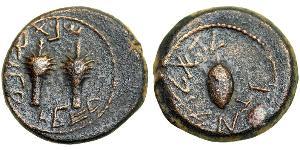
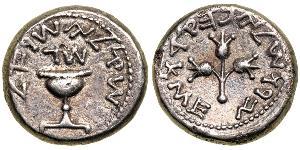
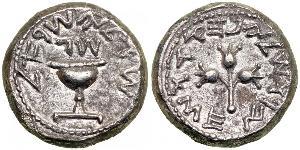
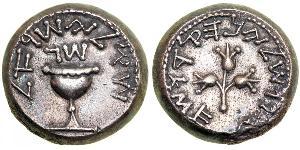
The artistic characteristics shifted over decades as governors changed and revolts threatened stability. Early Herodian coins were intricate works of Greek artistry; later issues became simpler or featured only Imperial portraits with standard legends, though some rebel coinage during the Bar Kokhba revolt (132-135 AD) returned to religious symbolism.
Notable Coins
No collection of Roman coins is complete without considering the famous Titulus "Pontius Pilatus Praefectus Judaeae" issued between 26 and 36/37 AD. These are perhaps among the most sought-after pieces by serious collectors today because they feature a high-profile historical figure.
The first issue was struck at Caesarea Maritima in silver (as denarii) but also produced gold staters that were less common to find than their silver counterparts due to smaller mintages. These issues are prized for the specific spelling and lettering variations of Pilate's name, which helps authenticate provenance.
A second issue was struck specifically at Jericho between 27 and 34 AD featuring different legends referencing Herod Antipas ("Tetrarch") rather than a Governor or prefect. These coins are valuable not just for their historical link to the governor who sentenced Jesus, but because they show how local political authority coexisted with imperial symbols before being absorbed into direct Roman rule.
Tiberian denarii from Caesarea Maritima struck between 18 and 34 AD are another category of high importance. These often display a profile portrait of Tiberius Caesar alongside inscriptions that include the names of his wife Julia or sometimes "Pontifex Maximus."
The coinage minted during Herod Antipas's reign (26-39 AD) in Galilee and Perea is distinct from later Judaea coins because it was a tetrarchy rather than full provincial status. These issues bear legends such as "Herodes Tetrarches" and display artistic styles typical of the region while remaining subordinate to Rome.
In contrast, during Agrippa I's reign (41-44 AD), there were coins produced under his own portrait that briefly revived local autonomy before returning again to strict Roman control. The later Palmyrene-inspired designs from 39 AD onward are rarer and reflect the specific historical moment when Caesarea became a major urban center.
Cultural Legacy
The coinage of Judaea reflects how Rome attempted to integrate this volatile region into its global economy without completely crushing local identity. The persistence of Jewish titles on Roman coins—like "Pontifex Maximus"—demonstrates a pragmatic approach by early Emperors who understood that economic stability required political sensitivity.
The shift from coinage celebrating kings like Herod to denarii bearing only Imperial images marks the moment Rome fully absorbed Judaea into its bureaucratic machine. The designs on these coins tell the story of how a small province became strategically vital, not just through military campaigns but by controlling trade routes and maintaining economic stability in volatile times.
The numismatic record preserves memories that were otherwise lost to history books about Jewish law and local religious figures who might have been ignored if they hadn't struck coins bearing their titles. These artifacts connect directly with the lives of everyday citizens, merchants using these same currencies for trade on roads leading toward Syria or Egypt.
For collectors
Judaea offers a compact yet incredibly rich collection history that bridges biblical times and Roman imperialism in tangible ways. While many coins can be found relatively easily due to survival numbers from the major Caesarea mints, certain issues like Pilate's titles are consistently scarce.
The historical significance of Judaeans lies not just in rare specimens but in their ability to narrate how a region survived centuries of conflict and changing governance while maintaining its own cultural identity. For those who study ancient history or numismatics as a hobby, this material serves as an excellent teaching tool about Roman administration.
The legacy of Judaea is also found in the famous coinage struck during times of rebellion when religious symbolism re-emerged on metal for one last time before final suppression and renaming to Syria Palaestina. Collectors should focus first upon well-preserved silver specimens that bear clear inscriptions, as these represent a unique window into early Christian history alongside Roman conquest.