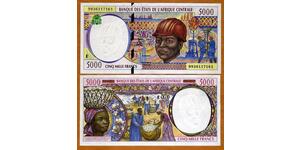
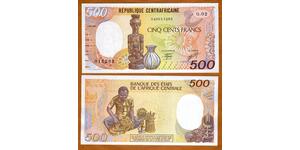
| View |
| preceded by | |
| Central African Republic |
| succeeded by |
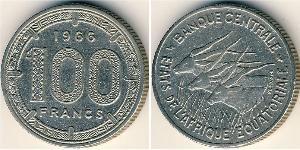
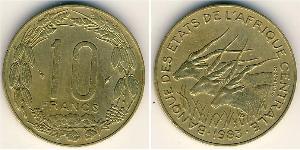
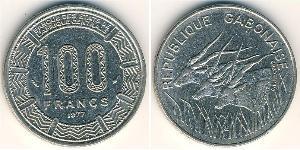
| Central African Republic | Link to Wikipedia |
The Central African Republic: History, Coinage and Collectibles
Historical Background
Welcome to our gallery where we examine a nation carved from the vast heartland of Africa. The Central African Republic (CAR) stands today as a landlocked territory in central Africa, bordered by its neighbors to the north through Chad and Sudan, eastward into South Sudan, south towards the Democratic Republic of Congo, southwest with the Republic of the Congo, and west bordering Cameroon.
To understand the monetary soul of this nation, one must first look at how it came to be. Long before modern maps were drawn by European powers, hunter-gatherer societies pushed into these savanna regions around 10,000 years ago as deserts expanded northward. Farming eventually took root here, with white yam progressing into millet and sorghum cultures that thrived alongside fishing industries known for centuries.
The region was once part of a larger French colonial entity, often referred to in history texts under the name Ubangi-Shari. This territory served as an administrative unit within the greater system of French Equatorial Africa (FEA). France seized and colonized this vast area in 1894 during the late Victorian scramble for global influence. Initially named after its two defining rivers, the Ubangi and Chari—waterways that crisscrossed the landscape—the colony was administered from Brazzaville.
The colonial administration introduced a policy of mandatory cotton cultivation and constructed road networks vital to regional trade. This economic integration laid the groundwork for how currency would function in this region: serving not just as payment, but as an instrument linking local subsistence economies with French imperial commerce.
Currency and Coinage History
The evolution of money here is a story of external influence followed by intense national identity. During the colonial era, the currency circulating in Ubangi-Shari was entirely tied to France. The franc system dominated trade because it allowed for efficient exchange between producers (the local farmers growing cotton and timber) and foreign merchants.
When independence arrived following World War II—specifically around 1960—the Central African Republic had its first opportunity to define itself through monetary sovereignty, though this path was not without turbulence. The nation initially operated as a republic within the FEA before becoming fully independent later in 2013 (according to the provided text's timeline). However, history enthusiasts note that earlier political shifts heavily influenced coinage.
A pivotal moment arrived with the establishment of an empire regime between 1976 and 1979. This period is fascinating for numismatists because it represents a drastic departure from the French influence seen previously. The country changed its name to the Central African Empire, signifying that this coinage was minted under monarchic authority rather than republican administration.
The transition marked a desire to create a distinct financial and artistic legacy separate from colonial rule. This era introduced new denominations in silver and gold intended for both local commerce and international prestige.
Mints and Coin Production
When discussing the "where" of coinage, it is important to distinguish between central minting hubs that were shared across French territories versus specific national issues. Early on, the heavy industrial cost in human lives associated with colonial projects meant resources for metallurgy went elsewhere.
Much like many African colonies during this period, high-quality coins were often produced at large mints overseas—in France—while local administration handled lower-value coinage or circulating currency. However, as national pride swelled after independence, the focus shifted to minting that reflected indigenous imagery and resources.
Artistic characteristics of these issues typically avoided generic designs in favor of unique symbols representing the land.
The design aesthetic evolved from strictly French Republican emblems (like the Marianne figure or gallic rooster) toward motifs specific to Central African nature. You will find artistic renderings that celebrate the natural beauty of this region: representations of wildlife, local flora like oil palms and cotton plants which were crucial for exports.
The mints produced pieces with varying metallurgical qualities suitable for trade across borders. The coinage was often designed by artists commissioned from Paris or specialized workshops in neighboring colonies who sought to capture the essence of a nation that prided itself on its rich natural resources, including diamonds and gold reserves which were discovered and exploited during these periods.
Notable Coins
The most historically significant period for collectors centers around early independence issues. When CAR became fully sovereign in 1960, it needed a currency that replaced the French francs used locally but retained familiarity through value stability.
A key series often features designs depicting agricultural themes relevant to local life: cotton fields and cattle herds.
The subsequent Imperial era (under Jean-Bédel Bokassa) brought perhaps the most recognizable coinage in this region. A significant shift occurred with the introduction of new denominations featuring a prominent shield symbol on reverse sides, often accompanied by a lion imagery representing strength. The 5 Franc piece is particularly well-known for its bold depiction.
In terms of precious metals, collectors are drawn to issues minted from the late colonial period through the Imperial era which incorporated gold and silver alloys into circulating denominations or commemorative strikes. These pieces served as a tangible assertion of sovereignty.
Cultural Legacy
The coinage here is deeply tied to national identity, serving as mobile ambassadors for Central African culture. Even before independence, the name "Ubangi-Shari" and its French colonial context set the tone: it was about connecting two great rivers—waterways that were not just physical boundaries but lifelines of commerce.
The shield emblem often seen on coins is more than a heraldic device; for this people who are known to have inhabited parts of their territory since 8000 BCE, the symbol represents unity against external forces. This symbolism permeates every major design change from French rule to independence and subsequent regime changes.
The coinage reflects an economy that was heavily reliant on natural resources like timber (lumber), hydropower potential, and later oil reserves found in the deep south and west of this landlocked territory. The currency designs paid homage to these exports as if paying tribute to the wealth trapped within their borders despite poverty statistics.
For collectors
The historical significance of Central African numismatics offers a rare window into how French colonial administration managed vast territories and subsequently, new nations asserted themselves against that legacy. Collectors remain drawn to these issues because they represent the early formation of an independent state in Africa.
It is important for collectors to focus on provenance when evaluating pieces from this region's history. The coinage serves as a record of economic transition—from French controlled trade routes and cotton exports, to national independence declarations represented by the changing shield and lion imagery.