| View |
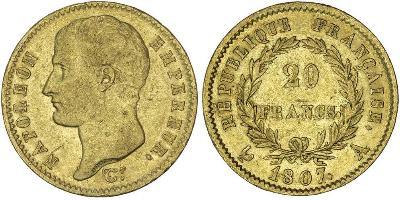
| preceded by | |
|
|||||||||
 Grand Duchy of Finland (1809 - 1917)
|
|||||||||


| succeeded by | ||||
|

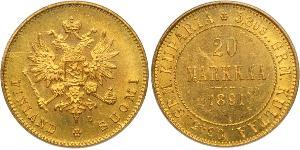
| Grand Duchy of Finland (1809 - 1917) | Link to Wikipedia |
Grand Duchy of Finland: History, Coinage and Collectibles
Welcome to our exhibit room dedicated to one of Europe’s most fascinating transitional monetary periods between 1809 and the end of the First World War. The Grand Duchy of Finland represents a unique bridge in numismatics where imperial authority coexisted with localized autonomy, creating coinage that tells a story not just of metalwork, but of national identity forming within a vast empire.
Historical Background
To understand the coins circulating through the northern archipelagos during this era, one must first comprehend the geopolitical landscape established by the Treaty of Hamina in 1809. Following decades of conflict with Sweden and France’s shadow across Europe, Finland was ceded to Russia but retained a distinct legal status known as autonomy under the Grand Duke.
This arrangement preserved Finnish laws and privileges while linking the economy directly to St. Petersburg. Trade routes expanded rapidly during this century, driven largely by timber exports and paper production from vast forests that stretched northward. As Helsinki transitioned from a fishing port into a cultural capital with universities and theaters, commercial needs demanded reliable currency systems.
The era was defined by stability despite political shifts in Europe, allowing for the preservation of local Swedish language traditions until national sentiment rose later under Tsar Alexander II. Culture flourished alongside commerce; opera houses opened to new audiences while merchants relied on silver standards trusted across borders. This environment fostered a demand for coins that acknowledged both their imperial rulers and their unique regional heritage.
Currency and Coinage History
The evolution of money in this region reflects the tension between local needs and central control. Initially, Swedish riksdalers were accepted alongside Russian rubles, but by the mid-nineteenth century, standardization began to take hold as Russia modernized its monetary system.
Finnish minting was not initially distinct from St. Petersburg production in terms of policy, yet local autonomy allowed for variations in design and legend that would appeal to a bilingual population speaking Finnish and Swedish. The silver mark became the dominant unit for higher value transactions while copper pennies circulated daily commerce markets.
A significant shift occurred during the industrialization wave where mints upgraded from hammered coinage mechanisms to press stamping techniques, matching European standards of quality found in France and Germany. This technological leap meant that coins minted within Finland were no longer just imperial tokens but high-quality specimens suitable for collectors today who value proof-like surfaces.
The role of these issues extended beyond simple trade; they served as government revenue tools during periods of war and economic expansion, yet the local population remained vigilant in preserving their own cultural symbols embedded into metallic objects passed through generations.
Mints and Coin Production
The heart of this operation lay at Turku (Åbo) before independence solidified other centers. The minting facilities there served a dual purpose: fulfilling imperial orders for Russia while producing localized coinage that acknowledged the Grand Duchy's status.
Techologically, production utilized steam-powered presses introduced after 1850 which allowed for precise striking of fine details such as laurel wreaths and royal profiles. Engravers were often recruited from Imperial workshops but given license to adapt designs with local flavor under strict oversight.
The artistic characteristics are telling; early issues displayed heavy, classical realism imported directly from European centers like Paris or St Petersburg that reflected imperial power. Later decades saw the subtle introduction of art nouveau influences and neoclassical elements as Finland sought its own cultural voice within Russian borders without challenging sovereignty explicitly.
Notable Coins
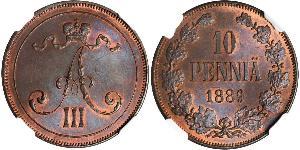
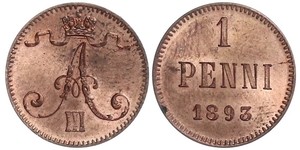
Collectors often find their favorite specimens in copper denominations bearing low face values that were widely used by fishermen, merchants, and farmers. These early pennies show a distinct wear pattern on high-relief features due to decades of circulation against wooden counter surfaces.
- The 1890s silver issues are considered milestones because they feature refined portraits that transition from stiff imperial profiles to more naturalistic renderings common in the late nineteenth-century coinage boom across Europe. These coins were popular for their sharp strikes and elegant lettering styles reminiscent of French mint productions.
Another key specimen is found during times when silver reserves dwindled due to wartime demands, leading mints to alter metal composition or cease low denomination production while maintaining high-value gold issues reserved for official government payments. This scarcity creates an historical narrative within the physical metal itself regarding fiscal policy under duress.
The Silver Marks
Perhaps most iconic are large silver denominations that bore dual legends in Russian and Finnish or Swedish, illustrating administrative duality during this period of transition. These pieces often featured crossed keys as a symbol of government authority but with intricate background patterns inspired by traditional Nordic woodwork motifs.
Cultural Legacy
The numismatic history of the Grand Duchy serves as a tangible record of Finland's path toward independence while acknowledging its complex relationship with imperial Russia. As the nation built libraries, schools, and museums that celebrated local folklore through woodcuts or paintings found on coin reverses.
For collectors
The legacy remains significant because each example carries a narrative piece from an empire that was simultaneously distant yet intimately tied to local affairs. They represent a period when art, law, and trade aligned under unique conditions rarely seen in other nations during the same time frame.