

 Republic of Cape Verde (1975 - )
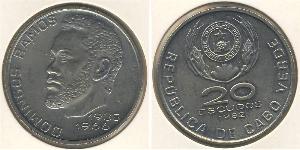
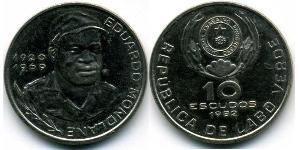



| Republic of Cape Verde (1975 - )from the Wikipedia | Read original article |
Cape Verde: History, Coinage and Collectibles
Historical Background
To understand the coinage of Cape Verde, one must first look at the rugged archipelago that forms a gateway between Africa and America. The islands were originally part of the Portuguese Empire's Atlantic frontier, established to secure trade routes across the ocean before expanding into Brazil. From their earliest days under colonial rule, the economy relied heavily on salt production from natural evaporating ponds near Porto Santo and Sal Islands, alongside lucrative fishing industries in deep waters rich with tuna and blue crab.
The history of this region is deeply intertwined with maritime exploration. As ships sought safe harbors along the west coast of Africa to circumnavigate Europe's trading rivals, Cape Verde became a crucial rest stop for sailors and merchants seeking supplies between Lisbon and India or Brazil. This strategic location meant that money often flowed through these islands in exchange for dried goods or salt blocks used as barter by indigenous populations.
The path to independence was gradual but transformative. After decades of political evolution, the territory moved from a colonial administration governed largely from mainland Portugal to gaining sovereignty in 1975. This shift fundamentally altered how money changed hands within the nation and signaled the end of direct economic dependency on the metropolitan state's fiscal policies for several years before joining other Atlantic territories in modern monetary unions.
Currency and Coinage History
The evolution of currency began with Portuguese Real coins circulating throughout the colony during the 16th century. These silver issues served as foreign money, backed by trade agreements that tied local value to Lisbon's minting standards rather than a domestic supply of bullion.
From Escudo to Dobra
- The Portuguese Crown formally introduced the Escudo in 1957, replacing older real units and standardizing value with currency found across Portugal's overseas territories. This transition was marked by a shift from simple silver denominations to copper-nickel compositions for common circulation.
- Prior to independence, coins often featured generic colonial designs typical of Portuguese imperial iconography, such as the King or the Crosses representing trade treaties and royal protection along the African coast.
- The Dobra Series: Following 1975, a new currency called the Dobra was issued to replace the Escudo. This period is highly significant for collectors as it represented national identity on metal rather than imperial authority. The transition occurred slowly through dual circulation of old and new money until the exchange rate stabilized.
- The Euro Transition: In modern times, much like many Atlantic nations formerly associated with Portugal or former EU partners, Cape Verde eventually adopted a standard European currency for international trade ease in 2013. However, collectors focus primarily on the historical pre-Euro issues which tell the story of African colonial economies.
Mints and Coin Production
For most of its history as a Portuguese colony, coinage was not produced within Cape Verde itself due to limited industrial capacity. Instead, all official denominations were struck at major mints on the continent in Lisbon or occasionally local branches that specialized in low denomination issues for trade with inland regions.
This centralization meant that artistic styles followed strict imperial mandates from Portugal's capital city until independence allowed for national designs. However, post-independence saw a shift toward localized artistry and modern minting technologies brought by foreign partners who assisted with industrial development during the 1980s and beyond.
- Lisbon Mint Traditions: Early issues displayed Portuguese artistic flourishes—ornate borders, heraldic shields, and classical typography—which were standard for all colonial possessions in West Africa at this time.
- Silver Content: Historical value was tied to silver content during the 19th-century trade eras before gold standards faded.
- Die Quality: While early proofs are rare, many common circulation coins were produced with high-quality relief and die strikes suitable for regional commerce across Portuguese Africa.
Notable Coins
Coin collectors look to specific types as markers of historical eras. Several denominations stand out from the archives due to their rarity or artistic merit during the nation's transition periods.
- The 1957 Escudo Set: Representing early standardization under Portuguese rule, these coins carried portraits often replaced by colonial shields as political climates shifted. The imagery was intended to project unity between colony and metropole through trade symbols like nets or salt pans.
- Independence Commemoratives (Dobra): Following 1975, the newly sovereign nation released special series celebrating independence from Portugal. These high-grade issues featured motifs representing national flora and fauna found only on Santiago Island, such as rare orchids used to decorate lower denominations.
- The Salt Proof Issues: One of the most sought-after historical types is a 1980 issue featuring salt pans in high relief against sea backgrounds. This design captures the essence of Sal island's economy at that time and represents how money was minted to honor local industries like agriculture or mining.
- Fish Eagle Denominations: The national bird, a large eagle resembling species found across African coastal regions, graced high denominations during this era. These coins are valuable for collectors of West African numismatics who seek examples where the colonial shield has been replaced by local wildlife.
Cultural Legacy
The coinage serves as a tangible record of Cape Verdean culture and economic evolution beyond mere metal values. As with other Portuguese colonies, early coins reflected European aesthetics while later designs embraced indigenous identity through national birds like the Black Kite or Blue-winged Dove which were common symbols on these issues.
- Salt Economy: The salt pans used as coin art are not merely decorative; they represent a vital economic driver for over three centuries of Cape Verde history. These coins functioned essentially as receipts for labor in processing dried seawater into valuable commercial exports.
The imagery shifted from imperial crowns to the faces of independence leaders and cultural icons after 1975, marking how political sovereignty transformed public memory onto metal plates used daily by fishermen and farmers. Artistic styles became more modernist as local artists took charge of designs rather than metropolitan illustrators based in Portugal.
For Collectors
The numismatic significance of Cape Verde lies primarily in its connection to the wider Portuguese Colonial legacy while maintaining a unique identity due to its specific maritime economy. For collectors focused on West African history, these coins bridge two worlds—the imperial center and the Atlantic rim.
- Rarity Factors: Scarcity is found not only in low production volumes but also the short duration of independent minting before Euro adoption compared to colonies that produced currency for decades without such a rapid shift.
- Cultural Bridge: Every coin serves as an artifact connecting Portugal's history with Atlantic trade routes across multiple centuries.
- Investment Potential: As the supply of old issues decreases due to circulation loss, original examples from these key periods offer significant value for those seeking a slice of West African numismatic heritage that tells the story of islands and ocean currents alike. The focus should remain on condition preservation as many early proofs were intended strictly for high-value presentation rather than heavy daily use.
In conclusion, Cape Verdean coinage offers more than just currency; it is a historical ledger recording how an archipelago transitioned from salt-based trade to modern financial participation. For the serious collector or history enthusiast examining metal artifacts of this region's heritage remains one of the most educational avenues available today.


