| View |
| preceded by | |
|
|||||||
 Principality of Lippe (1123 - 1918)
|
|||||||

| succeeded by |
| Principality of Lippe (1123 - 1918) | Link to Wikipedia |
Principality of Lippe-Detmold: A Collector’s Guide to History and Currency
Welcome, collectors and historians, to an exploration of one of the most unique numismatic entities in German history: the Principality of Lippe. Located between the Weser River and the Teutoburg Forest, this small state offers a fascinating case study for enthusiasts who appreciate how political evolution influences monetary design and collectibility.
Historical Background
To understand what lies beneath your glass cases, we must first grasp the lineage of Lippe’s ruling house. The entity began its journey in 1123 under Bernhard I as a mere county but evolved significantly over centuries. A pivotal moment occurred when Simon V assumed the title of Count in 1528 and later, in 1789, it was elevated to a Principality with Leopold I ascending to power.
This political evolution is critical for any collector looking at early issues. The state remained independent after the Holy Roman Empire dissolved in 1806 but entered various Germanic alliances throughout its existence. From an agrarian standpoint, Lippe’s economy was often described as among the weakest in the entire empire during the nineteenth century; this economic reality is reflected directly on their currency—simpler designs were required to facilitate daily trade for a populace reliant on agriculture.
The region also experienced significant religious shifts. Following Lutheranism and later Calvinism, local culture evolved away from strict Catholic traditions seen in neighboring areas like Cologne or Munich. While this influenced the iconography of stamps and official documents more than gold coins, collectors often notice how coinage design shifted to reflect a Protestant sensibility during certain reigns.
Currency and Coinage History
The trajectory of money in Lippe mirrors its political history perfectly. During the late eighteenth century and early nineteenth century, following Napoleon’s entry into German affairs, state independence fluctuated between various alliances. In 1807, Lippe joined Napoleon’s Confederation of the Rhine before eventually aligning with Prussia during the Napoleonic Wars.
This period was crucial for numismatics in small states like ours today were often subject to French influence on design and metal standards (like silver content) or reverted to traditional Thaler systems once the conflict ended. In 1866, Lippe joined the North German Confederation, a time when standardization began eroding individual state identities.
The transition into the German Empire in 1871 marked another major turning point for any collector seeking these pieces. As constitutional monarchies solidified power and land ownership was separated from property of the Princes under State Minister Adolf Schaumburg-Lippe, currency systems became more centralized yet maintained local pride through distinct emblems.
The final years were turbulent; in 1904/1905 a succession dispute arose involving the Lippe-Biesterfeld branch which was heavily influenced by Emperor Wilhelm II. This political friction often meant that minting authority paused or designs changed significantly during these disputes to show allegiance to different factions.
The state finally lost its sovereignty after Prince Leopold IV abdicated in 1918, becoming the Free State of Lippe and eventually merging into North Rhine-Westphalia. This cessation of independence means that post-1947 coins are simply part of the Deutsche Mark or Euro systems found today.
Mints and Coin Production
The Principality did not possess a massive industrial complex, relying instead on specialized contract minting for its silver issues. This was typical of smaller German states; they needed high-quality currency to trade in an agrarian economy but could not afford the overhead of maintaining large coin presses.
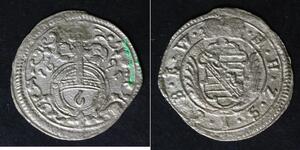
Lippe maintained strict adherence to traditional artistic styles even while adopting modern technologies late into their history (up until 1905 when a constitutional monarchy was formalized). The coins produced usually featured the House Coat-of-Arms—a distinctive black bear and shield design—and often included names of reigning Princes in Latin or German script.
The administration subdivided itself into Ämter, but economically it remained reliant on specific districts. This decentralized economy meant that small town mints might have occasionally produced local change before the centralization efforts took over by 1879 under the Oberlandsgericht regulation.
Notable Coins
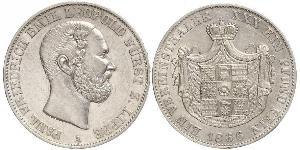
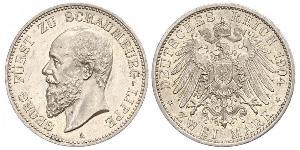
For serious collectors of German state issues, Lippe is prized not for grand gold sovereigns (which were rare and issued primarily in specific imperial periods) but for its distinctive silver coins that showcase local identity. One category to seek out involves the early post-1871 pieces where the coat-of-arms appears prominently on the obverse.
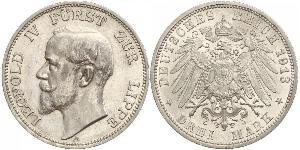
The transition period from 1906 through 1914 is historically significant as collectors examine how designs evolved under different Princes—specifically between Leopold IV and his predecessors. These issues are often sought for their scarcity, resulting in low mintage numbers typical of a small principality struggling with an economy that could not support large-scale coinage operations.
The Free State period (post-1918) introduced new types reflecting democratic values rather than monarchical heraldry, providing collectors with material to study the shift from monarchy to republic within German numismatics. The final years of Lippe before its 1947 merger offer a unique bridge between these eras.
The scarcity is compounded by historical events like World War II and post-war destruction in North Rhine-Westphalia, which claimed many original mints and records of the state's monetary history. Consequently, surviving examples from Lippe command attention for their rarity rather than just face value.
Cultural Legacy
The coinage reflects a small but proud region that maintained its identity against larger neighbors like Prussia and Hanover (until 1867) or Bavaria. The use of coats-of-arms on currency was not merely decorative; it served as a legal seal ensuring authenticity in trade markets across the German-speaking world.
Culturally, these coins represent a time when local nobility held legislative power and were deeply tied to specific estates like Bad Meinberg or Uflen. Collectors looking at Lippe's pieces are essentially holding artifacts of a society that balanced agrarian traditions with emerging constitutional democracy. The family estate still retains ownership over the Detmold castle, preserving the lineage history that originally authorized these coins.
For collectors
If you seek to build a collection focused on regional German states or micro-states of history, Lippe offers a compelling narrative arc from county to principality. Its status as one of sixteen small representatives in Bundesrat councils highlights its minor but significant political role.
The numismatic interest lies heavily in the specific periods where Lippe managed monetary autonomy before forced unification under larger empires or federal states. Because they were agrarian, their coinage was functional and relatively simple compared to gold-rich Prussia. However, that simplicity combined with short periods of issue makes surviving specimens highly desirable.
In summary, the Principality’s coinage is a testament to how small powers maintained dignity through heraldry while navigating the complex monetary landscape of 19th-century Germany. For those appreciating historical context over high metal content values, Lippe offers one of history's most engaging stories in every square inch.