| View |
| preceded by | |
 San Marino (301 - )
|
| succeeded by |
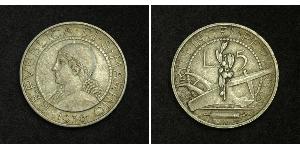
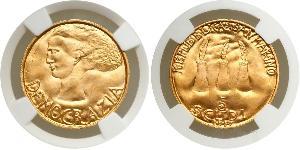
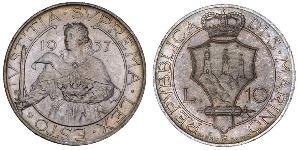
| San Marino (301 - ) | Link to Wikipedia |
San Marino: History, Coinage and Collectibles
Historical Background
In a rugged expanse of the Apennine Mountains, nestled deep within Italian territory, lies a geopolitical anomaly that has defied centuries of change: San Marino. This republic claims to be humanity's oldest living constitutional government, established by stone-mason Saint Marinus in 301 AD atop Monte Titano. Its survival is a testament to diplomatic finesse and geographical necessity; completely landlocked yet fiercely independent for millennia, it serves as one of the world’s two microstates alongside Vatican City.
The history of this republic is defined by its role as a sanctuary in turbulent times. Throughout centuries of regional instability under the Papal States or Italian unification movements, San Marino refused assimilation. In 1463 and later decades following it annexed surrounding communities including Faetano and Serravalle to solidify its borders, yet always maintained autonomy even when Italy’s power rose around it. The republic became a haven for political exiles during the wars of Italian unification in the nineteenth century; Giuseppe Garibaldi famously found refuge here before crossing into France. Similarly, San Marino declared neutrality throughout both World Wars and was recognized by Napoleon Bonaparte himself, who promised to guarantee its liberty.
Economically, this microstate has remained a beacon of stability while surrounding nations grappled with inflation or war economies in the twentieth century. Its economy relied on banking secrecy services initially, before shifting toward tourism and finance that integrated seamlessly into Western markets without full EU membership yet adopting their currency. This unique transition from isolation to global financial participation forms the backdrop for its modern numismatic identity.
Currency and Coinage History
The monetary history of San Marino is a tale of independence evolving alongside European standards. Prior to joining Eurozone conventions in 2001, the republic used the Italian Lira as de facto currency but issued its own commemorative stamps from 1877 which are highly prized by collectors today.
The adoption of the euro marked a significant turning point for San Marino's economy. In January 2001, it replaced local currencies with this common European unit alongside Italy and several others, including Vatican City. Unlike many nations that simply adopted currency standards passively, small sovereign states like these have unique privileges within the Eurozone: they retain the right to issue their own commemorative coin designs for specific denominations.
This distinction is crucial for collectors. While standard circulation coins typically feature a common national design on one side shared across the Eurosystem (or in San Marino’s case, often an image of Saint Marinus or generic themes), they are free from central bank interference regarding reverse sides to mark historical milestones and cultural heritage.
Mints and Coin Production
The production landscape for this republic is a blend of sovereign design authority and professional craftsmanship. While the physical mintage often contracts with major European minting houses located in countries like Italy or Belgium, the artistic direction remains distinctively Sammarinese to ensure that national identity is preserved even within a shared currency system.
The technological evolution reflects broader trends in numismatics. Early issues featured standard relief and metallic purity typical of Eurozone nations (mostly gold-plated bronze for denominations under 5 euros). However, the most significant aspect has been the artistic tradition employed: rather than listing political slogans or abstract geometries often seen on modern European coins, these reverse sides frequently feature historical scenes, religious icons, or landscape depictions.
The design houses responsible produce high-fidelity reliefs that withstand daily circulation wear. This is particularly important for this microstate's reputation in the collector market; they have maintained a consistent standard of quality even when mint runs are limited to specific thematic series like "European Architecture" or "Nature and Environment."
Notable Coins
To understand what collectors seek, one must identify why these coins matter beyond their monetary face value. The most significant collectible items for San Marino begin with its early Euro adoption.
- The First Series (Euro Introduction): The first issues minted in 2001 are prized not just as the republic's entry into a common currency, but because they feature designs often depicting their capital city or founding myths. The historical context here is vital: San Marino wanted to signal that despite its small size and shared money with neighbors like Italy, it remained politically sovereign.
The "Historical Figures" Series:
This series pays homage to the very founders of the republic. Designs featuring Saint Marinus are highly sought after because they anchor these metal objects in the actual history provided by scholars: that a Roman stonemason built a small monastery on Monte Titano, establishing this refuge thousands of years ago.- The "Cultural Heritage" Series: Influenced heavily by their UNESCO World Heritage status (Monte Titano and the historic center), these coins display architectural renderings. For history enthusiasts, they serve as portable records of a landscape that has changed very little since 1463.
The "Commemorative Euro" Denominations:
Certain denominations were issued with two-sided designs (one common across the region and one unique to San Marino). For instance, coins featuring a specific denomination might feature the traditional flag on one face and national symbols—such as the Three Towers of the capital city—on another. This duality offers collectors tangible proof that these are legitimate sovereign issues.Cultural Legacy
The designs engraved onto brass or gold-plated alloys reflect a nation deeply rooted in faith, artistry, and hospitality. The imagery on San Marino's coinage typically avoids the cold machinery of industrial modernity found elsewhere; instead, they favor pastoral scenes that honor the agricultural pastures surrounding their capital.
Religion plays a central role here, given Saint Marinus' martyrdom and patron status in Christian tradition. Consequently, many designs feature ecclesiastical symbols or depictions from medieval art styles prevalent during Italy’s Renaissance period when San Marino was surrounded by Papal influence yet remained free of control.
For collectors
The appeal of collecting the coinage and stamps of this nation lies in its scarcity relative to other Eurozone members. While standard circulation is minted for public use, many special issues have low print runs intended strictly as legal tender but rarely find their way into daily commerce.
This rarity makes each new issue a historical artifact representing how San Marino honors its past without compromising its modern economic integration with Europe.