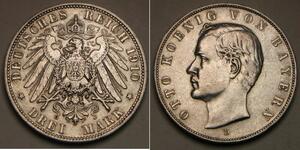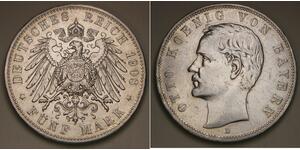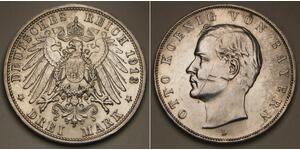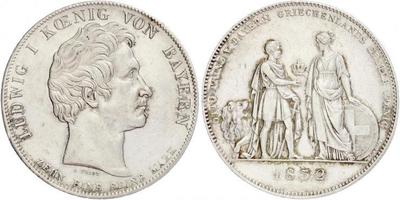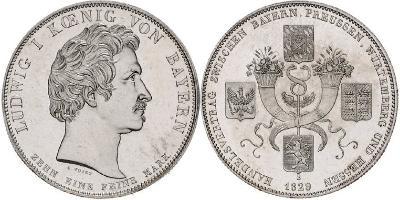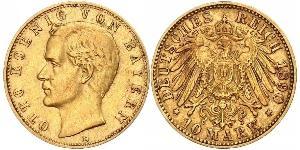
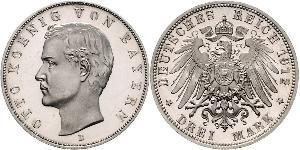
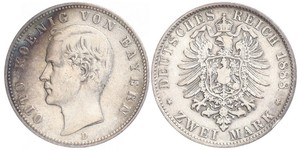
| Otto of Bavaria (1848 – 1916) | Посилання на Вікіпедію |
Otto of Bavaria: History and Coinage
The Historical Legacy
Ancient German history is defined by the House of Wittelsbach, a dynasty whose rule shaped southern Germany for centuries. Among these sovereigns are several men who bore the name Otto, holding titles ranging from Duke to Elector Palatine within Bavaria and its neighboring territories. Unlike later kings who held imperial thrones beyond the region's borders, most Ottos governed smaller duchies or principalities in this area during both medieval and early modern periods.
The significance of these figures lies in their role as regional stabilizers during a time of fragmentation within the Holy Roman Empire. During the High Middle Ages, Bavarian dukes were responsible for maintaining internal order while managing feudal territories. This governance was not merely administrative; it represented local sovereignty granted by emperors or papal authority. As rulers expanded trade routes and fortified cities like Munich and Augsburg during their tenures, they sought to standardize currency within their lands.
The historical record indicates that these Dukes were instrumental in developing Bavaria into a wealthy state known for its banking connections across Europe. Their administrative reforms often necessitated reliable coinage systems to facilitate commerce with merchants from Italy and the Netherlands. While some names are more famous due to later dynastic unions, all Ottos who held regalia during their reigns contributed to the region's economic resilience.
The Connection Between Otto and Coinage
Coin collectors will find that depictions of these figures were not common throughout history but rather specific to times when minting rights were explicitly granted by an emperor. For instance, coinage from this lineage often circulated between the 14th and early 18th centuries, depending on whether a Duke held sovereign status or merely acted as an Elector within Bavaria.
- Sovereign Status: Ottos who served as Dukes of Lower Bavaria were often granted their own coinage privileges because they controlled the administrative and economic infrastructure required to produce currency.
- Issuance Timing: The majority of coins featuring these portraits were issued during a Duke's active reign. However, posthumous issues are rarer but exist when family members struck medals or reissues as honors after death.
The historical circumstance surrounding the coinage reveals much about regional politics. When Otto V ruled in 14th-century Bavaria for example, his portrait signified stability against external threats and internal noble disputes that might otherwise disrupt trade flow across these duchies. The coins themselves often featured legends of loyalty to imperial law.
The Appeal for Numismatists
For the historical collector or coin enthusiast, these issues offer a unique glimpse into regional history rather than national grand narratives. Collectors are attracted by their rarity in medieval sets and the artistry used during transitions from feudal to modern states.
- Rarity: Many silver denari issued under these Dukes survive only as fragments or specific local varieties, making them prized for specialists interested in German provincial history.
- Educational Value: Each piece allows the study of how sovereignty evolved. For instance, an early minting struck by a Duke shows feudal authority while later Elector coins display state-building symbols relevant to the Bavarian succession lines.
Beyond monetary value or price points, these pieces serve as tangible records of political evolution in southern Germany. The portraits and names printed on silver are historical testaments to how small states maintained economic independence before eventual modernization into a unified monarchy. Exploring their coinage connects enthusiasts with the lives of rulers who built foundations for regional prosperity.